Thinking About Combi-Feeding? Here Are Some Debunked Myths About It



When exclusive breastfeeding is too much to manage, some moms get into combi-feeding. Here are some myths that need to be busted
Moms breastfeed when and wherever they can. But what’s a mom to do when the supply doesn’t meet the demand? That’s where combination feeding, or combi-feeding for short, comes in. During the days that the milk supply doesn’t keep up (because babies get extra hungry on some days), we give our babies formula as a supplement. Or at least, until we’re able to produce more.
But like most breastfeedingBreastfeedingFeeding a baby with milk from the mother's breast, recommended by health authorities as the sole food for about the first six months. It supports immunity and bonding, and Philippine practices, there are some facts and myths behind it. Here are some myths about combi-feeding that need to be debunked.
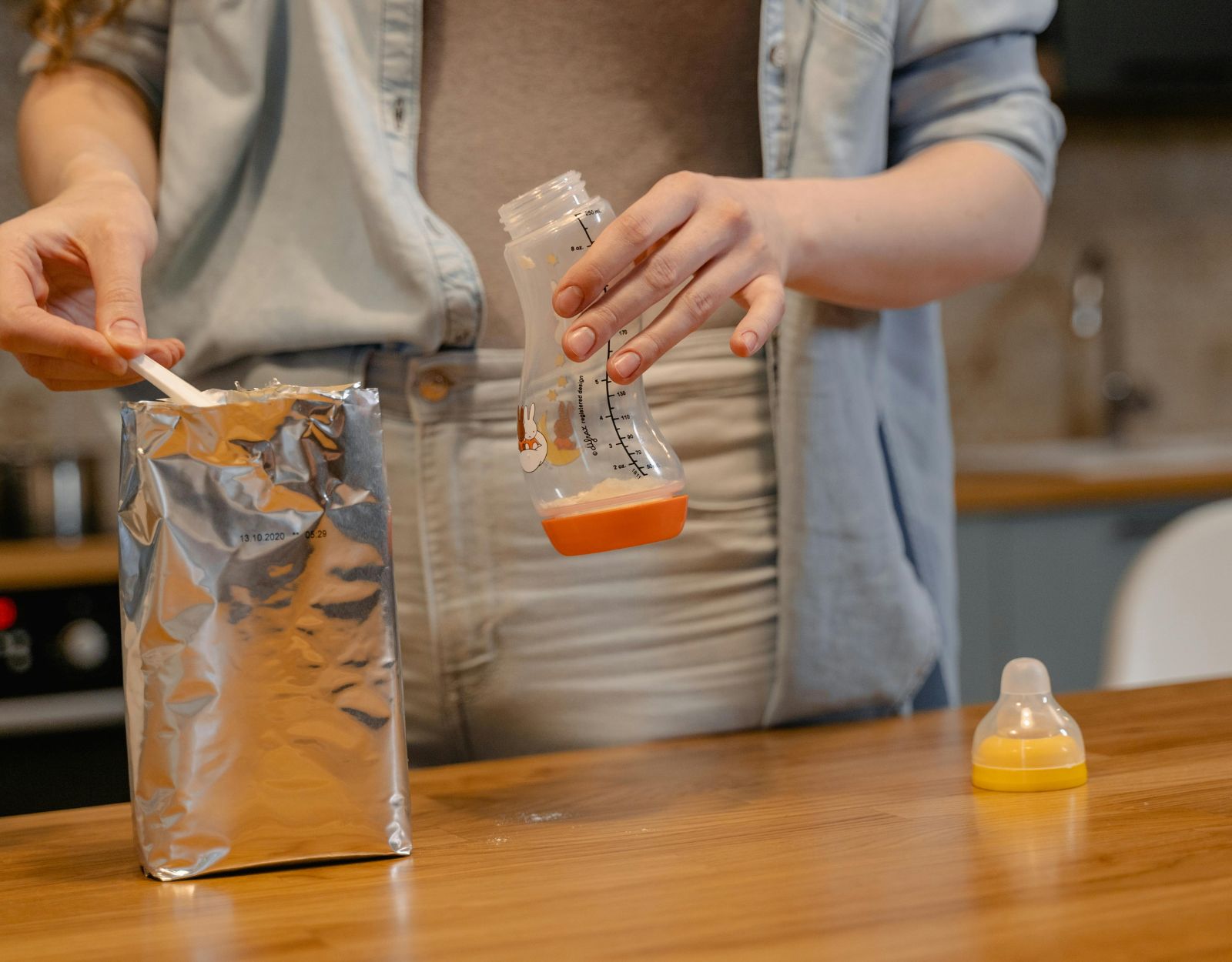
Debunking myths behind combi-feeding
Myth 1: “Mixing with formula ruins your milk supply.”
What really ruins the milk supply is if we don’t keep to a regular schedule and completely empty our breasts. In fact, most moms resort to combi-feeding because they either have low supply (which can be caused by health reasons), are returning to work and have no space to pump, and just want to make sure their baby’s fed (Bobbie Medical, 2025).
Myth 2: “Combi‑feeding leads to faster weight gain—or obesity.”
As of now, the studies are very encouraging. Babies who still take breastmilk—whether exclusively or have a little formula here and there—for six months or more have lower rates of obesity compared to fully formula-fed infants (Wood et. al, 2025).
It doesn’t mean going completely exclusive with breastfeedingBreastfeedingFeeding a baby with milk from the mother's breast, recommended by health authorities as the sole food for about the first six months. It supports immunity and bonding, and Philippine. Formula helps, but it takes a little more discretion in choosing the perfect one for our babies. Best to consult the pediatricianPediatricianA doctor who specializes in the health of babies, children, and teens. Regular visits for checkups, growth tracking, and vaccines give parents a trusted guide, and a good pediatrician listens for that one!
Myth 3: “You can freely mix breastmilk and formula in the same bottle anytime.”
There’s a bit of debate about this since some chemicals react to one another, making it harder for the baby to absorb (Costa Rican Institute of NutritionNutritionThe process of obtaining and using nutrients from food to support growth, energy, overall health, and proper body function., 2022). It’s why some nutritionists discourage mixing everything in one bottle. Besides, it does get confusing, especially when we think about the proportions.
So, feeding separately—breastmilk first, then formula—might be a better idea. Just so we’re sure the baby gets every ounce of that precious breastmilk.

Myth 4: “Combi‑feeding increases infant allergies.”
Not necessarily. Although breastfeedingBreastfeedingFeeding a baby with milk from the mother's breast, recommended by health authorities as the sole food for about the first six months. It supports immunity and bonding, and Philippine does improve the baby’s immune system, reducing it doesn’t mean the former just disappears (Patnode et. al, 2025)
Myth 5: “Moms who combi‑feed feel more guilt or shame.”
Unfortunately, this is quite true.
Because of how much value we place on breastfeedingBreastfeedingFeeding a baby with milk from the mother's breast, recommended by health authorities as the sole food for about the first six months. It supports immunity and bonding, and Philippine, combi-feeding is looked down just as badly as feeding babies formula. Even if the mixed feeding was part of the plan. Many cultures often see breastfeedingBreastfeedingFeeding a baby with milk from the mother's breast, recommended by health authorities as the sole food for about the first six months. It supports immunity and bonding, and Philippine as the “greatest form of love.” Unfortunately, that reasoning is why the shame and guilt can feel so crushing when we do formula feedingFormula FeedingFeeding a baby with infant formula when breastfeeding is not possible or not chosen. Parents should follow the label for mixing, sterilize bottles, and consult a pediatrician about the right or combi-feeding (Komninou et. al, 2017; Rehban and Green, 2020).
What Science and Experts Agree On
- Breastmilk is ideal, but combi‑feeding can still offer important benefits, especially when breastfeeding isn’t possible exclusively (Nutricia, 2023).
- Breastmilk contains unique components—antibodies, probiotics, HMOs—that support immunity and gut health, benefits that formula can’t fully replicate.
- Research shows combi‑feeding doesn’t necessarily decrease breastfeeding duration, provided effective milk removal routine is sustained.
In short…
| Myth | What Science Says |
|---|---|
| Formula ruins milk supply | Not if you’re consistent and empty the breast regularly |
| Mixed feeding causes obesity | No—breastmilk offers protective benefits, even when mixed |
| Mixing in one bottle is always safe | Use caution—nutrient absorption and milk waste vary |
| Combi increases allergies | No concrete proof yet |
| Combi moms feel guilty | Many do—but it’s a system problem, not a parenting one |

A Little Compassion Goes a Long Way
Choosing to combi‑feed isn’t about giving up—it’s often about doing what’s best for your baby and your well‑being. Whether you had to return to work early, faced supply challenges, or needed rest, supplementing can be a loving and realistic choice.
You deserve support, not shame. Your baby deserves nourishment—and that can come from breastmilk, formula, or both. It’s all love.
Whether you’re pumping at work, giving bottle feeds at night, or feeding however works—you are doing important work. Motherhood isn’t about doing it alone or doing it perfectly. It’s about loving, adapting, and choosing what’s right for your family.
References
Bobbie Medical. (2025). Top misconceptions HCPs have about combo feeding. Bobbie Medical. https://medical.hibobbie.com/resource/top-misconceptions-hcps-have-about-combo-feeding
Costa Rican Institute of NutritionNutritionThe process of obtaining and using nutrients from food to support growth, energy, overall health, and proper body function.. (2022). BreastfeedingBreastfeedingFeeding a baby with milk from the mother's breast, recommended by health authorities as the sole food for about the first six months. It supports immunity and bonding, and Philippine and weight outcomes in early childhood: A national longitudinal study. CRIN Journal of Pediatric NutritionNutritionThe process of obtaining and using nutrients from food to support growth, energy, overall health, and proper body function., 18(3), 121–134.
Daniels, S. R., & Koletzko, B. (2021). Infant feeding and the risk of childhood obesity: International perspectives. Pediatrics International, 63(5), 515–521. https://doi.org/10.1111/ped.14622
Komninou, S., Fallon, V., Halford, J. C. G., & Harrold, J. A. (2017). Differences in the emotional and practical experiences of exclusively breastfeedingBreastfeedingFeeding a baby with milk from the mother's breast, recommended by health authorities as the sole food for about the first six months. It supports immunity and bonding, and Philippine and combination feeding mothers. Maternal & Child NutritionNutritionThe process of obtaining and using nutrients from food to support growth, energy, overall health, and proper body function., 13(3), e12364.
Nutricia. (2023). Mixed feeding: BreastfeedingBreastfeedingFeeding a baby with milk from the mother's breast, recommended by health authorities as the sole food for about the first six months. It supports immunity and bonding, and Philippine and infant formula. Nutricia Australia. https://nutricia.com.au/paediatrics/resources/mixed-feeding-breastfeeding-and-infant-formula/
Patnode, C. D., Henrikson, N. B., Webber, E. M., Blasi, P. R., Senger, C. A., & Guirguis-Blake, J. M. (2025). BreastfeedingBreastfeedingFeeding a baby with milk from the mother's breast, recommended by health authorities as the sole food for about the first six months. It supports immunity and bonding, and Philippine and Health Outcomes for Infants and Children.
Rebhan, B., & Green, B. (2020). Emotional health outcomes in mothers who use combination feeding: A qualitative review. Maternal and Child Health Journal, 24(10), 1324–1335. https://doi.org/10.1007/s10995-020-02964-6
Rodriguez, A., & Sinclair, H. (2024). Infant formula and breast milk: A comparative review on nutrient absorption. International Journal of Pediatric Research, 9(2), 89–96. https://doi.org/10.1016/j.ijpr.2024.02.005
Stuebe, A. M., & Bonuck, K. (2021). Barriers to exclusive breastfeedingBreastfeedingFeeding a baby with milk from the mother's breast, recommended by health authorities as the sole food for about the first six months. It supports immunity and bonding, and Philippine in the first month postpartum: A systematic review. BreastfeedingBreastfeedingFeeding a baby with milk from the mother's breast, recommended by health authorities as the sole food for about the first six months. It supports immunity and bonding, and Philippine Medicine, 16(1), 17–24. https://doi.org/10.1089/bfm.2020.0279
Wood, C. T., Witt, W. P., Skinner, A. C., Yin, H. S., Rothman, R. L., Sanders, L. M., Delamater, A.M., Flower, K.B., Kay, M.C., & Perrin, E. M. (2021). Effects of breastfeedingBreastfeedingFeeding a baby with milk from the mother's breast, recommended by health authorities as the sole food for about the first six months. It supports immunity and bonding, and Philippine, formula feedingFormula FeedingFeeding a baby with infant formula when breastfeeding is not possible or not chosen. Parents should follow the label for mixing, sterilize bottles, and consult a pediatrician about the right, and complementary feeding on rapid weight gain in the first year of life. Academic pediatrics, 21(2), 288-296.
More about breastfeeding?
23 Breastfeeding Tips for New Moms
How This Mom Battled Her Breastfeeding Guilt
This Mom Verifies: Weaning Blues Are Very Real