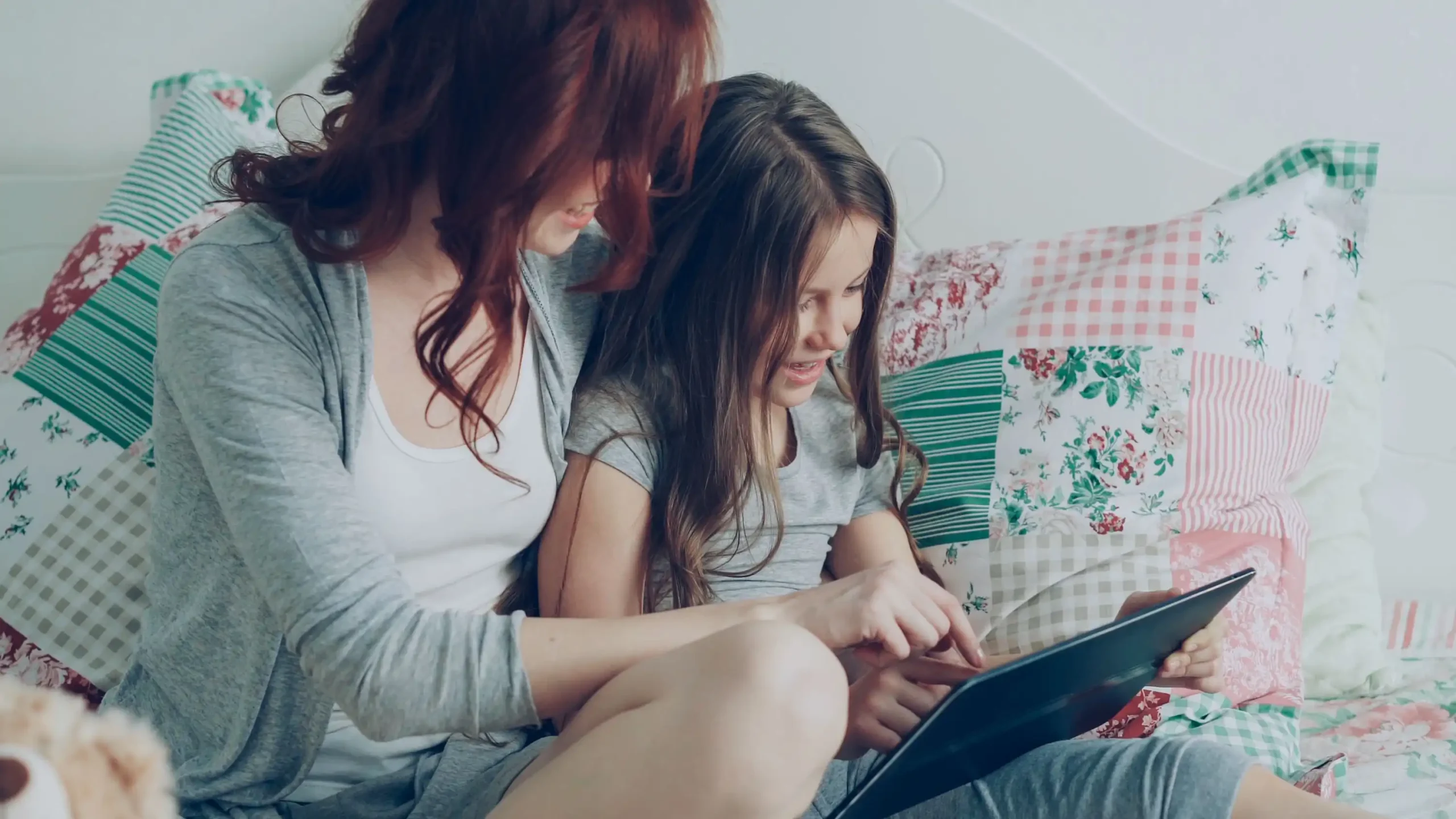
Can Screen Time Be Educational Or Is It Always Bad?



What can make the screen bad is the content on it, not the time spent on it.
The screen isn’t the problem. The content—and how it’s used—is.
We’re quick to label that screen timeScreen TimeThe hours a child spends on phones, tablets, TV, and games. Pediatric groups advise little to no screen use for toddlers and limited, high-quality content for older kids, with family is bad. It’s no surprise; many studies about screen timeScreen TimeThe hours a child spends on phones, tablets, TV, and games. Pediatric groups advise little to no screen use for toddlers and limited, high-quality content for older kids, with family and kids say so. But they’re forgetting about a generation that grew up with it and turned out fine: the millennial generation. As the generation that witnessed most technological pioneers, millennials—most especially gamers—developed the ability to discern what’s worth playing and freaking out over and what’s not.
Unfortunately, that skill somehow got muddled. Whether it’s due to the advancements of technologies to program more “challenging” gameplay or to make more realistic graphics, most screens nowadays contain games that become absolutely mindless once kids learn the pattern. Without the variation, it’s why some Filipino parents end up thinking that giving their kids = failure.
In the Philippines, where parenting is both personal and public, that kind of judgment is heard in the whispered off-handed remarks (or when people make “parinig“) or the quick avert of the gaze when eyes meet. There’s the pressure to be present, attentive, and hands-on.
So, it’s no surprise the morality of screen timeScreen TimeThe hours a child spends on phones, tablets, TV, and games. Pediatric groups advise little to no screen use for toddlers and limited, high-quality content for older kids, with family became so black and white: “Is screen timeScreen TimeThe hours a child spends on phones, tablets, TV, and games. Pediatric groups advise little to no screen use for toddlers and limited, high-quality content for older kids, with family bad?“

Growing Up With The Screen: From Curated Play to Endless Access
Back then, you didn’t just download whatever you wanted. If you wanted a new game, you had to buy it. A physical CD. Which meant one thing: parents still had a say in what went in and what went out.
And because of that, games were still curated.
Not endless and mindless. Not even algorithm-driven. Games had structure, progression, and often, a purpose. The games back then had structure, progression, and punishment.
Most importantly, there was a natural boundary too. When functions couldn’t be crammed into a device because of hardware issues, each device served a specific function. Computers were for learning, clerical work, and administrative work. Gaming consoles like the PlayStation, Game Boy Color, and PSP had different tech designed specifically for gaming. Different worlds meant different expectations.
That boundary disappeared the moment parts got smaller, and technology was marketed based on how many functions it could pack into something the size of a palm. Add the internet, and the possibilities became infinite.
Why Today’s Screen Time Feels Different
Many gamers would probably say, “Games and content have become more mechanics-driven than meaning-driven nowadays.”
Many of today’s games (excluding the strategy games and the Triple A games) often reward repetition over reflection. Entertainment beats thinking. Forget understanding; just find the pattern and counter it. Older games demanded patience and problem-solving—punishing by making sure the player stayed “stuck” until they figured things out.
The reward of getting out? Discovery. It could be a story. A new character. Earned progress in the form of a new weapon or spell that cleared stages in half the expected time.
Unfortunately, today’s content is more designed to keep kids engaged, not necessarily to help them grow.
But Screen Time Isn’t Always the Villain
It’s oversimplified to say, “Screen timeScreen TimeThe hours a child spends on phones, tablets, TV, and games. Pediatric groups advise little to no screen use for toddlers and limited, high-quality content for older kids, with family is bad!” That literally dumps online classes, Excel sheet work, registrations, chatting, online banking, PowerPoint presentations, streaming parties, and almost every other thing under the sun in that same category.
Besides, screens helped connect others to places that aren’t physically possible. Most Filipino families struggle to find education and interventions for their children because of the screen. Online teachers are proof that the screen can be useful. It’s just a matter of the tools they show on screen.
So, don’t blame the screen, but the culture and content that come with it. Some kids just pick up the wrong stuff because they can’t filter it. And let’s be honest, not every netizen has the patience to be kind. Some people go on the net because they need to be mean somewhere. They have nothing personal; they just had a bad day and wanted to unleash their frustration on the internet.

A More Practical Way to Think About Screen Time
The screen is here to stay. We cannot make our kids live under a rock all their lives. We just need to demonstrate that, like all technology, the screen is a tool. And tools can be both good or bad—depending on how they’re used. So, here are more practical ways to tackle screen timeScreen TimeThe hours a child spends on phones, tablets, TV, and games. Pediatric groups advise little to no screen use for toddlers and limited, high-quality content for older kids, with family and the kids:
1. Curate before you hand over the device
As a tool, the screen still needs someone to dictate its function. That’s where we parents come in: our job is to tell that device how to behave.
Want to keep the internet off? Activate airplane mode. Or, just turn off the wi-fi. Don’t even bother putting in a SIM card. Phones can function without them anyway.
Install games that can function offline. Most of these usually need money, but in a way, it’s worth it. Buying the game means private use, and if there is an online function, most gamers who buy the game rarely use the internet unless it’s to update the features or the security.
2. Study the content, not just the time
Two hours of thoughtful gameplay is not the same as two hours of mindless scrolling.
Look at:
- What the game rewards
- Whether it encourages thinking or just reacting
- Whether it builds patience or feeds impulse
Most YouTube streamers reveal these games. Check at least 3-4 streamers to get a more accurate and honest review.
3. Expect your child to outgrow your controls
Some kids will become tech-literate faster than others. Especially if they inherited a “tinker” personality from us, they will “break” the gadget on purpose. They will figure it out and eventually bypass our controls.
So instead of just blocking or censoring, show them what kind of content we enjoy. Curate them based on age. Food reels, cat videos, dog videos, farming games, or even gardening videos—if they see we like it, they’ll probably try to understand it themselves too.
So… Is Screen Time Educational or Harmful?
Screen timeScreen TimeThe hours a child spends on phones, tablets, TV, and games. Pediatric groups advise little to no screen use for toddlers and limited, high-quality content for older kids, with family isn’t good or bad on its own—it becomes what we allow it to become. It can be educational when it’s intentional, but it can also be a cause for chaos when left to its own devices. By learning how to use it, we can transform screens into windows to various worlds, use it as a support for learning, and even build disciplineDisciplineTeaching a child self-control and acceptable behavior through guidance rather than fear. Effective discipline is consistent and calm, explains the reason for a rule, and uses consequences that fit the.
Frequently Asked Questions
Not inherently. Screen time becomes harmful or helpful depending on the type of content and how it is used.
Because many studies focus on risks, but often overlook context—such as educational use, curated content, and purposeful engagement.
Mindless or overly repetitive content, lack of parental guidance, and unfiltered access to algorithms designed for constant engagement.
Curating content, choosing offline or educational games, and showing children how to critically engage with what they consume help.
Not necessarily. A more effective approach is guided use—balancing restriction with education, discussion, and intentional exposure.
More about screen time and gadget use for kids?
Why Giving Kids Screen Time at the Table isn’t Too Bad
6 Guilt-Free Screen Time Activities Parents Enjoy With Kids
Help! My Kid’s Screen Addiction is Making Them Aggressive!