
Why Every Family Needs Scam Ready ASEAN


Scam Ready ASEAN gives families free tools to spot online scams and protect one another, grandparents included
Many people know scams exist, but that does not always keep them safe. That is why the ASEAN Foundation, with support from Google.org, launched the Scam Ready ASEAN Resource Hub on Nov. 10. The free platform debuted at the first Scam Ready ASEAN Public-Private Partnership Dialogue in Manila. It aims to help 3 million people across Southeast Asia recognize and prevent online scams.
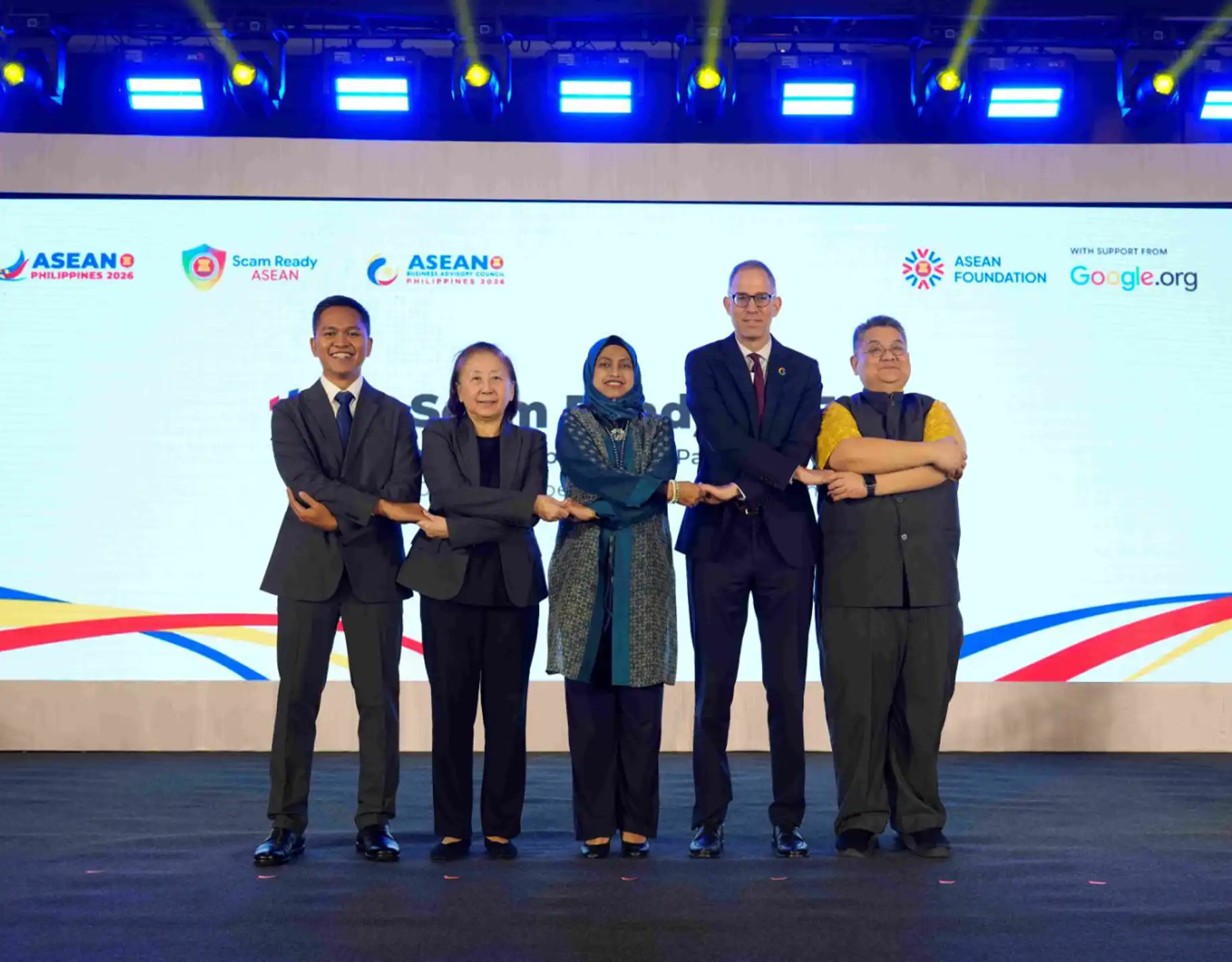
(L-R): Mr. Satria Ugahari, Project Manager of the Scam Ready ASEAN
H.E. Amb. Evangeline T. Ong Jimenez-Ducrocq, Chair of Committee of Permanent Representatives
and Permanent Representative of the Republic of the Philippines to ASEAN H.E. Ambassador Sarah Al Bakri Devadason, Chair of the Board of Trustees of the ASEAN Foundation and Permanent Representative of Malaysia to ASEAN Mr. David Weller, Senior Director of Government Affairs & Public Policy of Google
Dr. Piti Srisangnam, Executive Director of the ASEAN Foundation
What the Free Hub Offers
The hub offers a curriculum built with internet safety experts at the Internet Society and the Global Cyber Alliance. It also features Google’s Be Scam Ready game, which helps users recognize common scams and make safer choices. In addition, a directory lists scam reporting hotlines and contact centers across all 11 ASEAN member states.
Why Families Need Scam Ready ASEAN Now
The State of Scams Philippines 2026 Report found that 84% of Filipino adults met a scam attempt in the past year, up from 77% in 2025. Although 58% felt confident spotting scams, 60% of those who met one still interacted with the scammer. Only 4% reported it to authorities. Meanwhile, the Global Anti-Scam Alliance estimates scams cost Southeast Asia $23.6 billion in 2024.
Dr. Piti Srisangnam, Executive Director of the ASEAN Foundation, said: “Effective scam prevention depends on institutions sharing knowledge and understanding how their efforts can complement one another. This dialogue gives partners across ASEAN an opportunity to share lessons learned, identify shared priorities, and explore practical cooperation. We hope it will lay the groundwork for partnerships that support stronger community protection across the region, and with the launch of the Resource Hub today, that learning can continue well beyond this room.”
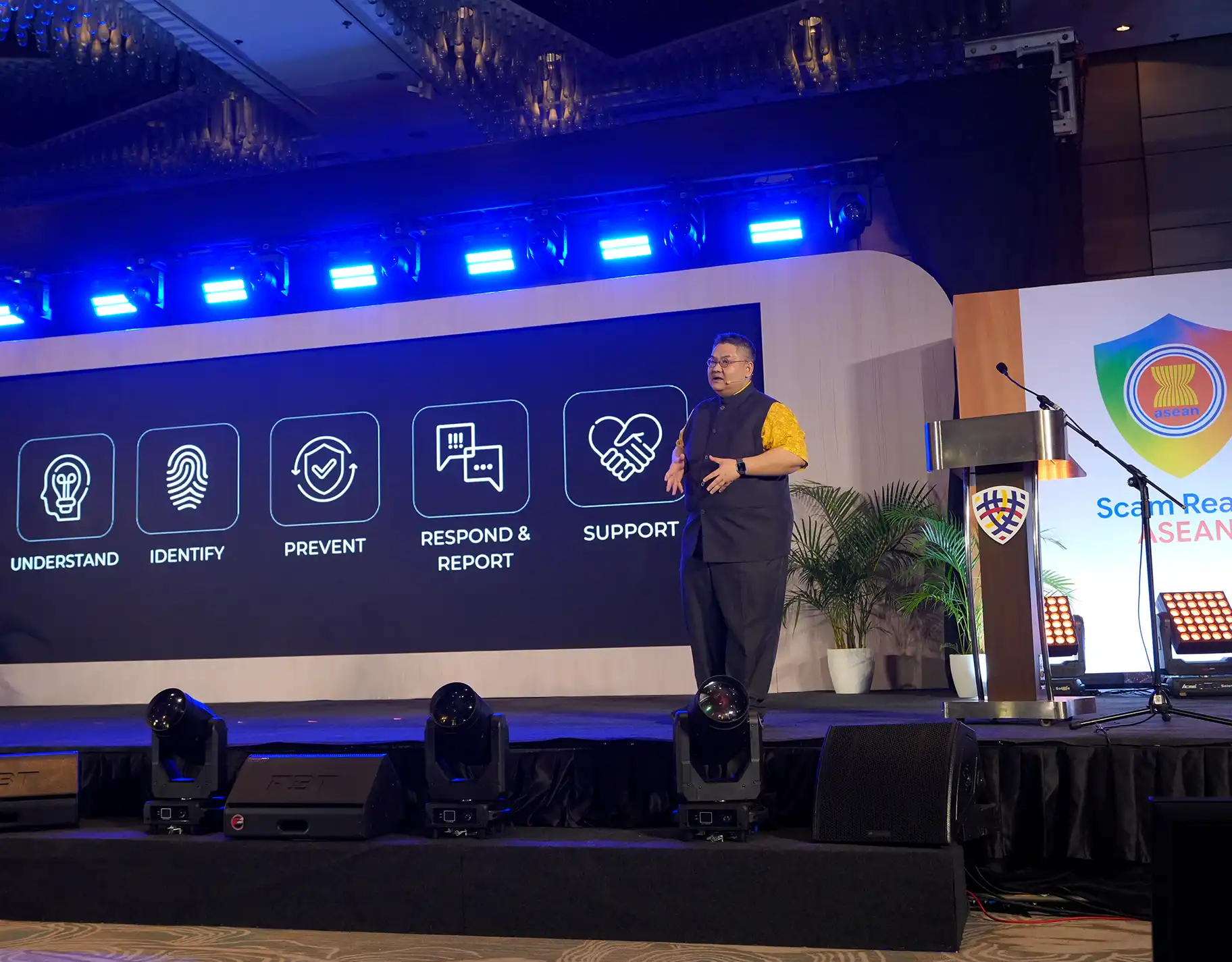
its interactive learning journey, including the Be Scam Ready Game, designed to help individuals
recognise and respond to potential scams through practical, real-world scenarios.
A Scam That Targets Parents
Dr. Piti also shared a common scam in Thailand, his home country, that targets parents selling pre-loved baby items. Here is how it works:
- The bait: A scammer posing as an online platform representative contacts a parent with baby items listed for sale and insists on a home visit.
- The photos: Inside the home, the scammer photographs the baby items, plus the home layout, house number, and family members.
- The personal details: They ask for a copy of the seller’s Thai ID card, address, and bank details, supposedly to set up a bank transfer or verify the seller.
- The setup: With that information, the scammer registers an e-wallet in the victim’s name, or triggers a link to the victim’s mobile banking app.
- The final step: A one-time password (OTP) pop-up arrives. The scammer rushes or tricks the victim into tapping “Yes” or sharing the code, then wipes out the linked bank account remotely.
Dr. Piti said it is important for families to learn about these scams and how to spot them, so they can help protect one another.
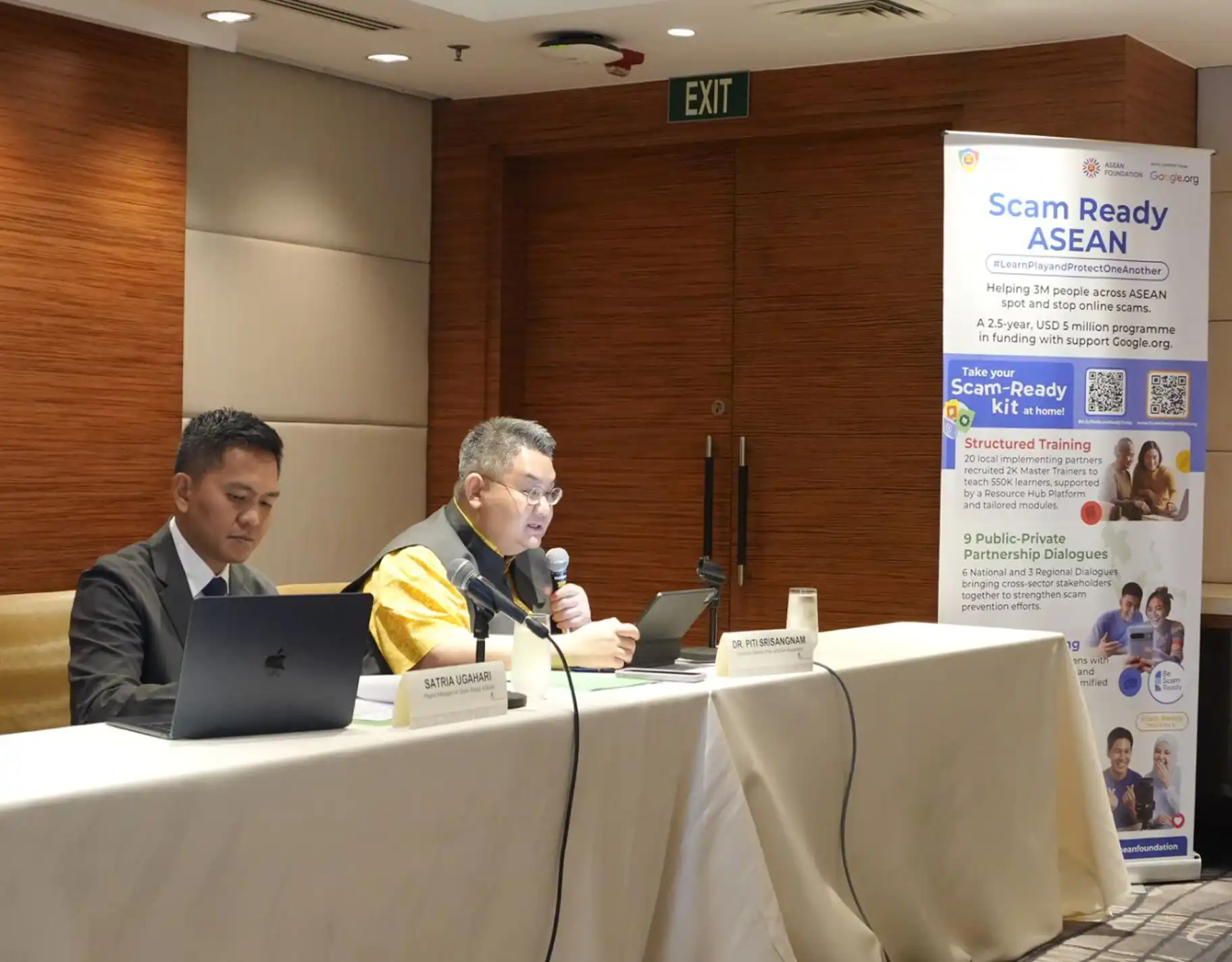
on building regional scam awareness, digital confidence, and community resilience.
(L–R): Satria Ugahari, Project Manager, Scam Ready ASEAN
Dr. Piti Srisangnam, Executive Director, ASEAN Foundation
Teaching Grandparents With Patience
Older people are often victims, so Dr. Piti asks young people to be patient when teaching their elders about scams. Since its April launch in Malaysia, the program has recruited 2,332 Master Trainers and 151 ASEAN Digital GrandPals to raise scam awareness among at least 22,000 older persons.
David Weller, Senior Director, Google Global Affairs, APAC, said: “No single organization can defeat complex scam networks alone. Building greater digital resilienceResilienceThe ability to bounce back from setbacks, disappointment, and stress. Children build it through supportive relationships, chances to solve problems, and adults who show that mistakes are part of learning across Southeast Asia requires strong public-private cooperation, including to help raise public awareness. We’re proud to partner, through Google.org, with the ASEAN Foundation on the Scam Ready ASEAN Resource Hub. This will bring practical tools and localized scam awareness education directly to local communities across the region, to help people build resilienceResilienceThe ability to bounce back from setbacks, disappointment, and stress. Children build it through supportive relationships, chances to solve problems, and adults who show that mistakes are part of learning against common scam tactics.”
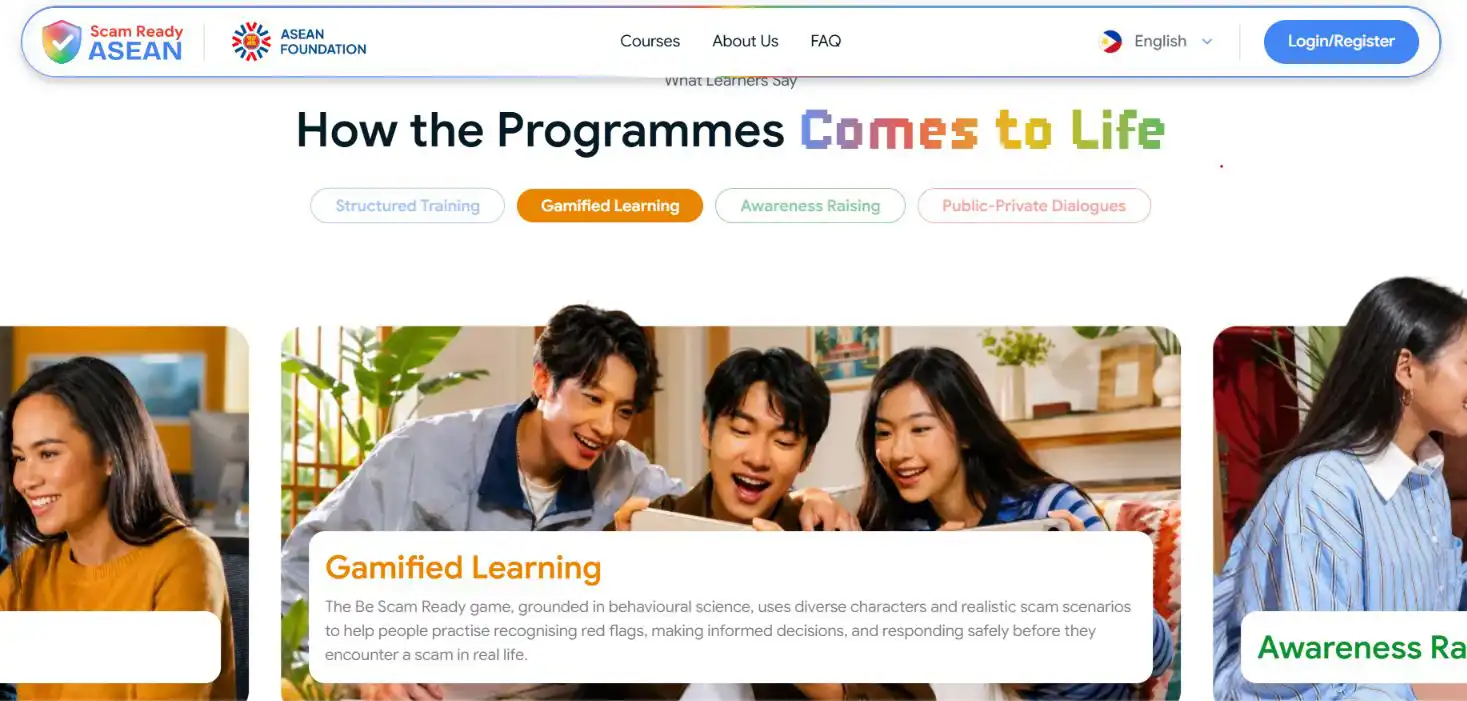
Anyone can explore the free learning modules at ScamReadyASEAN.org
Frequently Asked Questions
It is a free digital learning platform from the ASEAN Foundation, supported by Google.org. It offers a scam awareness curriculum, Google’s Be Scam Ready game, and a directory of scam reporting hotlines across all 11 ASEAN member states.
Yes. Anyone can use the learning modules at ScamReadyASEAN.org at no cost.
Dr. Piti Srisangnam asks young people to be patient, since older people are often scam victims. The hub’s free modules and the Be Scam Ready game are a good place to start.
Related reading
When “Too Good to Be True” Costs Families Everything
Why It’s Important to Protect the Elderly Online
Outsmarting Scammers! How Families Can Tell If They’re About To Get Scammed