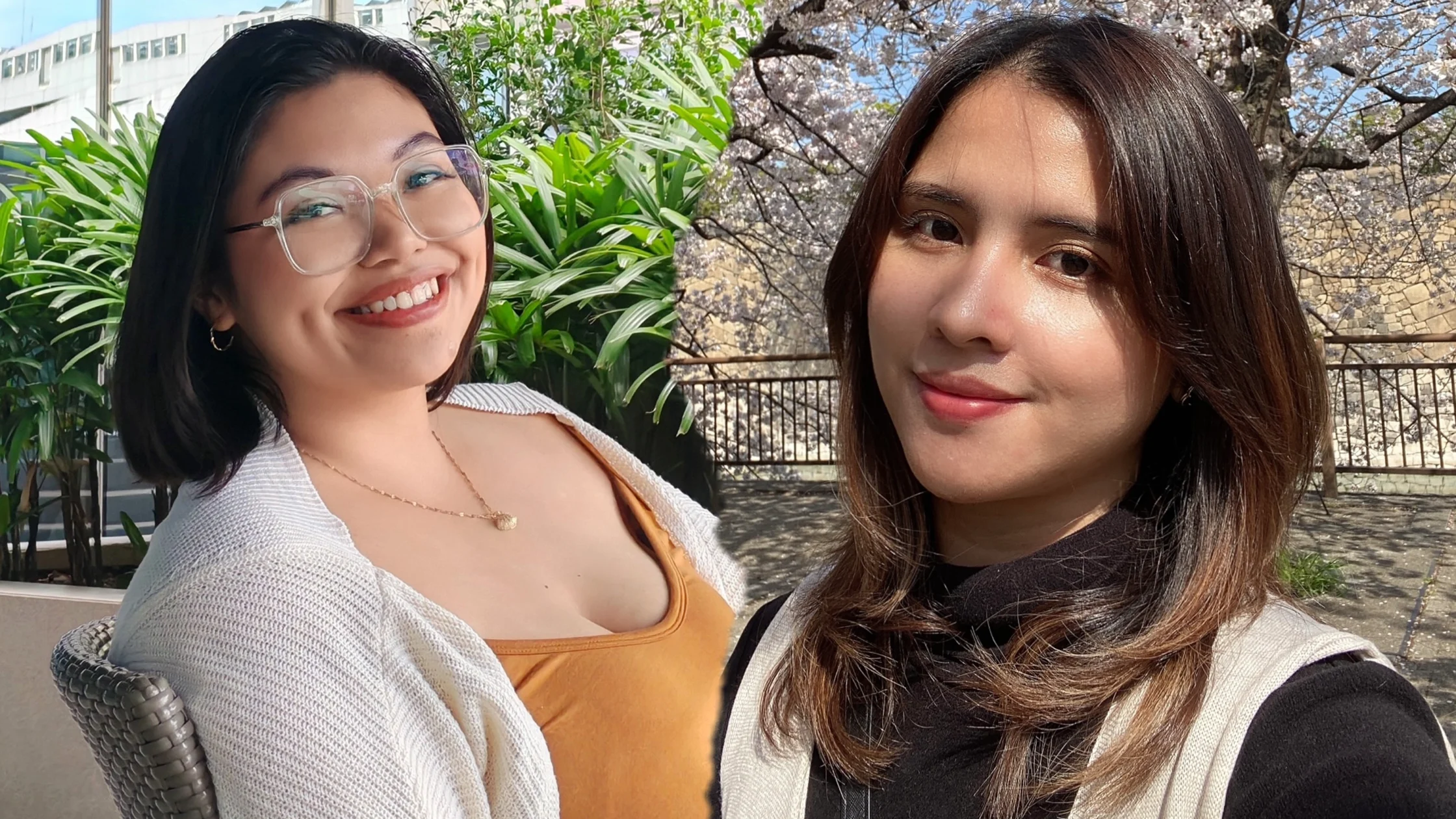
Stories In Every Stitch: When Moms Choose To Remember



For Yumenui’s Tala Quinto and Bear in Mind PH’s Shekinah Bermejo, starting over means preserving the heart and soul but in a new form
Starting over doesn’t always arrive with fireworks or a neatly written resolution. Sometimes, it shows up as regret: a rushed dinner, a distracted evening, or the heartbreaking moment one realizes that their baby has outgrown the clothes they swore to keep forever.
But for moms like Shekinah Bermejo and Tala Quinto, starting over could also be found in transformation. That realization served as the foundation of their passion projects-turned-businesses. Bear in Mind and Yumenui became a family’s bridge between memory and meaning. Each piece they stitched to life honored that love deserved to be held onto, that memories deserved form, and that starting over could also be an act of preservation rather than loss.
Because when life moves too fast, starting over can simply mean choosing to remember.
Tala Quinto: Stitching Dreams Together With Love And Loss
Yume is Japanese for “dream,” and Nui means “to stitch” or “to weave”—these two words resonated with Tala Quinto during a deeply challenging moment in her life: the loss of her grandmother, who, together with her single mom, raised her and her four siblings. Navigating the grief and the heartbreak of being unable to bid goodbye in person due to the pandemic, she left behind her work in Internal Auditing and returned to creating.
“I began exploring different forms of making again,” Tala reflects. “Sewing, crafting, experimenting with machines, and sharing what I learned. That period eventually led me to build a small creative space online.”
While a trip to one of Japan’s museums filled with quilted textiles made from repurposed kimonos inspired Tala, it was a decluttering moment with her son’s old baby clothes that first wove the brand into reality. Memories resurfaced. Moments she thought she had forgotten returned.
“I couldn’t let go of those clothes,” she admits. “I wanted to keep them, but not just store them away. I wanted to transform them into something I could see and live with every day.”
The Threads of Past, Present, and Future
Her return to creation, particularly sewing, allowed her to reconnect—not just with fellow makers, but also with her grandmother. Much of her childhood had been spent at her grandmother’s panahian. Whether it was a peaceful afternoon doing some crochet work or listening to the old Singer sewing machine grind off its rust to throw a stitch or two in, sewing had long been her passion.
“I spent months experimenting, learning, and following rabbit holes, allowing the work to evolve naturally,” she recalled.
Her personal pursuit resonated with others. Family and friends, then eventually others, commissioned her. While she initially imagined herself sewing baby quilts, her first official commission came from someone coping with loss—a mother grieving for her late husband.
“Yumenui is about honoring what was, while creating something that can continue to live with a family into the future,” Tala explains.
Yumenui, from then on, was a manifest of her Ikigai. Tala sees her work as a space where fabric, memory, and care come together. It was never just about making heirloom quilts. Rather, it was about helping families hold on to the stories that matter and transforming them into something new to preserve their memories.
Heartstrings in An Heirloom Quilt
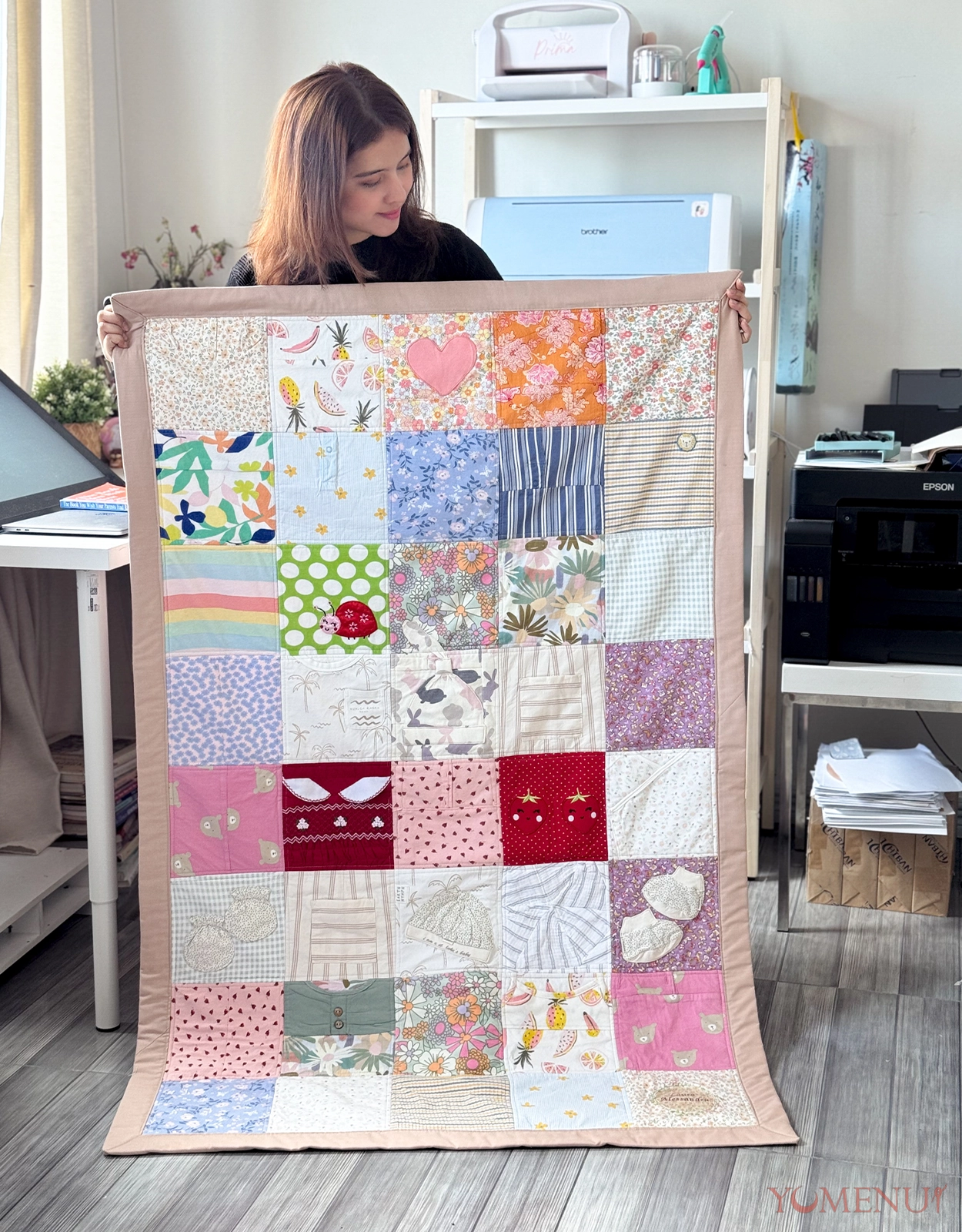
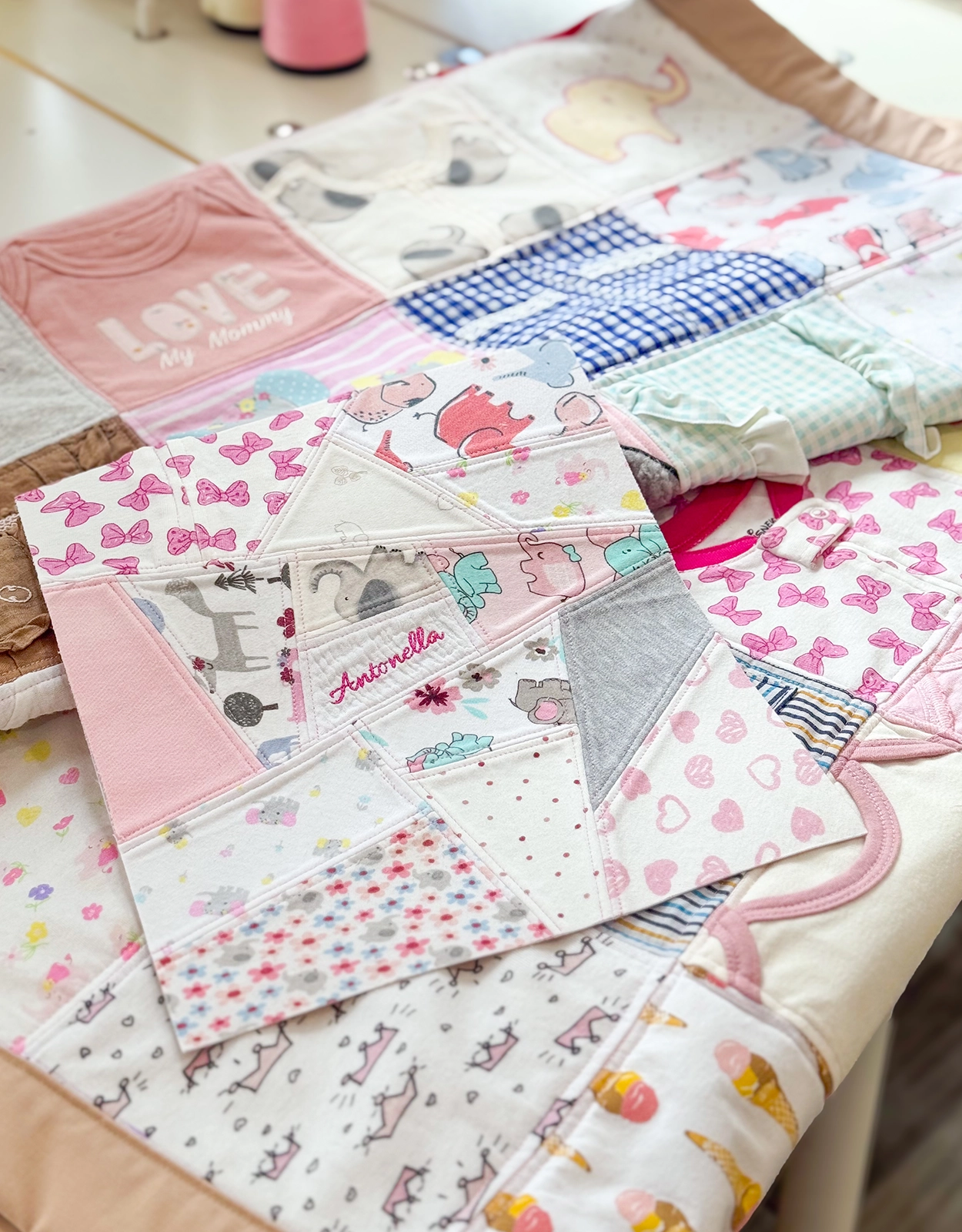
The heart of each Omoide Nui (Japanese for “heirloom quilts”) doesn’t just lie in the purposeful craftsmanship. It also lies in how they treat the garments themselves, says Tala.
“We don’t simply cut them into uniform squares,” she explains. “Instead, we take time to preserve meaningful details such as pockets, collars, ruffles, buttons, smocking, embroidery, and even small imperfections that carry memory.”
No two heirloom quilts are the same. Even if the brand of the clothes still exists today, it’s the softness, wear, and marks from their owner that make them irreplaceable. In the process of creating the quilt, it’s the families who decide what pieces go where. As Tala says, they simply “borrowed” her hands to bring the keepsake to life.
She exclaims, “It’s like their [the family’s] own masterpiece!”
Even more so for those who navigate the cycle of grief. Little anecdotes are always helpful in guiding Tala’s creative process. The moments spent reading them stay with her, reminding her that the fabric she handles are the remaining fragments of someone deeply cherished.
“One particular client who had lost her son and wanted his clothes preserved. When I opened the box and read her notes, I couldn’t hold back my tears. I could feel her pain, her longing, and her love so clearly through her words,” she recalls. “They remind me that this work is not just technical or creative, it is deeply human. My responsibility is to hold space for those stories and translate them into something that feels safe, respectful, and enduring for the family.”
How To Care For An Heirloom Quilt
Because of the many fabrics woven into it, Tala advises the balance of use and mindfulness. But it also highly encouraged to live with the quilts.
“To hold them, use them, and allow them to become part of everyday life, rather than keeping them hidden away. These pieces are made to be touched and loved,” she explains.
But loving care still goes a long way. According to Tala, washing only when necessary, using mild detergent, and using gentle cycles or hand washing then air-drying under low heat but away from direct sunlight ensures the continuation of the quilt’s story. Though its softening and wear are inevitable, Tala sees those as part of its evolution into something more meaningful.
In fact, many of her clients who had initially ordered the quilts as sleeping blankets eventually hang it as tapestries on their walls once they’ve experienced the meaning it carries.
Reborn in Every Stitch and Seam
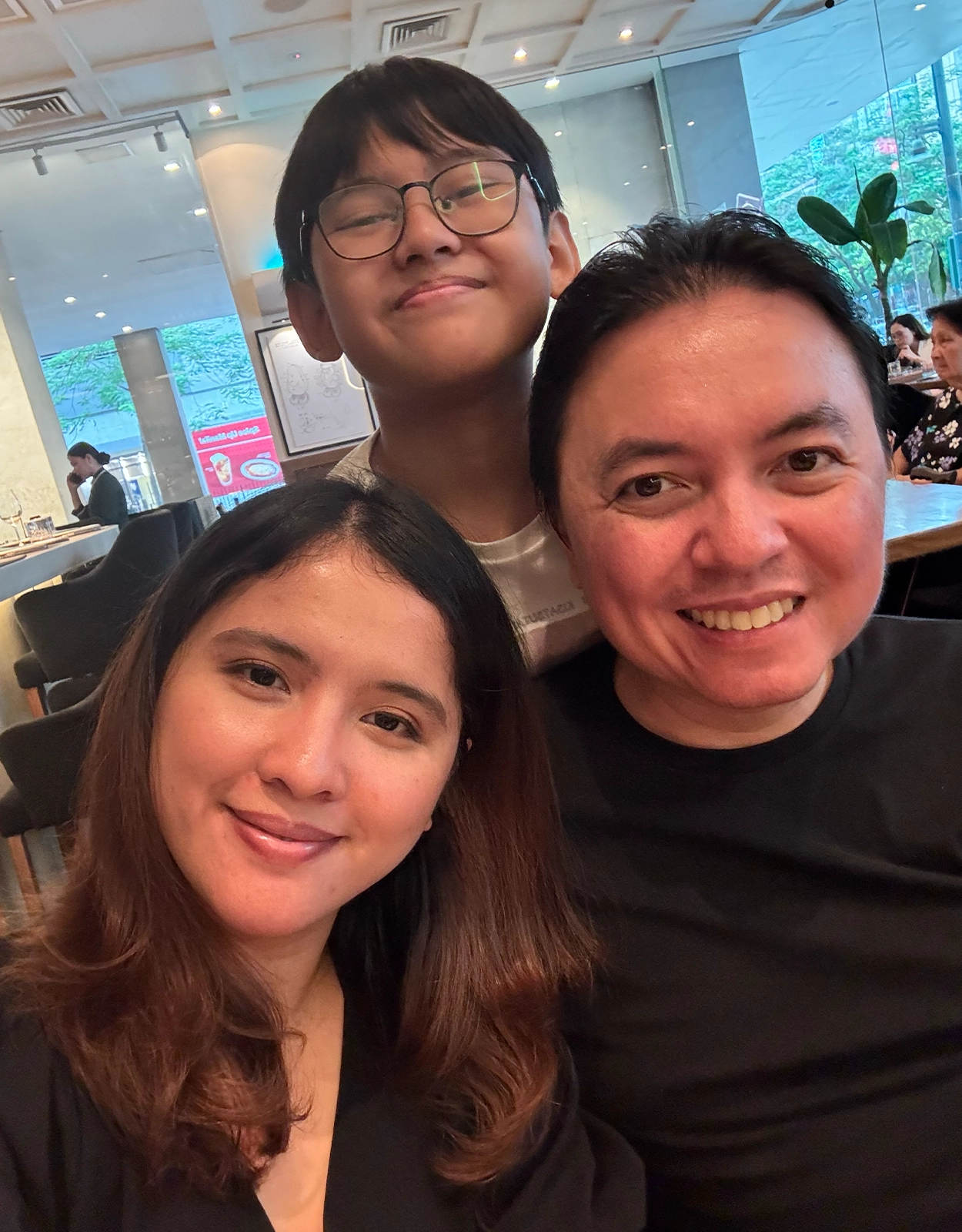
The core of Yumenui’s work is Tala Quinto’s belief that starting over does not mean erasing the past—it means choosing which pieces of it deserve to stay close. When she imagines creating a quilt for herself, Tala envisions one made from the different seasons of her life: her son Daffy’s baby clothes from ordinary, unremarkable days, and garments tied to moments shared with her partner that marked transitions in their life together. These are not fabrics chosen for beauty alone, but for meaning.
“It wouldn’t be about perfection or symmetry,” she explains. “It would be a personal map of our shared life — the random days, the changes, and the moments that shaped us.”
An heirloom quilt, for Tala, because it is made from old clothings—becomes a living object meant to be touched, used, and carried forward. Clothing holds memory in a way few objects can. These are the pieces people, as she says, “lived in, moved through the world in, and experienced life wearing.”
Through careful stitching and intentional design, those everyday garments are given new purpose, allowing families to wrap themselves not just in fabric, but in continuity.
In this way, Yumenui becomes a bridge between loss and renewal. Each quilt honors what was, while making room for what comes next. It is proof that even in grief, change, or fresh beginnings, memories do not have to be packed away. Instead, they can be held close—reborn in every stitch and seam, ready to be steady companions as families find their footing and begin again.

Shekinah Bermejo: To Bear Love In Mind
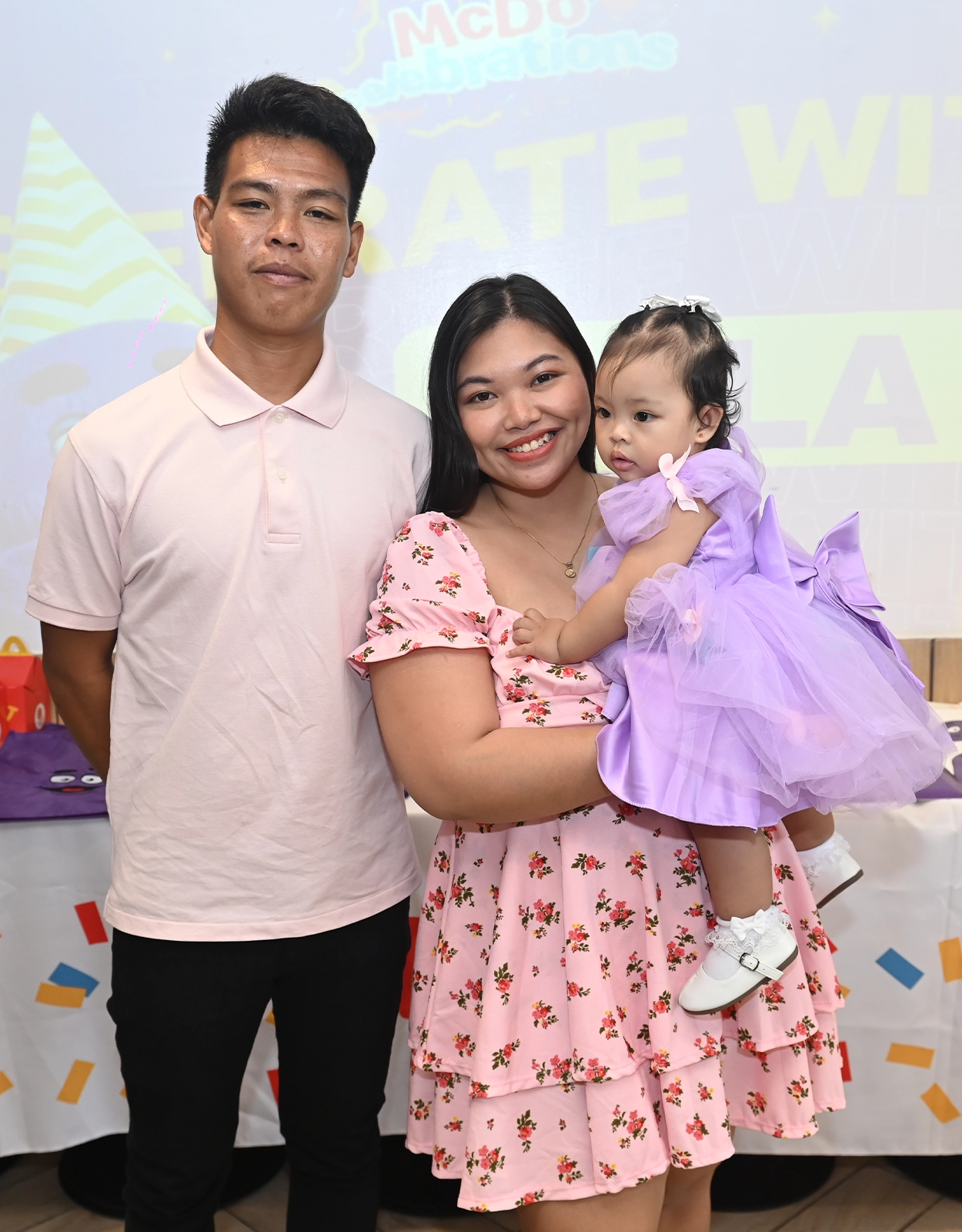
Bear in Mind began from Shekinah Bermejo’s experiences as a mother to a one-year-old daughter. Motherhood had rewired her sense of time. Days flashed. Clothes were outgrown before she was ready. Milestones slipped by, unnoticed. It’s only after realizing there was a blur in her memory that she faced the question: How do you hold on to moments you’re not ready to lose?
“Watching my child grow so quickly made me want to preserve the meaningful moments that were slipping away,” she shares. “That’s really where Bear in Mind came from—the desire to hold on to those moments before they’re gone.”
Learning Motherhood, One Day at a Time
Shekinah is candid about how new motherhood still feels surreal. “Sometimes I still can’t believe I’m a mom,” she says with a laugh. If she had to define herself, she’d choose one phrase: a learning mom.
“My whole experience of motherhood is new,” she explains. “Each day teaches me something—about patience, love, about my baby, and even myself.” For her, motherhood isn’t about arriving at certainty. It’s about staying open. “Being a mother doesn’t mean we stop growing. If anything, we grow even more as we embrace raising our children.”
That mindset—reflective and forgiving—echoes throughout her work. Bear in Mind isn’t about perfect bears or polished outputs. It’s about honoring growth, messiness, and memory.
“Just like the bears I create, I want everyday moments to be meaningful and lasting,” she adds. “Life goes by so fast, and I want to truly enjoy each passing moment before it becomes just a memory.”
What She Carries Forward—and What She Chooses to Change
Much of Shekinah’s approach to motherhood and passion for the keepsake bears is shaped by her own upbringing. She is clear about what she wants to carry forward: love, support, hard work, and a deep sense of community. “My parents came from different provinces, and they always found ways to help their communities,” she shares. “Those values shaped who I am, and I want to pass them on to my child, too.”
But starting over also means knowing what parts of the script to rewrite.
“As a daughter of an OFW parent, there were so many missed occasions and milestones,” she intimates. “They were sacrifices made out of love—but they still leave a mark. Because of that, presence has become her personal non-negotiable. I always remind myself that I want to be there—for my child’s happiness, sadness, achievements, and failures.”
From Outgrown Clothes to Living Memory
Bear in Mind began the way many meaningful ideas do: at home, with a box of baby clothes that no longer fit.
“Each piece held a memory,” Shekinah recalls. “The outfit she wore to her first checkup, her first bite of solid food, even something funny like her first blowout.” At first, she wanted to create a keepsake bear just for her own family. Then the realization followed: If this matters so much to me, maybe it matters to other parents too.
“I wanted to share my ability to transform a loved one’s clothes into something we can continue to cherish,” she says.
The Weight of Trust in Every Stitch
Creating a keepsake bear is not a casual process. Shekinah is upfront about the pressure that comes with working on irreplaceable items. “These clothes belonged to someone,” she explains. “There’s no room for error.”
Different fabrics present different challenges—stretchy, thin, delicate materials—but the biggest challenge is responsibility. “Once I start cutting, there’s no going back,” she says. “If I ruin the clothing, I can’t undo that. I would honestly feel like I failed my client.”
Because of that, she works slowly and intentionally. “These clothes are like life,” she reflects. “Mistakes can’t be undone, so I take my time and work thoughtfully.”
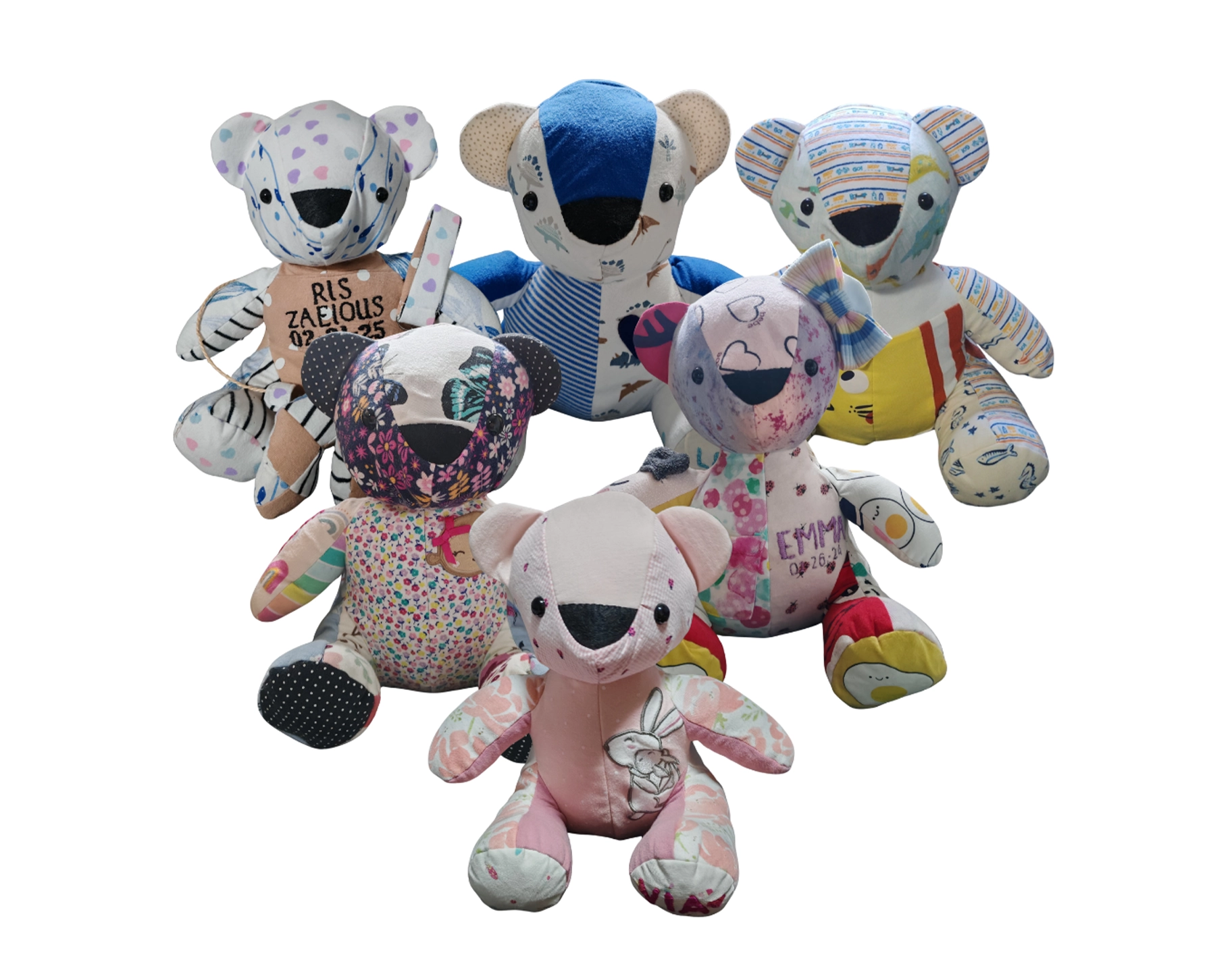
Her process is collaborative and deeply personal. She studies each garment’s details, checks layouts with clients, and incorporates patches, collars, buttons, and built-in designs to give each bear its own character. “There won’t ever be a standard bear,” she says. “Each one is tailored to someone’s memory.”
Choosing What Deserves a New Life
When asked how she decides whether something should be kept as is or transformed, Shekinah offers her own version of a familiar question. “Instead of asking, ‘Does it spark joy?’ I ask, ‘Does it spark a memory?’”
“If it still holds strong memories and can be cherished as it is, it deserves to stay that way,” she explains. “But if it’s outgrown or about to be given away, I see it as an opportunity—to turn it into something tangible, visible, and lasting.”
That belief sits at the core of Bear in Mind. A keepsake bear, she says, “is not just a stuffed toy. It’s your memory, nostalgia, and love all in one.” Each stitch holds a story. Each patch carries emotion. “That way, the memories don’t slowly fade,” she adds. “They continue to live—in our homes, and in our hearts.”
In choosing to remember, Shekinah shows that starting over doesn’t mean letting go of the past. Sometimes, it means holding it closer—softened by time, stitched with care, and shaped into something one can finally bear to keep.
Frequently Asked Question
Yumenui is a Philippine-based passion project-turned-small business owned by artist and mom Tala Quinto that focuses on creating heirloom quilts that can be passed down to generations.
Bear in Mind, owned by Shekinah Bermejo, is a Philippine-based business that focuses on turning baby clothes into keepsake bears—stuffed toys that kids can carry with them throughout their lifetime.
Having a tangible object brings long-gone memories much closer. The fabrics, worn and softened over time, can not be replicated through any other machine.
Both businesses are available on Instagram. Yumenui is known as yumenui.ph while Bear in Mind is known as bearinmindph.
Yumenui recommends gentle washing only when necessary, mild detergent, and air-drying away from direct sunlight. Bear in Mind encourages mindful handling, as each bear is made from irreplaceable garments meant to be loved, not rushed.
More about moms and their passions?
Princess Cabalan-Cantal: From Stay-At-Home to Work-From-Home
Atty. Jaye Bekema: Meet Every Parent’s Friendly Legal Mama!
Katrina Calugay-Alvaera: A Love Letter To Motherhood’s Body