The Weight We Carry, The Grace We Share



For Mental Health Awareness Month, Audrey Tan Zubiri and Stephanie Zubiri share on guilt, grace, and the strength it takes to ask for help
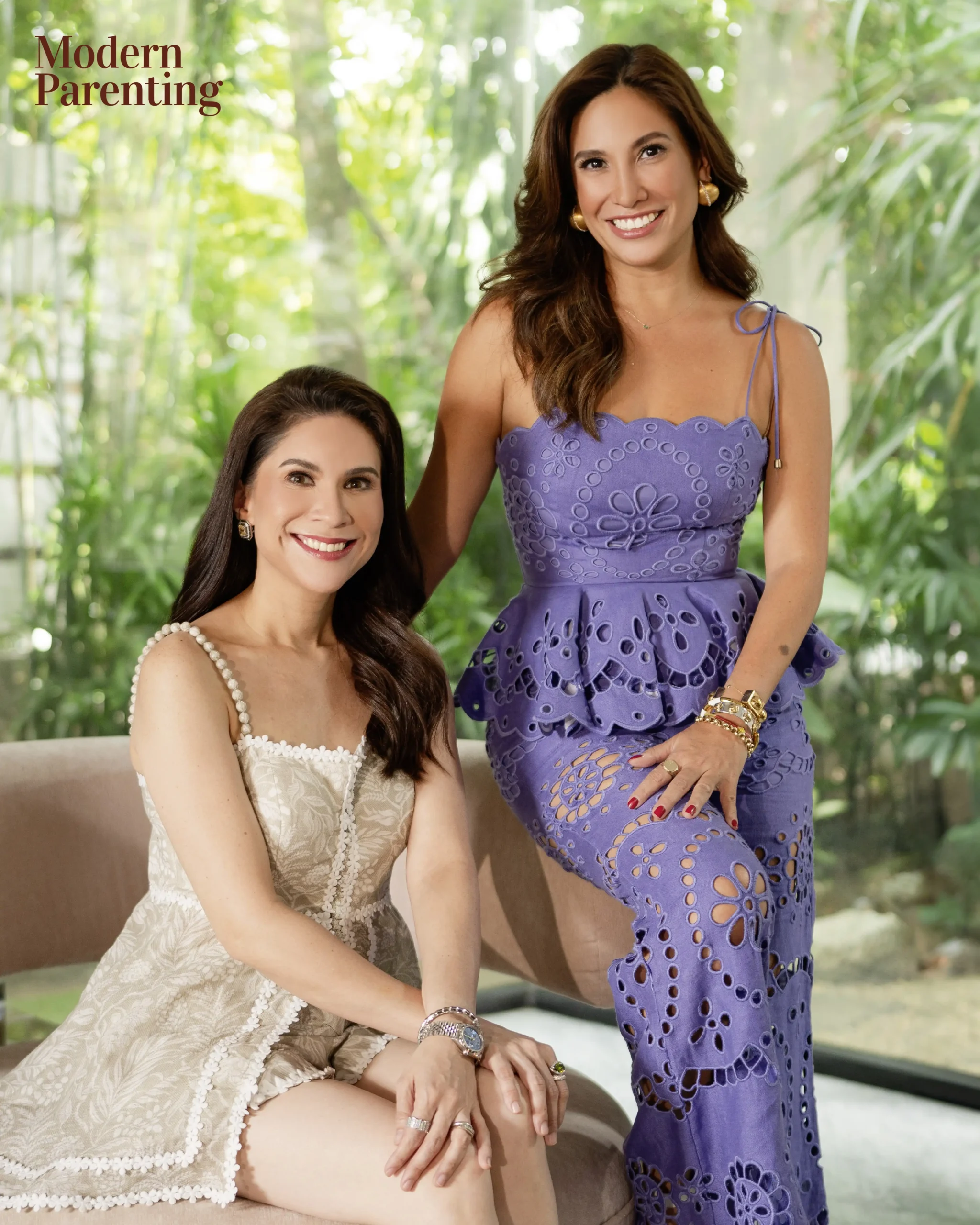
“I’m fine” may be the most common untruth among mothers. Ask Audrey Tan Zubiri and Stephanie Zubiri what should come after it, and two very different roads lead to the same soft answer: I’m here.
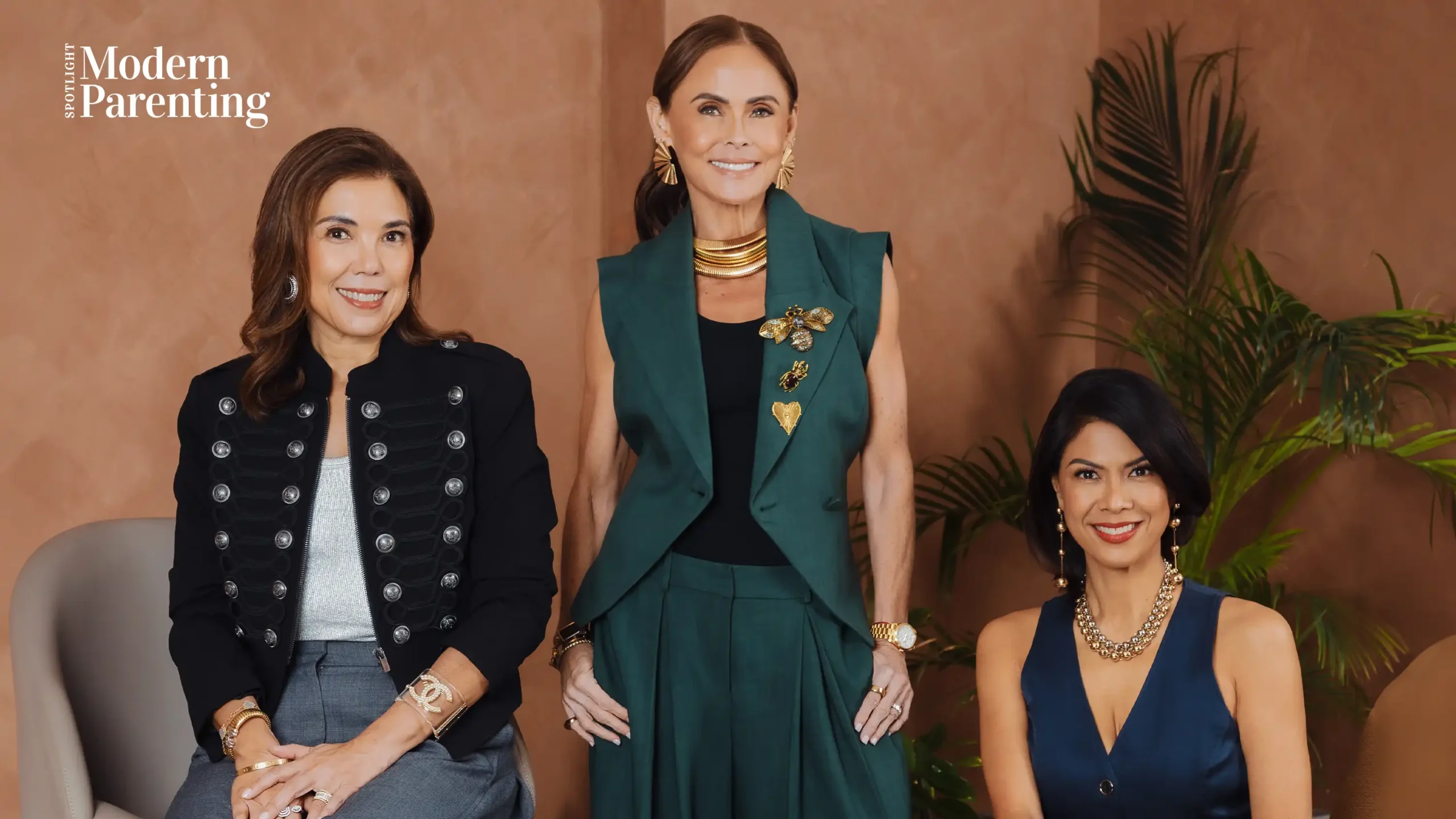
Audrey, a lawmaker, builds things. Stephanie, who runs the Soulful Feasts podcast and retreats, gathers people. Both are mothers, and neither will pretend it looks like the feed. “I love my children deeply, but it certainly is not serene nor effortless!” Audrey says.

From speaking up to building something
Audrey’s advocacy began with noticing. In 2022, as life edged back to normal after the lockdown, she saw that “while we had all focused so much on vaccinating against COVID-19 and keeping physically healthy, there was another epidemic going around that was not being addressed.”
As then-president of the Senate Spouses Foundation, she turned to the National Center for Mental Health in Mandaluyong, where some structures dated to 1928. What was an 8-bed facility is now a 23-bed triage and crisis center with a therapy rooftop garden, turned over in August 2025.
“Mental healthMental HealthA person's emotional, psychological, and social well-being, which affects how children and parents think, feel, and cope. Open conversations, regular routines, and timely help from professionals make it easier for advocacy must go beyond simply encouraging people to speak up,’ she says. “We must ensure that when people speak up, our words translate into tangible action.”
Next is a Women and Children’s Crisis Center (an initiative she started with Reps. Gina De Venecia and Lina Villarica in July 2025 as members of the Association of Women Legislators Foundation) which she chairs. They broke ground in August of this year, with opening targeted for late 2027 or early 2028. “Awareness opens the conversation,” she says, “but access to care is what can change lives.”
Her work has taught her that speaking up is not equally easy for everyone. “For many Filipino families, the cost of consultations, the lack of nearby professionals, and the fear of being judged remain very real barriers,” she says. “That is why mental healthMental HealthA person's emotional, psychological, and social well-being, which affects how children and parents think, feel, and cope. Open conversations, regular routines, and timely help from professionals make it easier for must also be a public policy and infrastructure priority.” Her hope is a day when “every Filipino parent and child knows that seeking mental healthMental HealthA person's emotional, psychological, and social well-being, which affects how children and parents think, feel, and cope. Open conversations, regular routines, and timely help from professionals make it easier for support is as normal, responsible, and important as seeking medical attention for any physical illness.”
She is quick to add that advocacy doesn’t require a crisis of your own. “As mothers, I think we are naturally more in tune with the feelings of others and naturally empathize with them,” she says.
The wave, and the grid
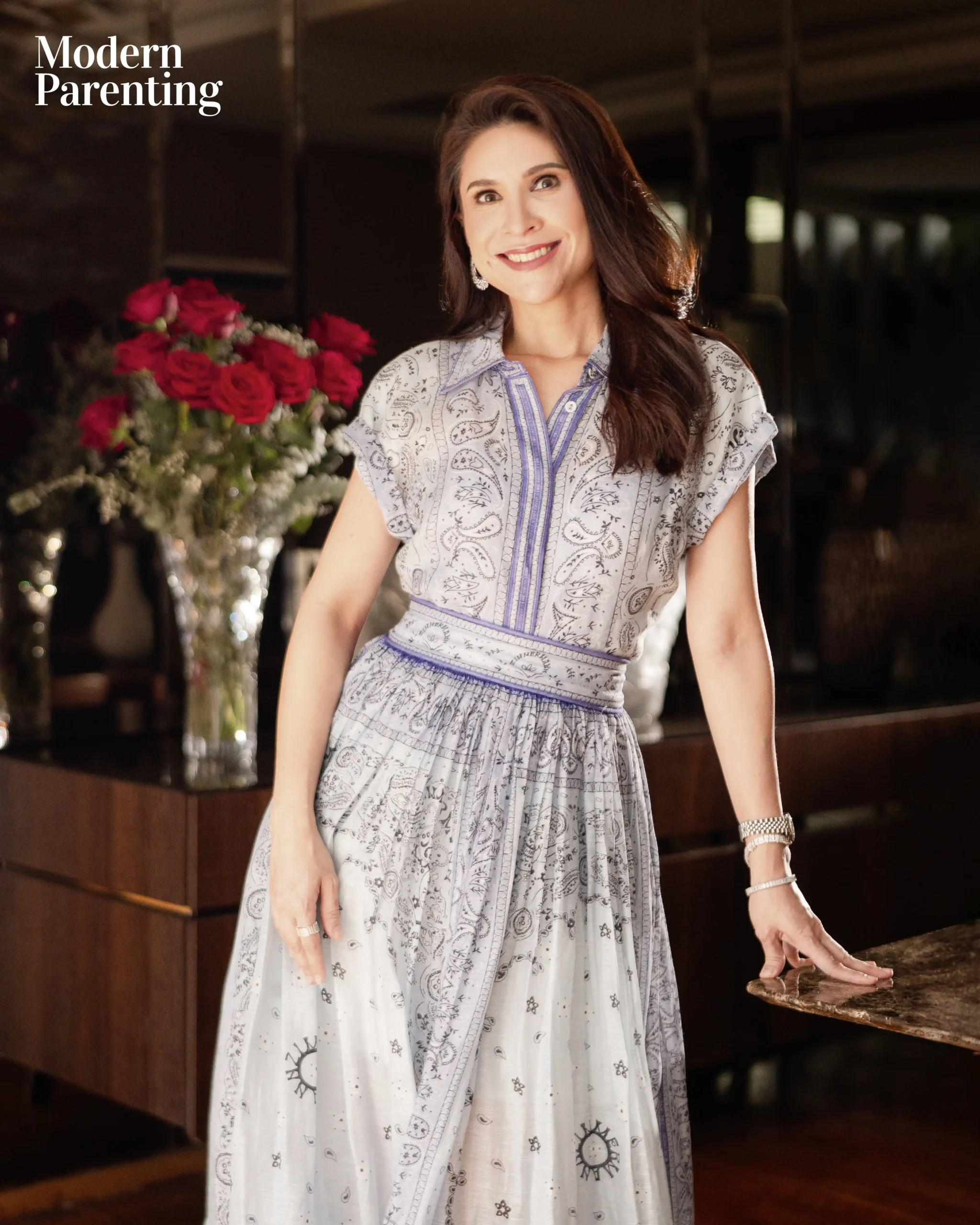
Stephanie’s starting point is personal. “My life is an open book, none of it is a secret,” she says.
In 2019, after leaving her second marriage, she felt “like I had caused so much pain and destruction and I also felt like that the world didn’t need me anymore.” On Jan. 1, 2020, on a family holiday in Bali, she was in the ocean. “The waves were kind of like pulling me to the ocean and I actually really just wanted to let the waves take me. And then I heard my dad on the beach and he was like, ‘What are you doing?”
She turned around and saw her children playing. “I realized I had to do something about this. I couldn’t leave them.”
That realization sent her to therapy for the first time. Until then, she had relied on meditation and healing work. Therapy and Jungian psychology, which she later studied for two years, “really changed my life.” She learned, with a psychiatrist’s help, to recognize mental healthMental HealthA person's emotional, psychological, and social well-being, which affects how children and parents think, feel, and cope. Open conversations, regular routines, and timely help from professionals make it easier for disorders and trauma, and to know when to refer someone to an expert. “You can go to as many retreats, yoga classes, and things like that as you want,” she says, “but until you are ready to pick apart your life and look at it with no judgment… that’s the only time you will really get better.”
The pressure behind that low point had an ordinary face: the Instagram grid. “Suddenly you’re thinking about the grid. How does the grid look? Does it fit my aesthetic?,” she says of 2013 to 2018. “That was what led me to my depression.”
Telling the truth turned out to be freeing. “When you have no skeletons in your closet, you can live life authentically,” she says, and it makes friendships deeper. “They’re not just connecting with your persona, they’re connecting with your soul.” Writing about it began as therapy and still works that way: “When you put it out… it doesn’t live inside you anymore.”
She knows how fine the line can be. She went through postpartum depressionPostpartum DepressionA serious mood condition that can affect mothers, and sometimes fathers, after childbirth, causing persistent sadness, anxiety, exhaustion, or loss of interest. It is treatable, and early support from doctors,, and “you don’t really know if it’s just your nalungkot or if it’s really a hormonal thing.” Her barometer: any feeling that lingers more than two weeks is a sign to look deeper or see an expert. “Mental healthMental HealthA person's emotional, psychological, and social well-being, which affects how children and parents think, feel, and cope. Open conversations, regular routines, and timely help from professionals make it easier for disorders are real,” she says. “It is not just something you can meditate away.”

A good mother should not come last
Ask both women to rewrite one unspoken rule, and they land on the same one.
“I would change the belief that a good mother must always come last,” Audrey says. Sacrifice is part of love, she notes, but “a mother should not have to disappear as a person in order to be considered a good mother.”
Stephanie is blunter. “I think there is so much of this burden that is placed only on the mother… I think the dads need to show up more.” She credits her partner, Scott, who steps in when her fuse runs short. “I always get to show up as my best self for my children because I have a partner.”
She is just as direct about the choices women make. Her own mother, she says, “would be like the most proud of me if I was just a housewife and got married to a rich man… that’s just from her generation.” Stephanie’s view: “There is no right or wrong path. It is your path.” Staying home or building a career, as long as it is a choice of “your own volition,” is “a beautiful choice.” Then comes the harder part: “Women need to stop judging each other.”
Guilt, in her telling, works the same way. “Once you start judging yourself, others will also judge you,” she says.

Big feelings, held gently
Audrey’s generation grew up equating strength with keeping emotions in check. “Sometimes children aren’t being difficult but rather, are having a difficult time,” she says. “And those are two very different things. We can raise respectful children without raising children who are afraid to speak.”
Stephanie’s approach to a child in tears: “You have big feelings, you’re allowed to feel them. So why don’t you go in your room, do what you need to do, cry, scream, shout, and when you feel ready to talk about this, let’s talk about it.” She leans on a line from Carl Jung: “There’s no greater burden on a child than the unlived life of a parent.” Her gift to her sons: doing the inner work so she doesn’t pass it down.
Audrey’s children have taught her that “listening is not the same as agreeing,” and humility besides. “Parenting is not just about raising children. It’s also about allowing our children to make us better people.” Stephanie puts the same idea from the other side: “When you are your best self, your children are their best selves. A stressed out mom makes stressed out kids.”
Audrey and her husband lean on their Catholic faith, which she sees as compatible with professional care. “Faith and professional mental healthMental HealthA person's emotional, psychological, and social well-being, which affects how children and parents think, feel, and cope. Open conversations, regular routines, and timely help from professionals make it easier for care can go hand in hand,” she says, and love and disciplineDisciplineTeaching a child self-control and acceptable behavior through guidance rather than fear. Effective discipline is consistent and calm, explains the reason for a rule, and uses consequences that fit the “can co-exist.” Looking back, her advice to her younger, first-time-mother self is to “enjoy her children a little more and worry a little less about getting everything right.” For the teenage years, she would add that “patience is sometimes more powerful than authority, and that listening can accomplish what lecturing cannot.”

What care looks like now
Before wellness became her work, Stephanie says, self-care was “shallow shopping. It just serves to fill an empty hole.” A sandstorm in Mongolia changed that. Caught in a tent with Scott and their two boys, she says, “I really thought we were going to die.” The family came out unhurt, but their belongings were gone. “Passports, credit cards, computer, whatever. Nothing mattered… just that we were all safe.” What stayed with her was what was left: “It’s family. It’s love. It’s connection.”
Today it looks plainer: an Ayurvedic oil massage with affirmations, daily meditation, and on other days, comfort food and something silly on TV. She prefers “well-being” to the buzzword “wellness,” which can mean anything “from a sound bath to run club to… switching out your coffee for matcha.” Her tool is a heart map: write what lights you up inside a drawn heart and what drains you outside it. “Most people won’t even write their name or themselves in the heart.”
Boundaries count too, especially with the holidays near. “I always just say, thank you, but I have a previous engagement,” she says, “and my previous engagement is maybe a massage at home. It is an engagement.”
Small first steps
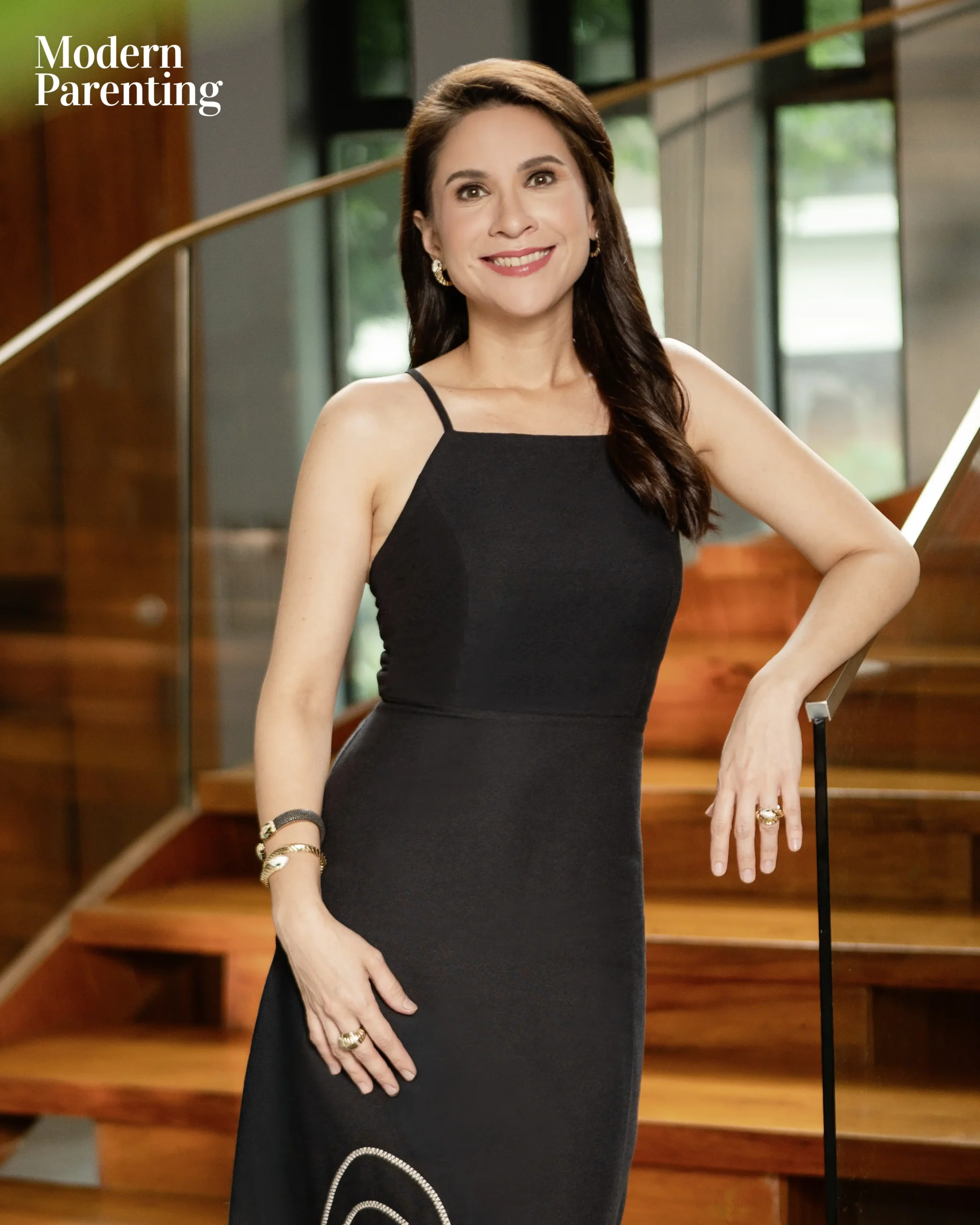
Start with “10 minutes a day without your phone,” Stephanie says, then stretch it.
Then try a solo overnight. “Check into a hotel by yourself,” she says, because “there is something so freeing and powerful and relaxing about not having to decide or make any decisions based on anyone else but yourself.” At night, her phone charges in the bathroom. “The time you spend doom scrolling is extra time that you could be sleeping.”
Audrey’s first step is just as modest. Parents, she says, “don’t have to wait until things become unbearable before asking for help.” Reach out to a spouse, a friend, a family member, a doctor, or a mental healthMental HealthA person's emotional, psychological, and social well-being, which affects how children and parents think, feel, and cope. Open conversations, regular routines, and timely help from professionals make it easier for professional. For worried parents, school guidance counselors are a starting point. The National Center for Mental HealthMental HealthA person's emotional, psychological, and social well-being, which affects how children and parents think, feel, and cope. Open conversations, regular routines, and timely help from professionals make it easier for, a government psychiatric hospital, accepts PhilHealth.
For the friend who says she’s fine, Audrey keeps it simple: “I know you said you’re okay, but I just want you to know I’m here if you ever need someone to talk to and I’m praying for you.” She avoids “wala yan, kayang kaya mo yan,” which can make pain feel minimized.
“Children don’t need a mother who never cries, gets tired, or makes mistakes,” she says. “They need a mother who is strong enough to say ‘I need help.'” A healthy family “isn’t one where nobody ever struggles. It’s one where nobody has to struggle alone.”
Need someone to talk to? The National Center for Mental HealthMental HealthA person's emotional, psychological, and social well-being, which affects how children and parents think, feel, and cope. Open conversations, regular routines, and timely help from professionals make it easier for’s 24/7 crisis hotline is 1553 (mobile: 0919-057-1553/0917-899-8727/0966-351-4518).
Words NICOLE LIMLENGCO
Photography KIM MONTES
Sittings Editor MARGA TUPAZ
Make-Up TWINKLE BERNARDO and JOHNSON ESTRELLA
Hairstyling ANGELI ALFONSO and MORIEL FLORES
Styling SIYA DARYANI and ROSHNI MIRPURI of LUXME
Shoot Coordination TONI MENDOZA
Special thanks to VITO’S BBQ
Frequently Asked Questions
The National Center for Mental Health (NCMH) at #9 De Pebrero St. in Mandaluyong accepts PhilHealth. Its 24/7 crisis hotline is 1553, or 0919-057-1553/0917-899-8727/0966-351-4518 on mobile.
Audrey Tan Zubiri is a Filipina politician, columnist, and writer. She serves as the member of the House of Representatives representing Bukidnon’s 3rd congressional district. Prior to being elected, she worked as a writer and columnist for the Philippine Daily Inquirer. She is married to Senator Juan Miguel Zubiri.
Stephanie Zubiri is a Filipina writer, media personality, host, and Reiki practitioner. She is the founder of Soulful Feasts, a platform and podcast centered around mindfulness, well-being, personal growth, and mental health awareness.
Spotlight stories
The Change They Didn’t Hide
Beyond the Shortlist: The Parents Shaping Parents’ Choice Awards 2026
Joyce Pring and Juancho Triviño: Grace, Gratitude and God