Culture, Creativity, and Connection: How Canva Builds The Bridge Between Teachers, Kids, and Families



Canva, the world’s leading all-in-one platform for visual communication, empowers teachers to connect with their students through Canva Education
One of the best ways to connect with a child as they learn is through art. Something that Canva does now with Canva Education.
The bright colors, the movements, the kid-friendly graphics—all these make lessons more engaging and relatable for the child. Although teachers and parents have been using Google Slides and Microsoft PowerPoint for some time, the effort and time needed to make them creative can feel taxing. With too many features and things to click, some just leave their presentations black and white and remark with the typical Filipino saying, “okay na ‘yan.”
But that’s the beauty of Canva: with most of its features being plug-and-play, creating colorful and eye-catching presentations can be done in minutes. Even more so with Canva Education!
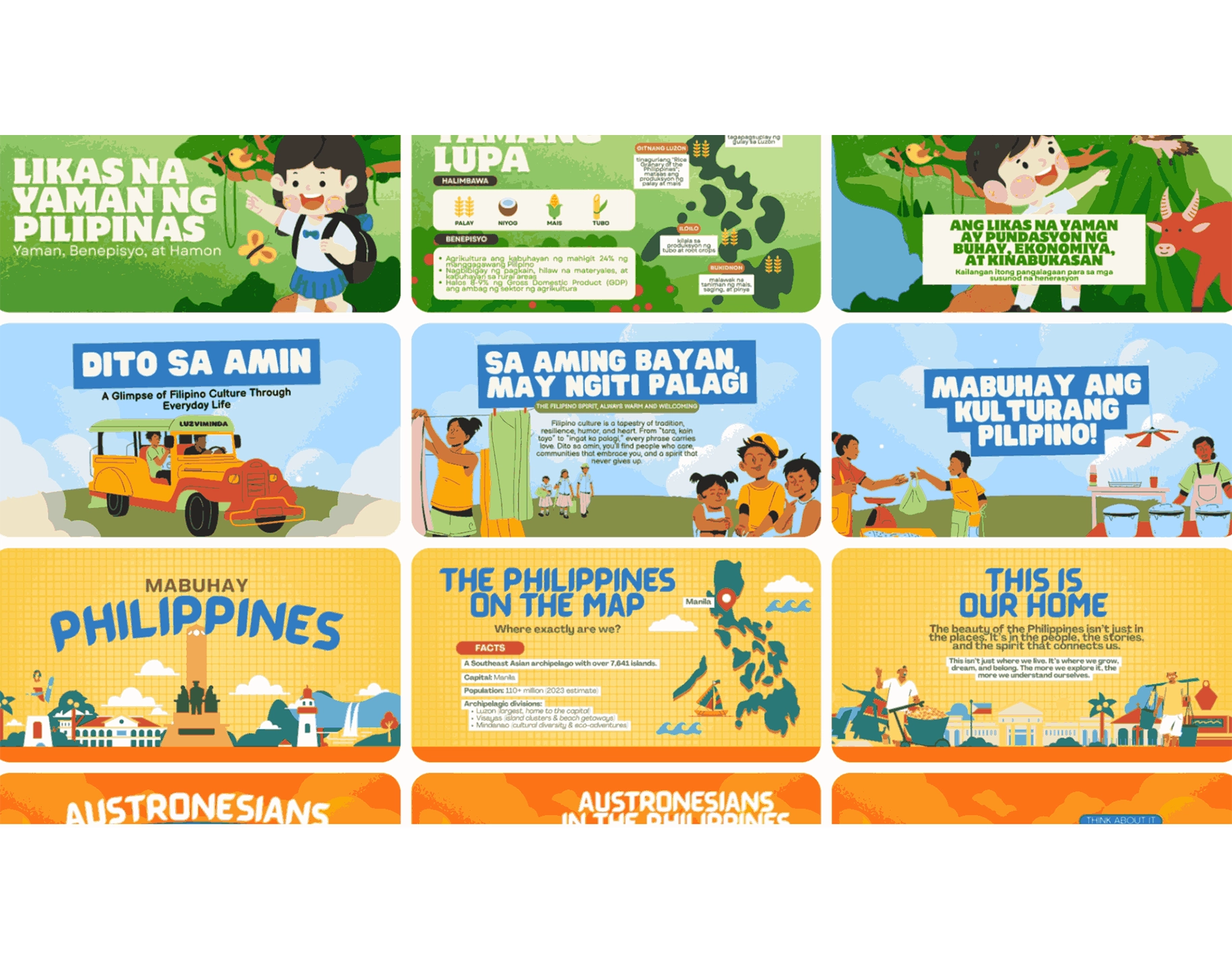
How Canva Education Bridges Teachers and Their Kids
The school year has started, and while teachers prepare some of their slides ahead of time, not everything goes as planned. Class suspensions. Updating information. Or worse, overhauling an entire lesson plan because the topic had been removed from the curriculum.
A lot of those changes usually come last minute, stressing out teachers to work from 7 AM to 12 midnight. But with Canva Education, teachers can access various templates and photos to ensure that the presentations are up to speed and beloved by the kids.
“Art has the power to unite people, both physically and culturally. By sharing a community’s story or an inspiring reflection, we build connections that bridge differences,” Canva Education Creator Lulu Campoto shares.
It becomes especially easier now as the Philippines enters its era of encouraging a greater love for the culture in the younger generation. With social media’s creative reels and skits exposing kids to various cultures, it can be challenging for teachers to embed Filipino values into their presentations—especially when some of these, if explained without context, can seem “toxic.”
So, teachers are discovering ways to bridge culture with creativity in the classroom.
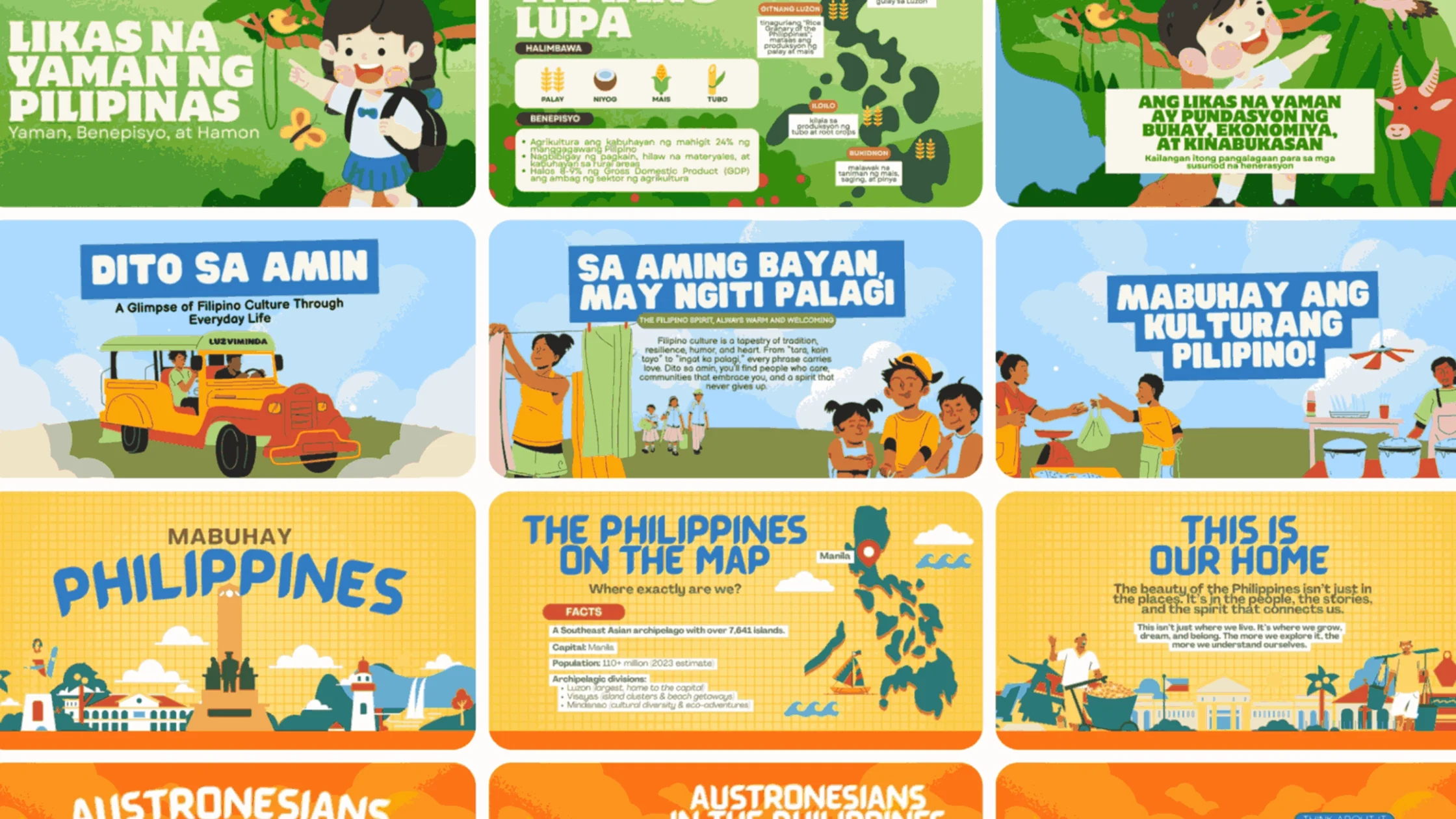
With Canva Education, even the simplest presentations can be transformed into an appealing and creative output. AI-generated images to suit the topic, manual color adjustments by hue, and even dictating the “position” of images in the slide, Canva turns textbook lessons into interactive and immersive learning experiences.
“It’s not just about making things look nice. It’s about helping students see the value of their own culture and social realities in a modern, digital space,” Canva Education Creator Egg explains.
Especially when teaching a text-heavy and information-overloading subject like Araling Panlipunan, Egg realized something early on: when lessons looked intentional and well-crafted, students were more curious, engaged, and inspired to participate.
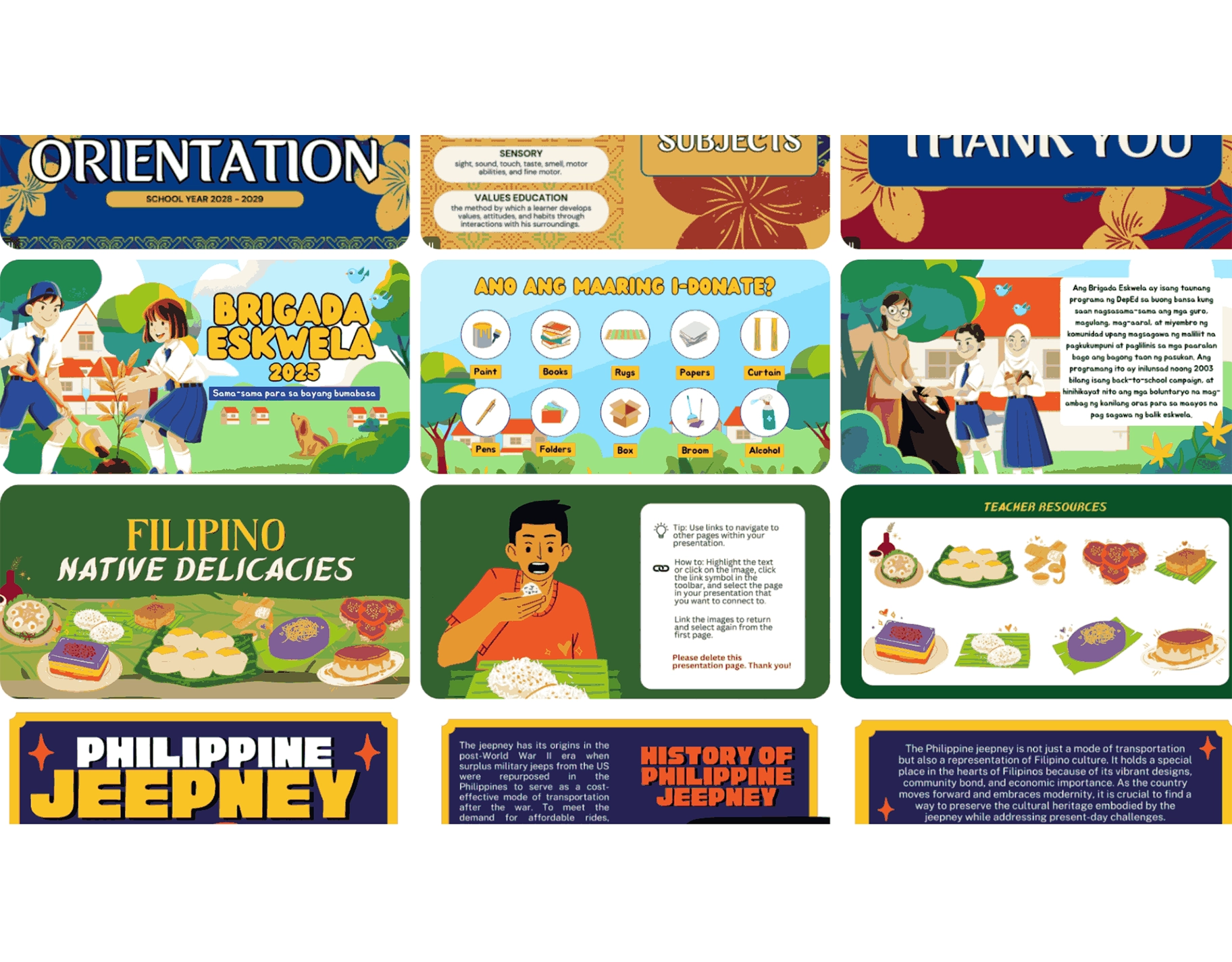
Building Meaningful Learning Through Design
Canva Education makes Canva freely available to K-12 students and teachers nationwide. With easy-to-use tools and a rich library of templates, patterns, and resources, Canva empowers educators to create materials that are simple, powerful, and accessible, ensuring heritage has a place in today’s classrooms.
Teachers see their students as their “kids” too and are always looking for more fun ways to help them learn. They take pride in creating moments that spark curiosity and make learning feel meaningful. Behind this work is a simple but powerful truth: when teachers have the right tools, education becomes a source of inspiration.
And for the kids who have access to Canva Education, enjoy the creativity at your fingertips. You’d be so surprised by the things you learn when you create presentations and images about them.
More about creativity?
Encouraging Creative Thinking in Kids in Philippine Families
This College Came Up with a Creative Way to Attract Students to…
Finding Healing in Art Therapy: How Parents Can Try It Out