Yearender 2025: The Conversations That Shaped Filipino Families



Modern Parenting writers Kevyn Gohu and Alexa Villano round up the stories that shaped family conversations over the past year
And just like that, 2025 flew by. Over the past 12 months, Modern Parenting closely followed the issues that mattered most to families—topics that sparked conversations not just online, but around the dinner table, within barkadas, and across society.
From technology and health to parenting styles and politics, these were the stories families couldn’t stop talking about.
Here are the key issues the MP team believes defined the year.

AI and Its Influence
Kevyn: Let’s face it: AI is everywhere. Whether it’s in the form of ChatGPT, Sora, Gemini (formerly Google’s Bard), or Siri, AI has changed the life of families. While its purpose was to reduce the executive workload, many have seen its potential to “replace” certain processes to reduce flaws. Some use it to generate art—for both good and bad. In the year 2026, perhaps, it’ll be time to talk more about its ethical uses.
Alexa: Even before Time magazine named the architects of AI as its Person of the Year, it was clear that AI would dominate headlines. As more people rely on tools like ChatGPT and Gemini, it raises an important question: how long before people—especially children—begin relying on AI to think and decide for them? That reality is already unfolding in parts of the world.
While AI offers undeniable advantages, how it’s used will ultimately matter most. With governments studying regulations—including Australia’s move to restrict social media use for those under 16—2026 may reveal whether humanity is ready to meet AI’s challenges head-on.

Influenza and Public Health
K: Remember the flu bug? While it didn’t make the headlines, we knew one too many relatives got hit. Vaccines had often served as a preventive measure, but many still hesitate today. Some are because of the side effects. Others are due to the lack of information. But one thing’s for sure: never only get medical opinion from one source. Always consult at least three.
A: Flu outbreaks forced several schools to temporarily suspend face-to-face classes, pushing students back online. While disruptions lasted only days or weeks, the shift reminded parents how challenging online learning can be—especially for children without proper access to gadgets. If the pandemic taught us anything, it’s that in-person learning still matters. The flu also served as a timely reminder that health truly is wealth.

Mental Health
K: The heartbreaking death of mental healthMental HealthA person's emotional, psychological, and social well-being, which affects how children and parents think, feel, and cope. Open conversations, regular routines, and timely help from professionals make it easier for advocate Emman Atienza brought back mental healthMental HealthA person's emotional, psychological, and social well-being, which affects how children and parents think, feel, and cope. Open conversations, regular routines, and timely help from professionals make it easier for as a topic for the dinner table and the court of public opinion. As an invisible threat, it’s hard for parents to find the true source. In some cases, mental healthMental HealthA person's emotional, psychological, and social well-being, which affects how children and parents think, feel, and cope. Open conversations, regular routines, and timely help from professionals make it easier for disorders does have a genetic component (e.g. Schizophrenia or even the affinity towards anxiety or depression). Other cases, it’s nutritionNutritionThe process of obtaining and using nutrients from food to support growth, energy, overall health, and proper body function.. Either way, mental healthMental HealthA person's emotional, psychological, and social well-being, which affects how children and parents think, feel, and cope. Open conversations, regular routines, and timely help from professionals make it easier for for families today may involve challenging the old status quo and re-appropriating it for today’s times.
A: Mental healthMental HealthA person's emotional, psychological, and social well-being, which affects how children and parents think, feel, and cope. Open conversations, regular routines, and timely help from professionals make it easier for has remained in the spotlight since the pandemic began in 2020. Too often dismissed with “you’ll get through it,” depression and anxiety demand real conversations—especially in a world made more intense by constant digital connection. For parents, this is a reminder to keep checking in. Sometimes, the signs are already there—we just need to look closer.

The “Flaws” of Gentle Parenting
K: Once a buzzword in the parenting game, Gentle ParentingGentle ParentingAn approach built on empathy, respect, understanding, and firm boundaries. Instead of punishment, parents acknowledge feelings, set clear limits, and guide behavior with calm explanations, aiming for cooperation rather than has fallen off as many of the older generation complain of the “lack of resilienceResilienceThe ability to bounce back from setbacks, disappointment, and stress. Children build it through supportive relationships, chances to solve problems, and adults who show that mistakes are part of learning” in today’s children. “Why don’t kids know how to fight anymore?”, “Why do they cry so easily?”, “Why can’t they survive outside anymore?”, “Why do they think life is so hard?” — these are probably just some of the questions that parents of the past and present have for today.
The issue perhaps lies in the word itself, “Gentle,” which was used originally to make it more casual and colloquial. Doing so blurred the lines of being permissive and authoritative, confusing parents even more about how to raise their children in a fast-paced and more “connected” world.
A: Many new parents we’ve met practice gentle parentingGentle ParentingAn approach built on empathy, respect, understanding, and firm boundaries. Instead of punishment, parents acknowledge feelings, set clear limits, and guide behavior with calm explanations, aiming for cooperation rather than as a way to heal from their own childhoods—where shouting and physical punishment were the norm. While the intention is deeply personal, parenting has no handbook. Mistakes are inevitable. What matters is knowing when to be a parent—and when not to blur that role with being a confidant.
Calamities in the Country
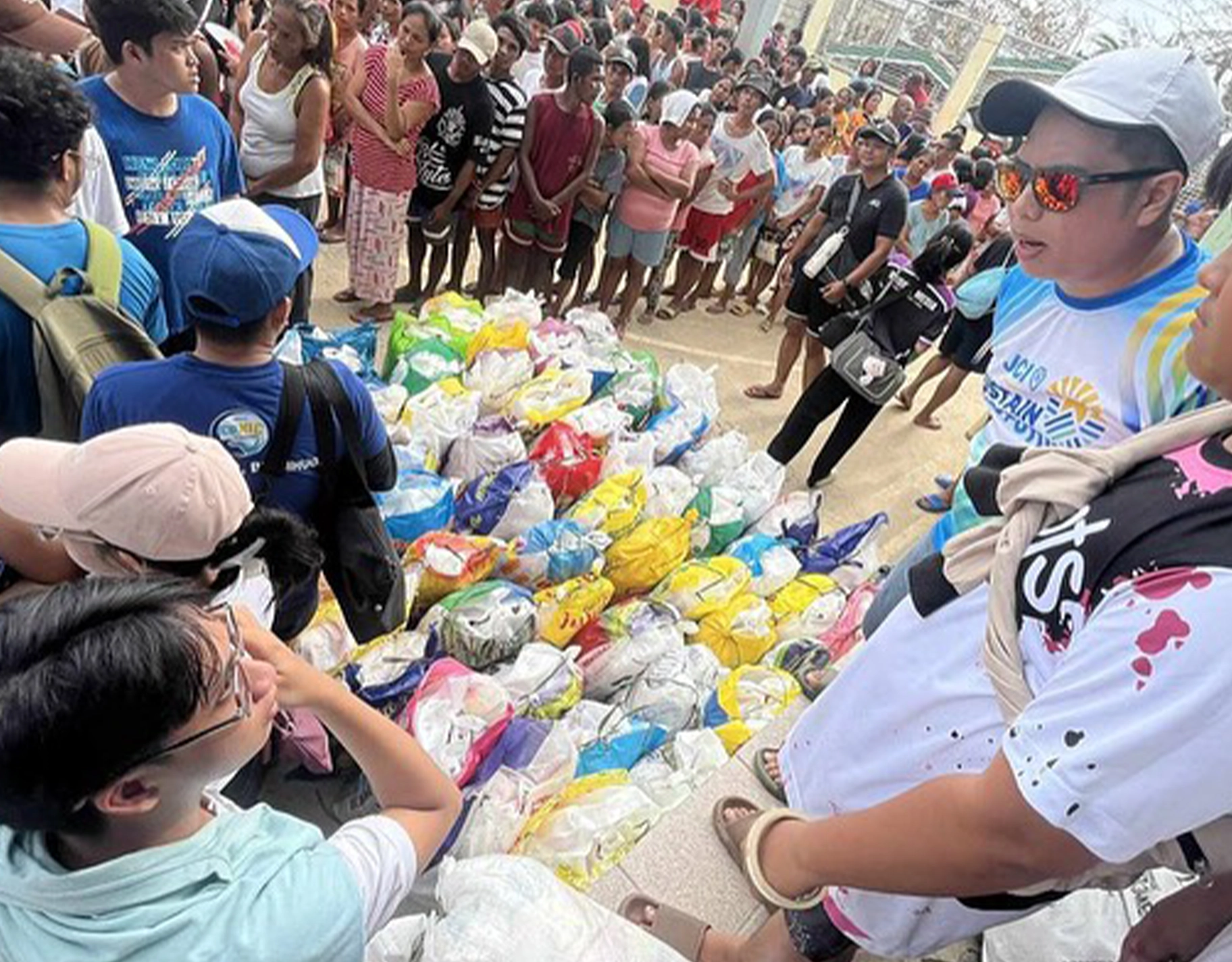
K: While the Philippines is no stranger to calamities, the typhoons have revealed wounds that have festered over the years. Ruined houses. Unmaterialized flood project controls. Lack of communication. It exposed the many ugly truths behind the fairytale of Philippine resilienceResilienceThe ability to bounce back from setbacks, disappointment, and stress. Children build it through supportive relationships, chances to solve problems, and adults who show that mistakes are part of learning.
Yet, it also revealed the spirit of compassion among those who have never met face to face. Language rarely became a barrier, as even celebrities stepped up to connect families.
A: Earthquakes and typhoons once again tested Filipino resilienceResilienceThe ability to bounce back from setbacks, disappointment, and stress. Children build it through supportive relationships, chances to solve problems, and adults who show that mistakes are part of learning—and the people endured. But the question remains: how long can resilience be demanded when citizens deserve more protection and accountability? If there’s a silver lining, it’s that Filipinos continue to rise, no matter what disaster comes their way.
Flood Control Corruption
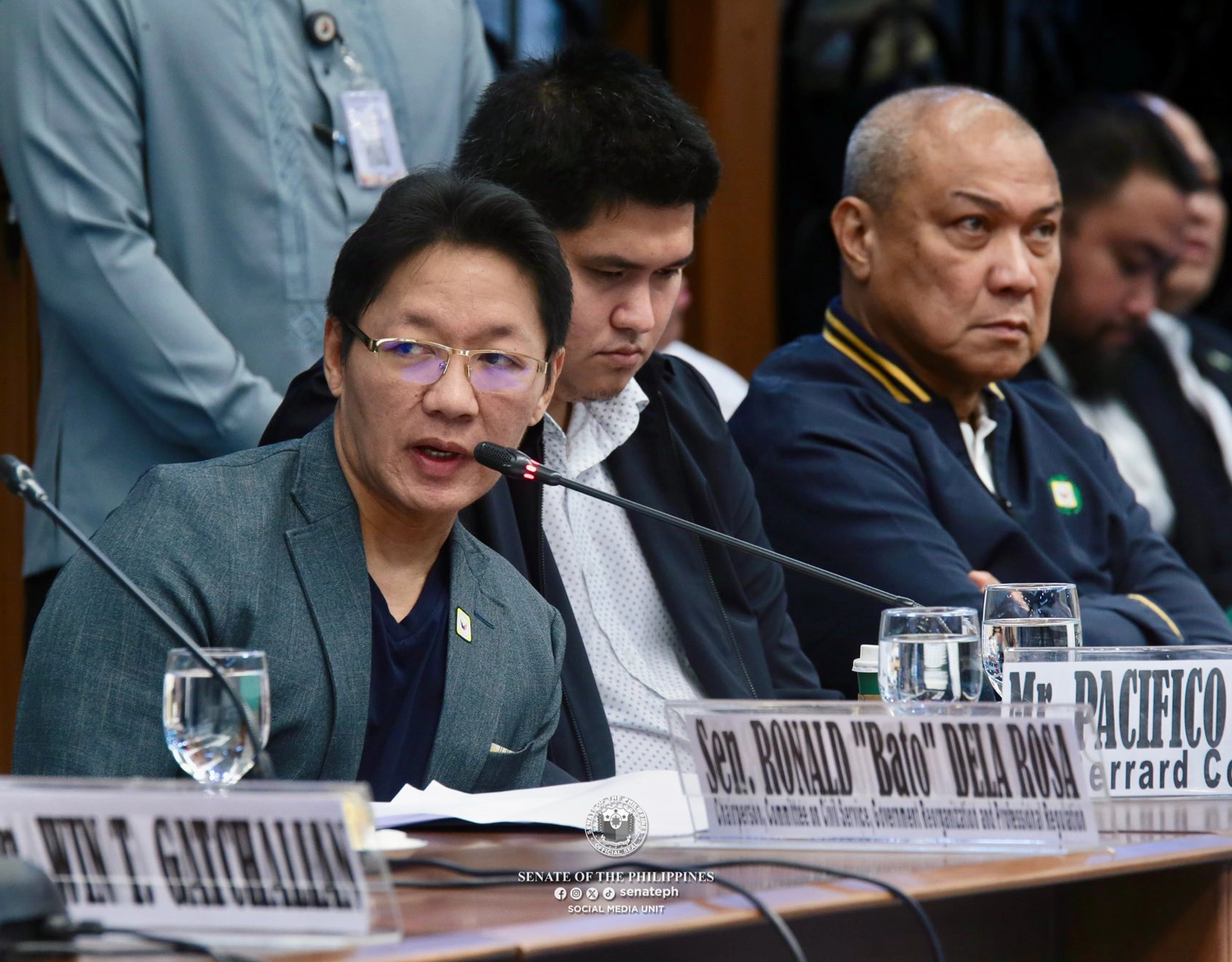
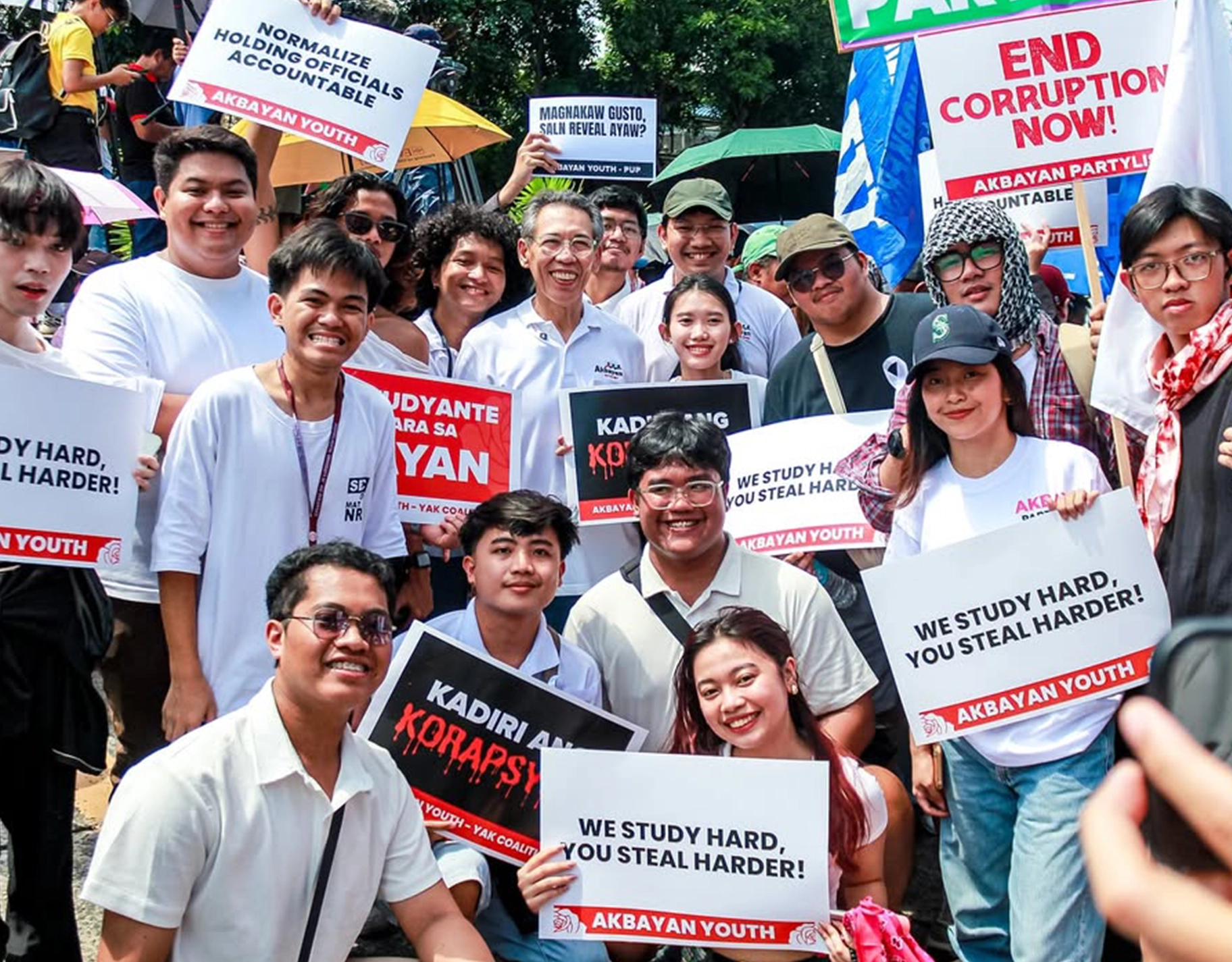
K: Whether it’s on the streets or by the keyboard, corruption has been a long topic of discussion among families. While many have accepted it, the younger generation fight. The time of lying on the ground like a doormat is over. For the younger generation and the many yet to come, the minor inconvenience of bringing up politics to the table, to the social media realm, and many others is all just a small step to changing the grand scheme of things.
A: Thousands—including celebrities—gathered in Luneta and along EDSA last September and November to protest failed flood-control projects that allegedly wasted millions in public funds. Anger spilled over into accusations against political families and contractors, reigniting debates on accountability, nepotism, and justice. While investigations and calls for resignations followed, many felt the response fell short.
Some parents even brought their children to the rallies—a powerful reminder of what they’re fighting for: a safer future for the next generation.
The 2025 Midterm Elections
A: Regardless of who you voted for, the 2025 midterm elections offered lessons for everyone. For some, it was validation after years of political attacks. For others, it raised questions about what went wrong. In any democracy, elections serve as a reminder that leaders shape policies affecting every Filipino family.
K: After the presidential election challenged families’ ability to navigate politics as a topic, the 2025 midterm election became the testing ground of how much they learned from the aftermath. Many have rediscovered their civil duties, via voting or just being of service to the people even without political power. Others soon began to see the “brokenness” of the system, pointing out how overwhelming it would be to either fix or to live with. But one thing is for certain: today’s families may find themselves fighting more next year—for a system that truly benefits their children and those yet to be born.
More stories to wrap up 2025
Meet Modern Parenting’s 100 List of 2025 Part 2
Meet Modern Parenting’s 100 List of 2025 Part 1
Mikael Daez & Megan Young: The Beautiful Becoming of a Family
Frequently Asked Questions
The Modern Parenting Yearender 2025 looks back at the major issues that shaped conversations in Filipino households over the past year—from technology and health to parenting styles, calamities, and politics.
These topics directly affected daily family life—how parents raise children, protect their health, navigate technology, and prepare for the future in an increasingly uncertain social and political climate.
AI became part of everyday life in 2025, influencing education, work, creativity, and even decision-making. For families, it raised concerns about ethics, children’s reliance on technology, and responsible use at home and in school.
Mental health remained a pressing concern following the pandemic. The yearender highlights how parents are being reminded to check in on their children and take mental well-being seriously amid constant digital connection.
Typhoons and earthquakes once again displaced families and exposed gaps in disaster preparedness and infrastructure, while also showing the strength of community support and collective action.
Public protests and investigations into failed flood-control projects made corruption a household conversation, with many parents using the moment to teach children about accountability and civic responsibility.