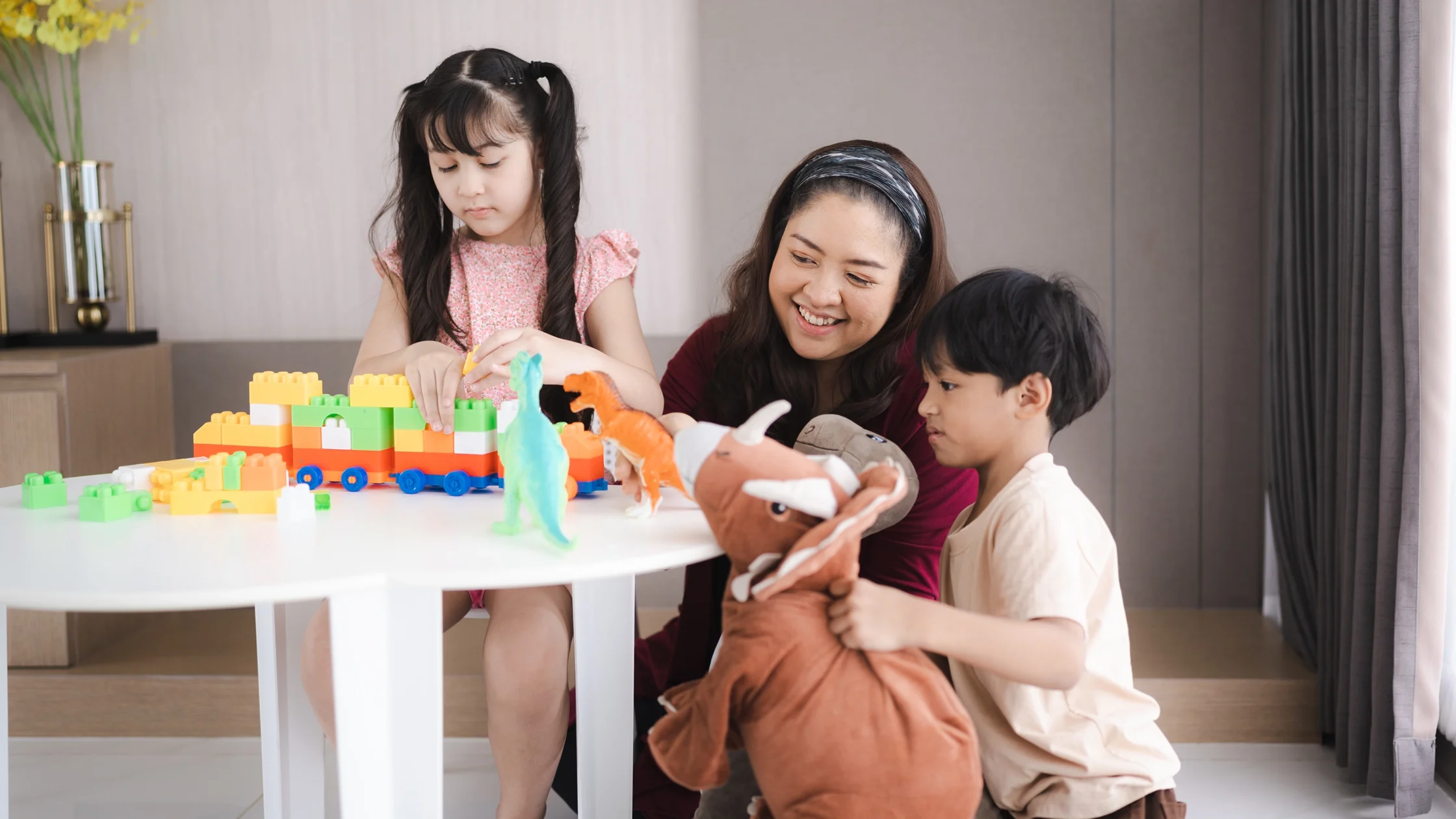
5 Brain Games for Kids That Help Quiet Their Busy Minds



Here are some brain games parents can do with their kids to help them get through the day.
Children today are growing up in a world that moves fast, talks loudly, and rarely pauses. Between school, gadgets, extracurriculars, and constant stimulation, many kids struggle to slow their thoughts down—even during rest. That’s why simple and analog brain games for kids are becoming increasingly valuable for parents. Not because they create “perfectly calm” children, but because they help train focus, emotional regulation, memory, and mental flexibility in short, low-pressure ways.
The best part is—these usually take only seven minutes a day.
Short bursts of intentional play can help children transition after school, regulate overstimulation, and reconnect with parents without needing expensive tools or elaborate setups. And unlike passive screen timeScreen TimeThe hours a child spends on phones, tablets, TV, and games. Pediatric groups advise little to no screen use for toddlers and limited, high-quality content for older kids, with family, these games gently activate the brain while still calming the nervous system.
Here are five easy brain games parents can start today.
1. Rhythm Hand-Clapping Games
Classic hand-clapping games like “Pat-a-Cake” or local Filipino playground chants help children regulate rhythm, timing, and attention.
How to play:
- Sit or stand facing your child.
- Start with a simple clap pattern:
- Clap your own hands
- Clap each other’s hands
- Repeat
- Add nursery rhymes, songs, or funny chants.
- Gradually increase the speed or complexity.
Why it works:
Rhythm activities help synchronize both sides of the brain while improving focus, coordination, and emotional regulation. Repetitive movement also has a calming effect on overstimulated minds.
2. The “Freeze and Breathe” Dance Game
This helps children regulate excitement and transition between high energy and calmness.
How to play:
- Play upbeat music and dance freely.
- Randomly pause the music.
- When the music stops, everyone freezes and takes three slow breaths before moving again.
Why it works:
Kids practice impulse control while connecting breathing to emotional regulation.
3. Story Building Chain
This game improves imagination, listening skills, and cognitive flexibility.
How to play:
- One person starts with a sentence.
- The next person adds another sentence.
- Continue building the story together for seven minutes.
Example:
“A dragon opened a sari-sari store.”
“But the dragon only accepted marshmallows as payment.”
Why it works:
The brain learns to adapt, listen, and creatively process information in real time.
4. Color Hunt Reset
This brain game works especially well for overstimulated or anxious children.
How to play:
- Pick one color.
- Set a timer for seven minutes.
- Ask your child to quietly find as many objects of that color around the room or house as possible.
Why it works:
Focused visual scanning helps ground children in the present moment instead of spiraling mentally.
5. The Quiet Copycat Challenge
This strengthens focus, emotional attunement, and body awareness.
How to play:
- One person silently performs slow movements.
- The other person mirrors them exactly.
- Switch roles after one minute.
Examples:
- Stretching arms slowly
- Pretending to swim underwater
- Moving like a robot in slow motion
Why it works:
Mirroring exercises activate concentration while calming the nervous system.

Happy Memories Are Better Than Coffee
Parents often think brain development requires expensive toys, enrichment centers, or complicated routines. But many children simply need moments of calm, connection, and playful focus.
Ironically, these games help adults regulate, too.
For seven minutes in the morning, parents stop doomscrolling. Kids stop overstimulating themselves. Everyone’s brain gets a small reset. And sometimes, laughter over a silly made-up story or a dramatic freeze-dance pose becomes a far better pick-me-up than caffeine ever could.
Because while coffee wakes the body up, happy memories wake the heart up too.
Frequently Asked Questions
Brain games are short activities designed to improve memory, focus, emotional regulation, creativity, and problem-solving skills in children.
Even 7 minutes a day can help children improve focus, calm overstimulation, and strengthen cognitive skills.
Yes. Simple calming games that involve breathing, focus, and sensory grounding can help children regulate emotions and reduce mental overload.
Interactive brain games encourage active thinking, emotional connection, and attention-building. Plus, it offers more opportunities for bonding.
Absolutely. Many calming brain games help parents decompress, reconnect emotionally with their children, and mentally reset after stressful days.
More games for kids
7 Educational Games for Preschool Kids
Real Life “Roblox” Games: Activities Kids Will Love
Top Video Games That Kids Are Playing in 2024