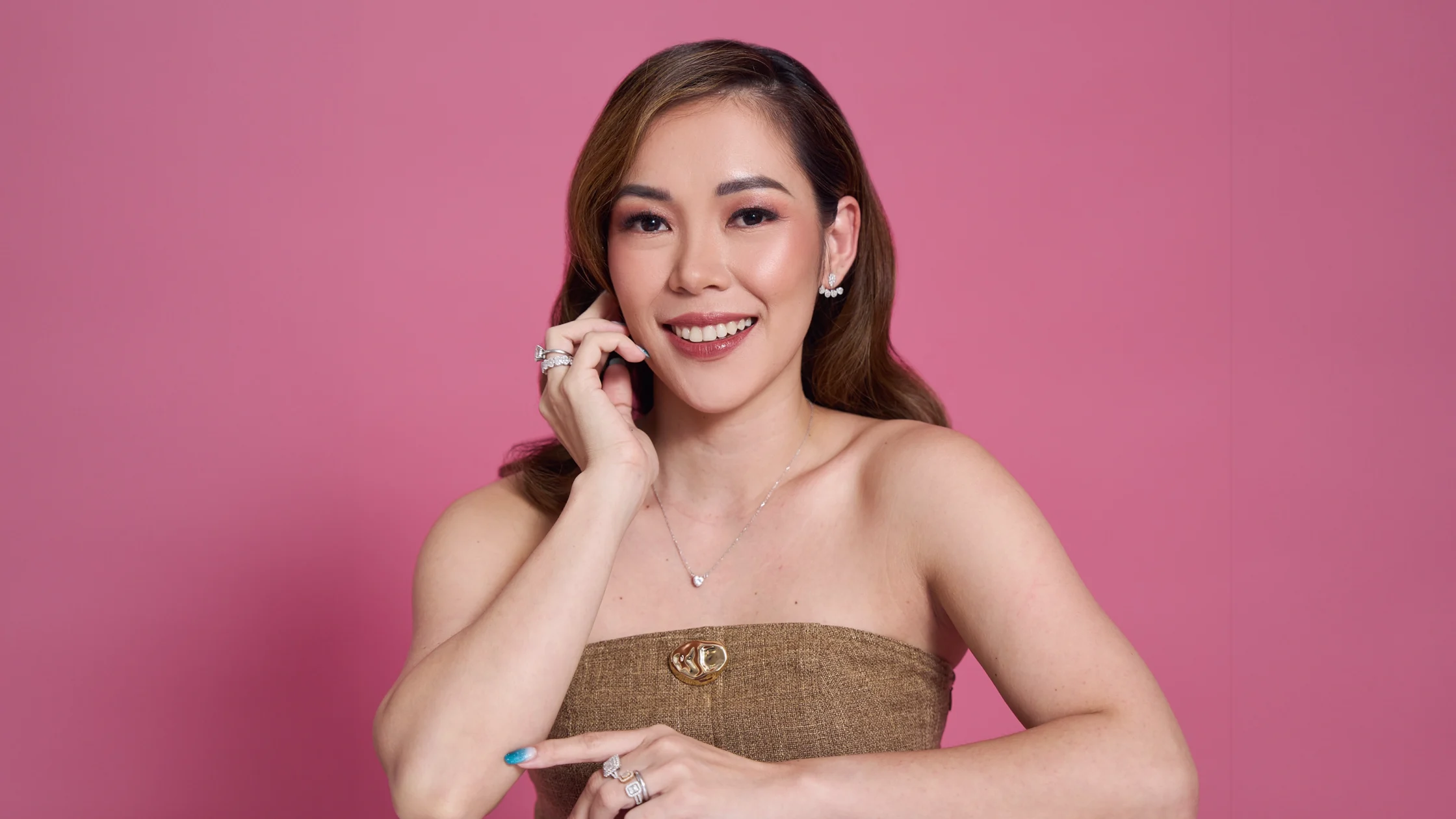
Grace Carillo Balaguer: From Fear to Flow



From her first hesitant steps to three empowering home births, Grace Carillo Balaguer discovers the power of choice
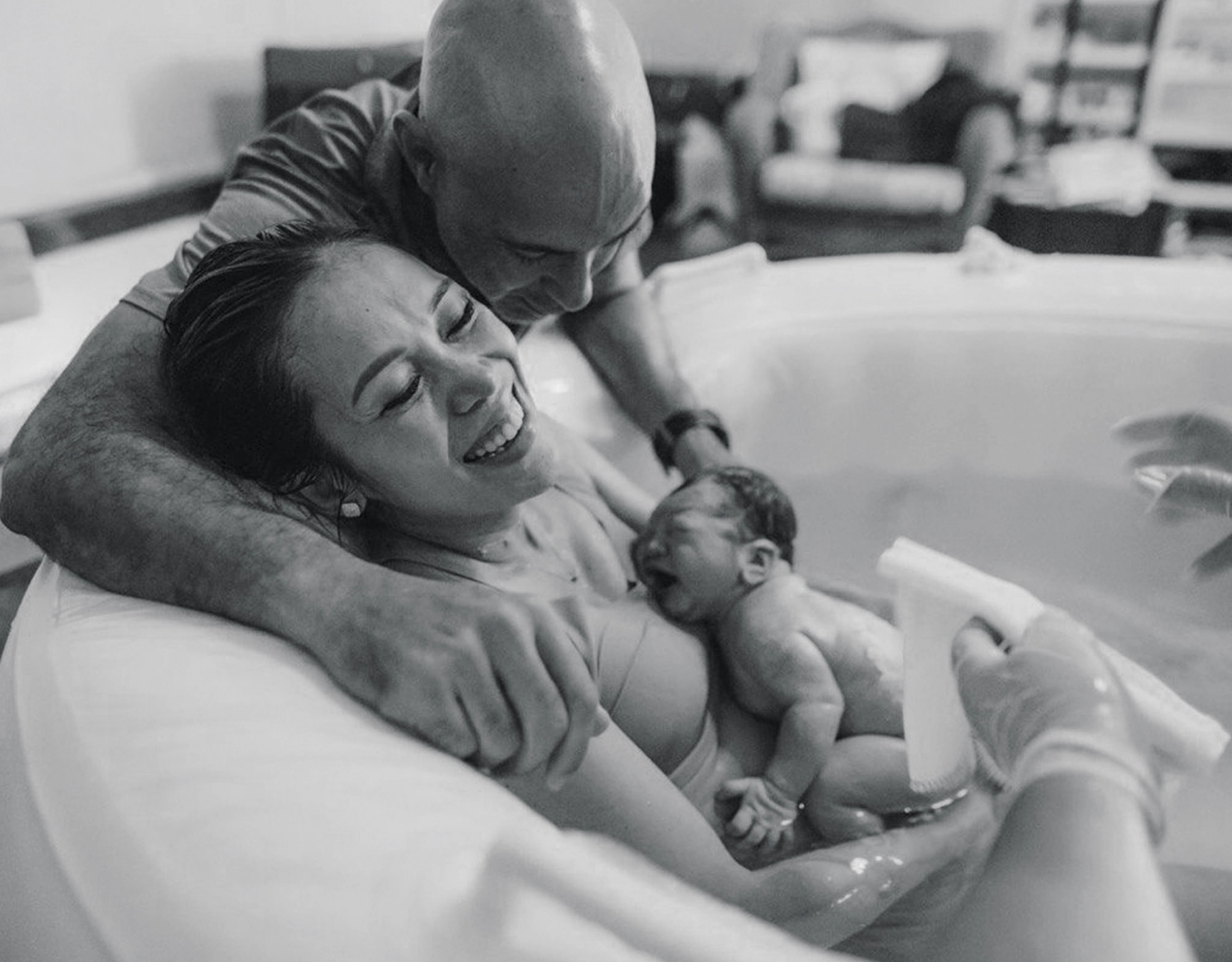
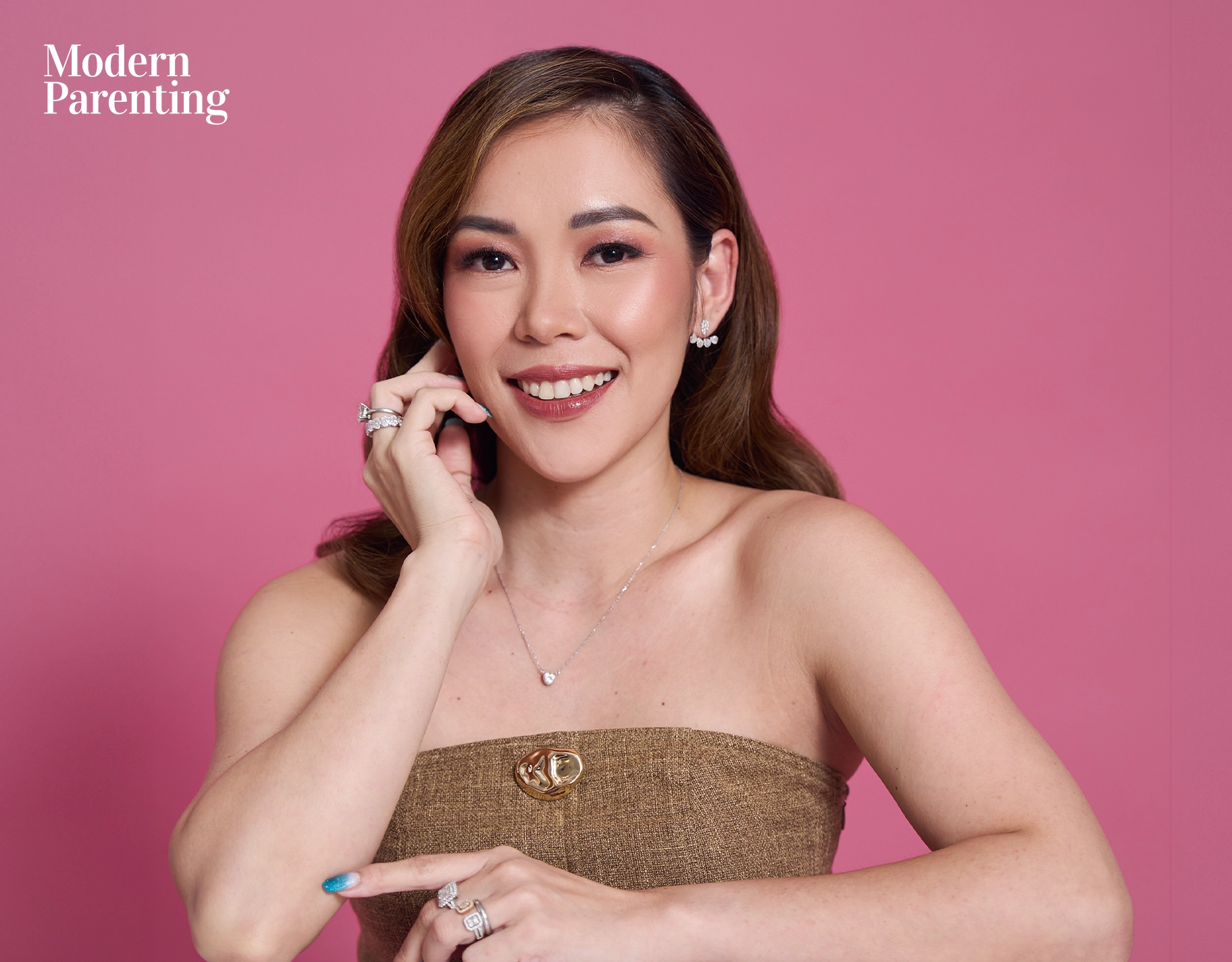
Grace Carillo Balaguer’s choice to try a home birth began during the pandemic, when hospital restrictions meant her husband would not be allowed in the delivery room. The thought of giving birth without him—and surrounded by strangers— didn’t feel right. She explored her options, connected with her doula, and slowly grew confident in the idea of giving birth at home, immersed in water.
Her OB was supportive as long as she understood the risks. While she would not assist at the home birth, she prepared Grace for any possibility—giving her an admission slip and advising her to pack hospital bags for herself, the baby, and her husband Ramon “just in case something unexpected or emergent happens.” Fortunately, that backup plan was never needed.
Doula Irina Otmakhova and midwife Aileen Gay Vinoya worked in harmony, guiding her from the quiet months of preparation to the tender days after each birth.
A Gentle Guide
Grace credits her team for guiding her through the entire process. When asked about her biggest fear, she says, “Safety.” She liked knowing there’s an option for an Obstetrician-Gynecologist to be on board.
Irina describes her role as a doula in three parts: before, during, and after birth. “At the start, we work with the mom’s preferences and fears, making sure knowledge is absorbed and processed, it’s the practical stuff,” she explains. She meets each mother where they are—some choosing hospitals, others considering unmedicated births.
For Grace, that support began well before labor. Months ahead of her due date, Irina sent her calming music and recordings of birth sounds. Grace listened with curiosity at first—“I tried to listen to it, see if it’s effective because I could still change my mind,” she recalls—but soon realized how deeply it worked. “The music put me to sleep,” she says, adding that she even shared it with pregnant friends, whether or not they planned a home birth. “Without Irina being physically present, she already knew how to make me feel calm.”
During labor, Irina is hands-on. “It’s a journey from the bed to the corner to the wall to the room to the toilet to the shower,” she says. “Some moms need a lot of physical support… massaging, changing positions.”
Others just need calm encouragement. “My role is to provide physical, psychological, and emotional support.”
While Irina notes the technique doesn’t work for everyone, one tool Grace swears by from her most recent birth is a wooden comb.
During contractions, she gripped it tightly, its teeth pressing into her palm. Irina explains: “It’s part of labor management—a way to squeeze and redirect sensation away from the stomach and lower abdomen, and into the hand.” By creating an alternate focal point for the brain, the mother perceives less intensity from the contraction. For Grace, it was a game-changer. “It was very effective for me,” she says.
Listening To Her Body
For Irina, the true goal isn’t about where the baby emerges—it’s about the mother owning her birth experience. “Water is not the goal,” she emphasizes. “It doesn’t really matter whether the baby is actually born in the water or not. The water is there to support the mother and help her relax.”
She adds that if she is happy in the water, that’s wonderful. But if she chooses to give birth on the toilet, on the floor, standing by her bed, or lying on her bed, “that’s equally amazing because she’s listening to her body.”
Irina wants mothers to make that choice themselves—without it being overridden by procedures, fears, restrictions or lack of support. Sometimes, a mother reaches her own limit and says, ‘This is as far as I can go, and that’s okay.’ In that case, a decision can be made together—to use medication if she feels that is the best course to take. Other times, it’s just exhaustion or distraction—too many people talking around her—so we encourage her, redirect her focus, and help her through it. Many times, she still ends up having a water birth or an unmedicated birth, fully on her own terms.
Postpartum Ceremonies
After the birth, Irina’s role extends into bondingBondingThe emotional connection that forms between parent and child through touch, eye contact, voice, and responsive care. Skin-to-skin time, feeding, and simply talking to a baby all strengthen it, and and recovery. “I usually stay for another couple of hours. Oftentimes, I help with latching.
One special offering is a postpartum ritual called “birth sealing and mother honoring.” As Irina describes it, “It’s a long ceremony dedicated to the mom after her rite of passage.”
This honors the new mother in a meaningful way, helping to “close” the physical, emotional, and spiritual openings created during pregnancy and childbirth. It supports holistic healing, marks the transition from maiden to mother, and can serve as birth reclaiming or trauma healing if the birth didn’t go as planned.
It may include a birth story tea ceremony, warming steam, hot stone abdominal press, herbal bath, Bengkung belly binding, herbal tummy firming paste, and a sacred ceremonial tuck-in. One highlight for Grace was being swaddled and wrapped like a baby, then left to sleep: “I could get deep, deep rest.”
Two Roles, One Shared Goal
While Irina focuses on emotional and physical support, Aileen Gay Vinoya, as a licensed midwife, oversees all medical aspects. “The doula is on the physical, emotional side,” Aileen explains, “while I am present for the medical side of the pregnancy and birth.”
The two roles complement each other, with constant communication. “I tell the doula the progress of the labor, what the actual position of the baby is. Together, we figure out how we can help the mom more.”
Aileen outlines the qualifications for a safe water birth: a healthy, non-complicated pregnancy, no bleeding disorders, no infections, and a baby in the normal delivery position. Her care begins with a one-hour consultation: “It’s a gradual process… we’re building friendships and relationships that last, even after postpartum.”
She offers a step-by-step process. “First, the mom comes and signs up for an appointment. Then we meet, and we talk in an environment that is non-threatening.”
Discussions cover contracts, consent forms, vaccine decisions for the newborn, and pain management options. A home visit follows. “We will do a survey of the vicinity—where is the best place to do the water birth.” She prioritizes safety, “The birth space should be near a water source. We also plan how we will transport mom in the event of an emergency.”
Once logistics are set, the next step is choosing the pool. “They can opt to rent. We have several of them,” Aileen says, noting that during the pandemic, many clients purchased their own. Options include birth in a box, oval oasis, round oasis, La Basinne, and the white birth pool—the latest type Grace used, sourced from Amazon.
Making Every Gentle Birth Possible
Not all candidates qualify for home water birth. “If the mom is physically healthy but not emotionally well, we may recommend hospital birth with pain relief or other support. There are a lot of factors to consider including where the birth will take place and who will be around,” Aileen notes.
But even in hospitals, gentle birth is possible. “Some hospitals allow midwives and doulas inside. I walk through with the patient inside the operating room and hold her hand. I let her smell aromatherapy oils.” Depending on needs, she uses lavender or peppermint for relaxation, frankincense for blessings and protection, and blended oils like dragon time for courage.
The Fear, The Challenge, The Breakthrough
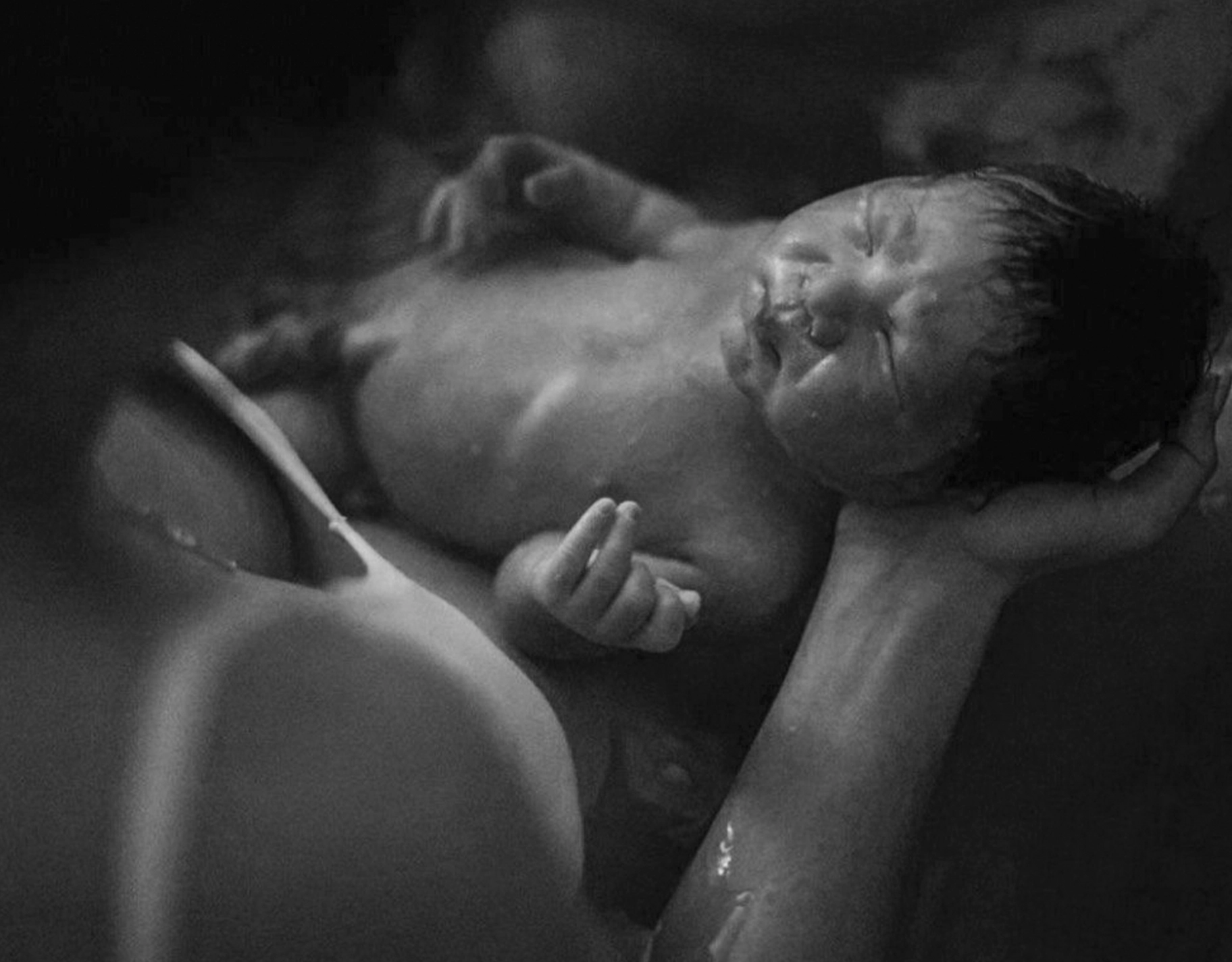
Each of Grace’s three home water births unfolded differently. “The first one was not so good,” she admits. “I was so scared, we tried different positions. I was super duper tired. I kept thinking ‘What if something happens?’”
The second brought its own challenge, “The baby was laying on his side. He was born a conehead. I tried so hard.”
But the third, she says, was her best. “I was calmer.” She credits Irina’s guidance and tools like the wooden comb. Irina agrees: “Out of all of Grace’s water births, the third was the most blissful and harmonious. She learned the skill of relaxation and letting go, so her body could do the work without force… a complete release and letting go through facilitated spontaneous ejection reflex, where the body births the baby using its own power.
From Protocols To Personal Choice
Grace recalls her hospital birth experience with her first two children, Zoe in 2009 and Andres in 2019. “They always told me to push, but you don’t have the urge to push,” she says, due to the epidural. “There was also a laceration because they said it was SOP.” Now she tells all her friends, “You have rights and you can say no.”
Irina elaborates: “Episiotomy is quite an outdated practice. In home births, never, ever. All babies are delivered just fine… seven out of ten would be with no lacerations at all.”
“After I gave birth, the OB checked, and said, ‘Oh, there’s no laceration at all.’ It’s amazing.” Irina credits the absence of forced intervention, the warmth of the water, and squatting positions, which give mothers more felxibility and control.
Hospital protocols required her to stay 24 hours. “Every now and then, someone will knock on your door, they will wake me up or the baby.” At home, she says, “I tell them, ‘You can go now. I need to sleep.’”
Grace’s three youngest—Ramon IV, Luis Mateo, and Rafael—were all born at home through water births in 2021, 2023, and March of 2025.
Looking back and knowing what she knows now, she continues to encourage expectant friends to consider water birth—but without pressure. “You know yourself, you know your body,” she says.
“If you are cleared by your physician… then you can continue having water births. And if you are afraid, then take things slow. Don’t push yourself. But if you’re going to ask me, I did it three times because I felt different…The feeling was super different from the traditional hospital births.”
For Grace, giving birth wasn’t just about bringing children into the world—it was an experience, it was about how she wanted to feel at that moment. Her path was shaped by instinct, knowledge, and a deep trust in what her body can do—and in the women by her side, Irina and Aileen. After her two hospital deliveries and three water births at home, she says with a smile about the latter, “I’m going to do it over and over again.”
To read the full article, grab a copy of Modern Parenting’s special Parents’ Choice Awards 2025 Print Edition—available on sarisari.shopping. Download the e-magazine from Readly or Press Reader for more exclusive features and stories.
More on Parents’ Choice 2025
Traveling with the Parenting Essentials: When Parents’ Choice Awards and Travelhood Come Together
Joanna Franken: Pump and Pour
Ria Atayde-Marudo: The Beautiful Mess of Motherhood