Is Your Family Ready For An Earthquake?



A nationwide earthquake drill hits the Philippines on Sept. 10 — here’s how to get your family ready even after
The ground gives no warning text. That truth drives the Nationwide Simultaneous Earthquake Drill on Thursday, Sept. 10, 2026 at 2 pm. The Office of Civil Defense conducts this test alongside PHIVOLCS, DepEd, and other agencies and LGUs.
The Philippines sits directly on the Pacific Ring of Fire. Seismic monitors log roughly 950 magnitude 4.0 or higher earthquakes within 300 kilometers of the country every year. Meanwhile, the 100-kilometer West Valley Fault runs under Metro Manila and surrounding provinces. Scientists confirm it is ripe for a magnitude-7-plus earthquake known as “The Big One.”
You cannot predict the exact moment a fault shifts. Household preparation matters far more than prediction.
Why Join the Sept. 10 Earthquake Drill
The national drill tests institutions: hospitals, schools, emergency operations centers, evacuation routes. But a school-wide drop-and-cover drill only protects your child for the hours they’re in a classroom. The rest of the time — at home, in the car, at the mall — safety depends on what your family has already practiced together.
Treat the Sept. 10 national exercise as a free home trial run. Use this date to test your household’s specific emergency response.
How To Prepare Before An Earthquake
Preparation starts at home, long before any siren sounds. Take these four key steps to secure your home:
- Identify your local hazards: Search PHIVOLCS hazard maps online. Check if your home, workplace, or school sits on an active fault line, liquefaction zone, or landslide slope.
- Secure heavy furniture: Bolt bookshelves, display cases, and high cabinets to wall studs. Anchor ceiling fans and mirrors securely.
- Remove overhead hazards: Move glass, chemical cleaners, and heavy objects off top shelves. Unsecured items quickly become flying projectiles during intense shaking.
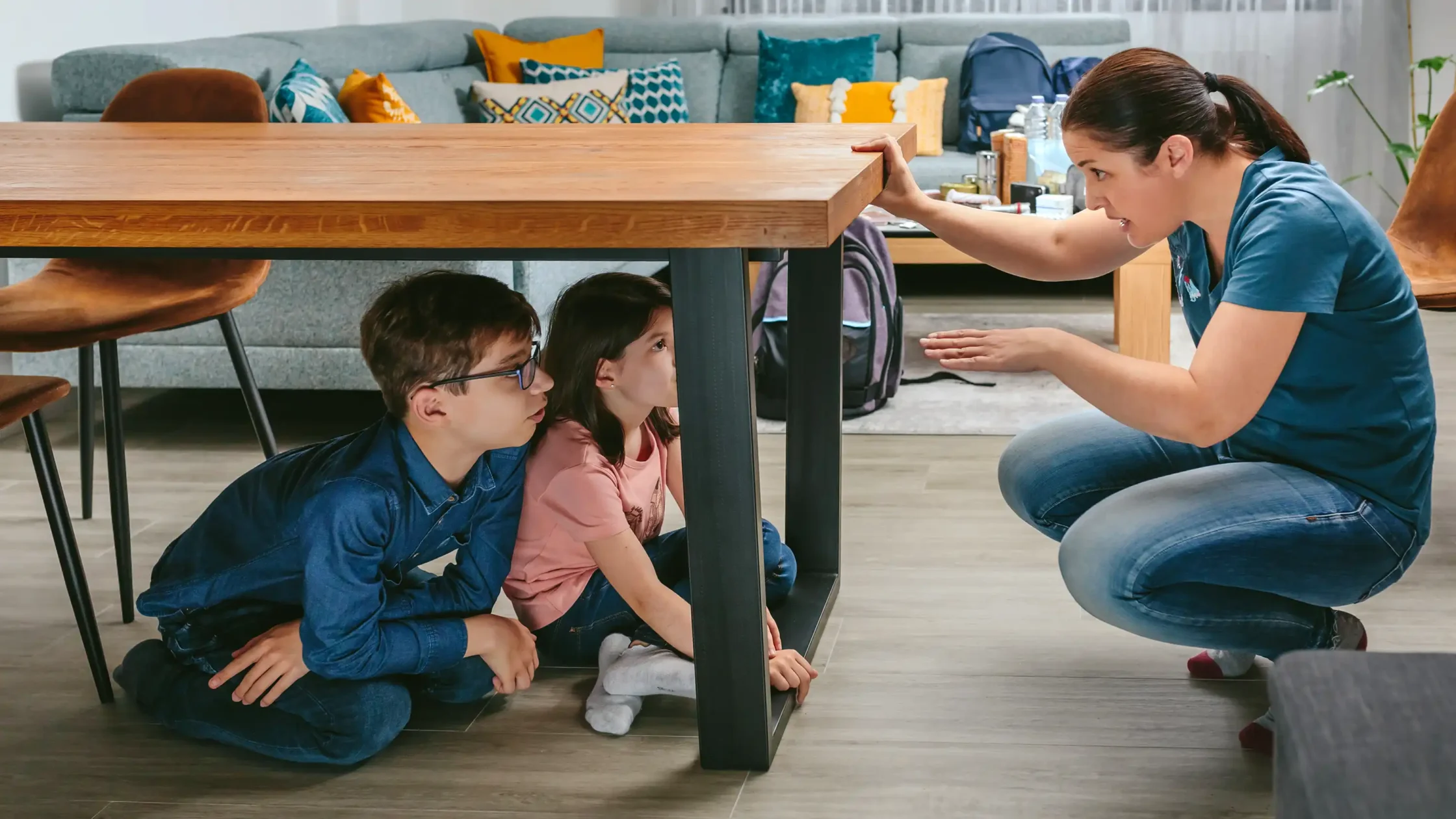
- Establish a family action plan: Pick a safe spot in every room, such as under a sturdy table or against an interior wall. Choose two meeting spots—one directly outside your house and one outside your immediate neighborhood. Assign an out-of-town contact person for emergency check-ins.
What Belongs in a Family Emergency Go-Bag?
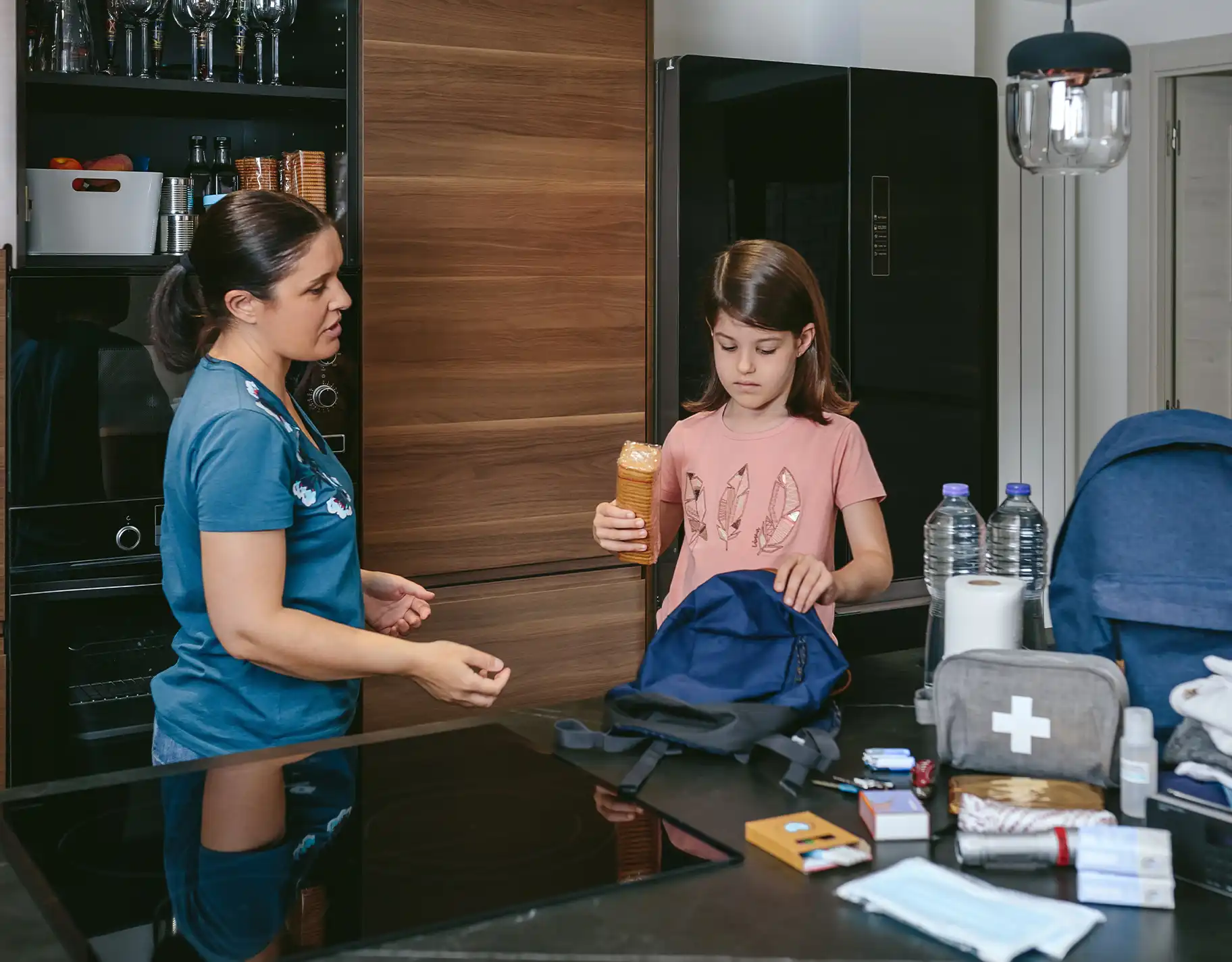
Pack one durable go-bag for every member of your household. Fill each bag with these essential emergency items:
- Water and non-perishable food for at least 72 hours
- A first-aid kit and any daily medications
- A flashlight, spare batteries and a power bank
- Copies of ID and important documents in a waterproof pouch
- Cash, a whistle, face masks and basic hygiene items
If you have pets, pack for them too!
What To Do When Shaking Starts
React immediately based on your exact location when shaking starts:
If You Are Indoors
Drop to your hands and knees. Cover your head and neck under a sturdy desk or table. Hold on to your shelter until all movement stops. Stay away from windows, glass, and tall cabinets.
If You Are Outdoors
Move quickly to an open area. Stay clear of buildings, streetlights, utility poles, and trees. Drop low to the ground and cover your head.
If You Are Near the Coast
Head for higher ground inland immediately if you feel strong or prolonged shaking. Do not wait for an official tsunami warning.
If You Are Driving
Pull over safely to the side of the road away from overpasses, bridges, power lines, and trees. Stop the vehicle, keep seatbelts fastened, and wait inside until shaking stops. If on a motorcycle, pull over safely, turn off the engine and get off. Keep your helmet on for protection while dropping low to the ground.

What Should You Do After an Earthquake?
The danger rarely ends when the initial shaking stops. Follow these safety protocols after the quake:
- Evacuate safely: Leave the building using stairs. Never use elevators during or after a quake.
- Check for injuries: Administer basic first aid before moving severely injured people, unless immediate danger threatens them.
- Inspect your surroundings: Check for gas leaks, cracked load-bearing walls, exposed wiring, or structural damage before entering.
- Monitor official channels: Avoid sharing unverified social media rumors. Get accurate updates directly from PHIVOLCS, OCD, and local disaster management offices.
How To Run a Home Earthquake Drill
Turn safety protocols into muscle memory by running a quick 10-minute family drill every few months:
- Schedule the drill: Select a date and inform every family member in advance.
- Trigger the alarm: Set a loud phone timer or shout “Earthquake!” to start the test.
- Practice response: Perform “Drop, Cover, and Hold” for 60 seconds in your current room.
- Evacuate the house: Walk your designated evacuation route to your safe assembly point outside.
- Review performance: Evaluate what worked. Identify loose items, test go-bag readiness, and fix flaws in your route.
The Sept. 10 exercise will end by mid-afternoon. What your family does with the lesson afterward is what actually counts.
Frequently Asked Questions
The 4th quarter Nationwide Simultaneous Earthquake Drill takes place on November 5, 2026 in connection with World Tsunami Awareness Day
It’s the recommended indoor response to shaking: drop to the ground, take cover under sturdy furniture, and hold on while protecting your head and neck until the shaking stops.
Pack water and non-perishable food for at least 72 hours, a first-aid kit, medications, a flashlight, spare batteries, copies of ID documents, cash, and a whistle for each family member. If you have pets, pack for them too.