
Why Being Tech-Savvy is an Essential Parenting Skill in the Philippines



Here’s why, what it means, and how Filipino parents can become tech-literate or tech-savvy.
What was once analog has now become digital. First, clocks then—kitchen appliances, office appliances, and phones followed soon after. Digitalization isn’t stopping anytime soon; it has quickened if the pandemic taught us anything. But what was just magic to us is normal for our kids. Humming WiFi routers instead of that shrieking dial-up tone that gets cut from a call. “Just Google it!” over “check the dictionary/encyclopedia!” Any generation born at least a millennial is tech-savvy or has become what we know as a “digital native.”
So, where does that leave the older generation of parents? Unfortunately, they’re left scrambling against a Darwinian rule: either live in the new world or die in the old one. And in the new world, to survive, being a parent means becoming tech-savvy. But how do we do that when our kids are learning faster than us?

Tech-Literate vs Tech-Savvy
Being tech-literate is a step below being tech-savvy. Someone “literate” with tech means they know the basic functions of digital objects or appliances. So, that would mean knowing how to change a battery in a device, understanding why electric voltages are important, being familiar with shape-sorting plugs, and the like. It may sound like a basic course in electronics, but that’s where all digital gadgets started.
Being tech-savvy, on the other hand, goes beyond. These people know how to use programs, websites, and other things to accomplish a variety of tasks. Another thing to include is that being tech-savvy means having the willingness to learn how to use tech to further optimize or streamline tasks and to navigate the digital space.
So, no, knowing how to surf social media is only the bare surface of being tech-savvy.
What Does It Mean To Be Tech-Savvy?
When tech started evolving in the 1990s to early 2000s, some have already predicted the need for digital literacy. Australian Education associate professor Catherine McLoughlin wrote in her report, citing Paul Glistner’s work in 1997, how computer literacy (often referred to as tech literacy) needs to go beyond keystrokes.
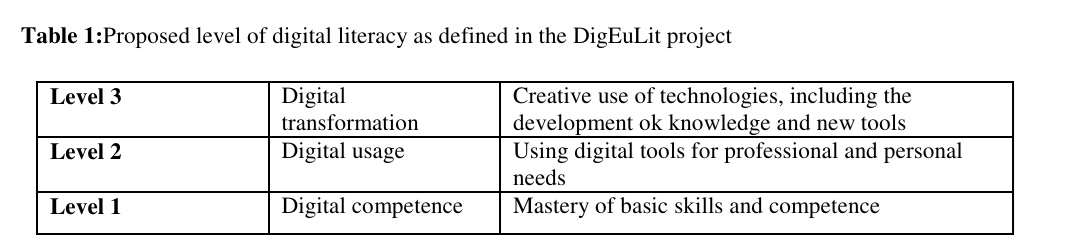
“Since it was first coined by Paul Glister (1997), use of the term digital literacy has implied a critical
approach to digital information and media: in his words, digital literacy is about mastering ideas, not
keystrokes,” she writes under her data in her report. “Literacy needs to be understood developmentally. It encompasses three developmental stages: competence, use, and transformation. Awareness, attitude, and ability are all developed in the individual initially through structured experiences which produce competence, but subsequently through practice in a variety of contexts, these skills lead to (self)-transformation.”
In other words, the way we should understand and use tech should be well-rounded. We use technology not just for its function, but also to understand even its limitations.
An Overview of Filipino Digital Native Culture
According to the DataReportal, over 90.8 million Filipinos use social media. Among the 90.8 million Filipinos, 89.6 million of them use smartphones. So, let’s be honest: the Philippines is quite digital in its landscape and operations.
Yet, only over 40% are actually digitally literate. In a study by the Philippine Institute of Developmental Studies (PIDS), most Filipinos only have “one out of the six critical skills for digital literacy.” While they have different names in studies, they’re normally labelled like this:
- Task definition
- Information seeking
- Accessing information
- Using information
- Synthesizing information
- Evaluating information
Chances are, most Filipinos succeed in number 1: task definition. We know what to do. But why do we fall short in numbers two to six?
Most Filipino families fall short in numbers two to six because of how deeply ingrained the social reward system is in the culture. When we look for information, we often zero in only on the ones that confirm our existing biases so we can remain in our group—or, what some may call a twisted or toxic version of pakikipagkapwa, or what some also call bayanihan. If ever we choose to step out of the metaphorical “echo chamber” or what Plato calls “the cave” in his Allegory of the Cave, it will take a lot of effort. After all, fear of rejection, judgment, and loneliness are quite valid. With social media, the effects are much more instantaneous.
So, we rarely encourage ourselves to go beyond the typical use of tech. Ever wonder why millennials and the succeeding generations got good at manipulating technology? Well, that’s because they’ve been playing and tinkering with it when we’re not hovering over them. They’ll definitely see disturbing things, but it’s there. Denying, rejecting, or reacting badly to them slams the door of opportunity to teach and learn about things outside.
What Parents Can Do To Become Tech-Literate or Tech-Savvy?
While there are a lot of courses out there to teach tech literacy and tech savviness, it can be overwhelming. Especially when we’re trying to keep up with our techie teens and their ever-growing Urban Dictionary, we’re left with the question: where do we start?
Here are some ways parents can start becoming more tech-literate or tech-savvy:
- Start with offline apps. Besides it being a private place to practice and learn, any mess-ups won’t be saved in the settings. The jargon there is used everywhere else: file, open, save, export, import, etc. Eventually, move onto “cloud-based” or online apps—since some of them are packed with more functions.
- Go beyond social media apps. Most people think being tech-savvy, or tech-literate, is knowing how to scroll through social media apps. Read up on other apps that may help make life easier. Period trackers, e-wallets, and all sorts of other apps always have a feature description.
- Refer to the Urban Dictionary. It’s not easy trying to communicate with our kids, especially with all the internet speak. To help with the translation, refer to the Urban Dictionary—home to all colloquial meanings that Gen Z and netizens use.
- Always remember: there’s an “undo” function. The fun part about tech is that everything has an “undo” function unless we click confirm. Most of the time, it’s CTRL + Z for Windows or Command + Z for Mac Users.

Being tech-savvy is now a parenting essential
Technology will never stop evolving. Somewhere, out there, someone is going to invent some wacky thing to make things faster because they don’t wish to be bothered about it. That’s really the purpose of most technology: they’re there to handle the things we find too troublesome.
Years ago, technology just bridged distances and organized files. Today, they’re used in entertainment to simulate certain situations, bridge distances with varying kinds of messages, and now—they’re advanced enough to accomplish executive tasks that normally would have been too troublesome to handle.
It may be our version of magic, but for the kids of today, it’s just a shrug and a “meh.” The future we’ve always been amazed by in sci-fi movies; this is it. It’s time to learn the “magic.”
Frequently Asked Question (FAQs)
Last year focused heavily on digital safety and AI awareness, as more families learned how to navigate online risks, misinformation, and new tech tools responsibly.
Because kids are digital natives, parents need tech skills to guide them, model healthy digital habits, and stay involved in their online world.
Tech-literate parents understand basic device functions. Tech-savvy parents go further—using apps, platforms, and tools confidently to solve problems and simplify tasks.
Start with offline apps, explore helpful non-social apps, learn digital vocabulary through Urban Dictionary, and remember the golden key: the “undo” button.
Practice regularly, stay curious, explore new tools together, and treat tech as a shared learning journey rather than a competition.
More about raising digital natives?
Maez De Guzman: Weaving Tech Into The Home
Christine Melody Taa: A Safe Online Playground for Every Kid
Joy and Edric Mendoza on Raising Different Kids in the Digital Age