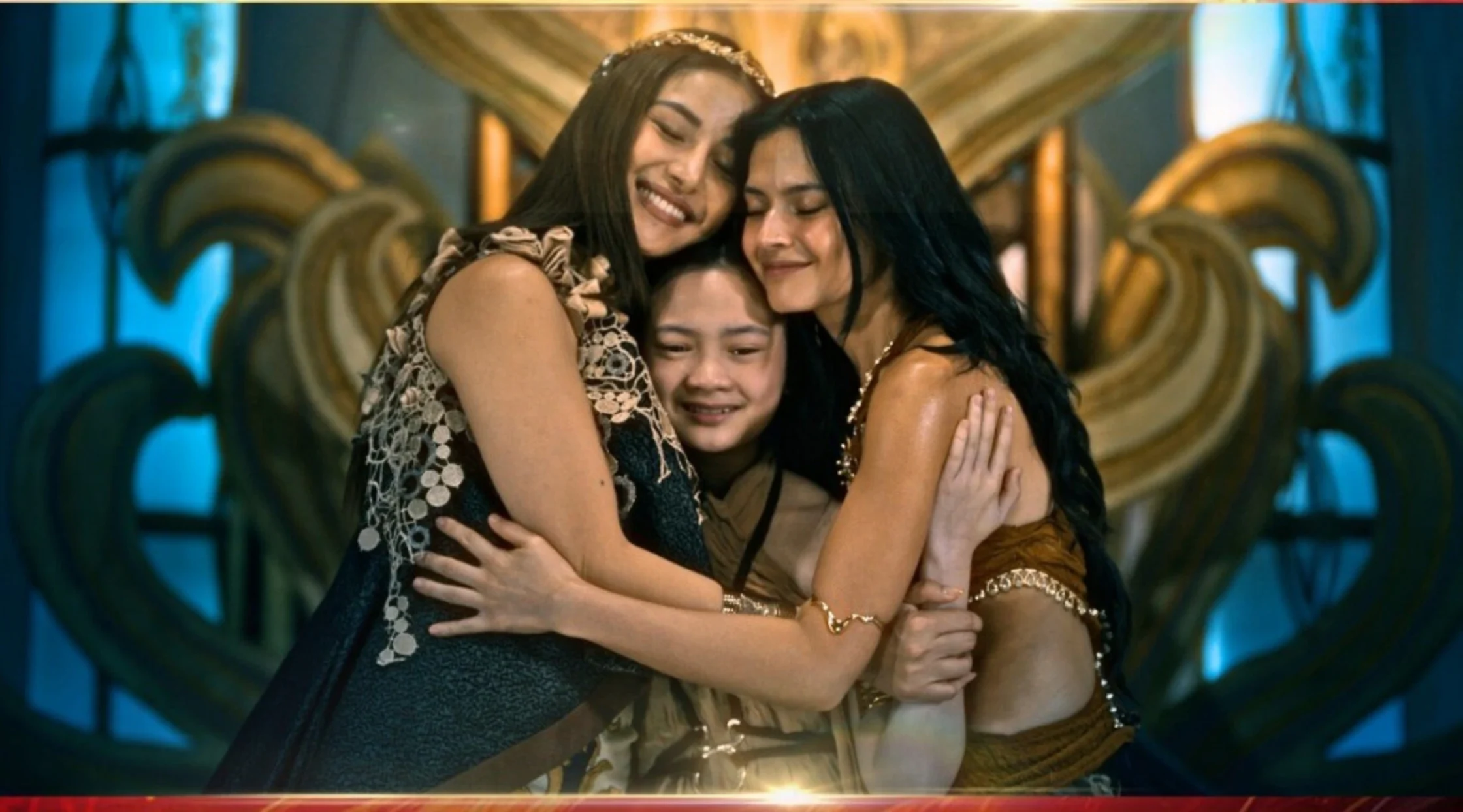
The Mother-Daughter Arcs of Encantadia Chronicles: Four Sang’gres, Four Stories Many Moms Will Feel



Through battles, prophecies, and elemental gems, Encantadia has always been about family
Since its 2005 debut on GMA Network, Encantadia has become part of Filipino pop culture. Beyond the diwatas, elemental gems, and epic wars, it gave us four sisters—Pirena, Amihan, Alena, and Danaya—whose stories of love and sacrifice now continue through their children.
And if you strip away the fantasy, what’s left are mother-daughter arcs many of us recognize: separation, guilt, pride, grief, and reunion.
Here’s how each sang’gre shows a different face of motherhood.
Pirena: The Flame That Refuses to Die
Pirena’s journey—from antagonist to defender of Encantadia—is also the story of a mother learning from her mistakes.
As queen of Hathoria, she trained Flamarra to be battle-ready, raising her not just as a diwani (princess) but as a warrior. But her relationship with Mira was more complicated. She once used Mira in her rivalry against Amihan, a decision that cost her dearly.
Pirena lost Mira in Sapiro during a battle when a Mine-a-ve soldier killed her. She was separated from Azulan, who was killed in battle. She spent 18 years apart from Flamarra. Time and again, she endured distance and grief.
And yet, she kept choosing to fight her way back—to her daughters, to her redemption.
Her arc mirrors two realities many moms face:
- The guilt of past mistakes.
- The determination to do better for the children still in front of them.
Pirena’s love isn’t soft or quiet. It burns. It protects. And when reunited with Flamarra, she becomes not only a mother again, but also a mentor to the next generation—Terra, Adamus, and Deia.
Because sometimes, motherhood is about second chances.
Amihan: The Mother Who Loves Without Conditions
If Pirena is fire, Amihan is steady air.
As queen of Lireo, she raised Lira with gentleness and strength. What she didn’t know was that the child she nurtured for years was Mira in disguise—while her real daughter grew up elsewhere in the mortal world.
When the truth unraveled, Amihan didn’t crumble. She fought to reunite with Lira. Their reunion was brief, interrupted by curses and war, but their bond remained unshaken.
What makes Amihan’s arc powerful is this: she never stopped loving Mira either.
Even after betrayal, even after loss, Amihan treated the child she raised with the same compassion. It’s a reminder that motherhood isn’t just biology—it’s the everyday choosing to love, guide, and forgive.
Her story echoes what many parents have practiced: loving children through confusion, mistakes, and hard truths.
Alena: The Mother Learning to Let Go
Alena’s story has always been shaped by love—romantic love, painful love, complicated love.
She lost Khalil. She stepped away from her sisters in grief. She bore Adamus under a promise. Later, she gave birth to Armea, who would grow up carrying the weight of a kingdom.
Alena’s most relatable arc may be with Armea.
Armea struggles between duty and freedom—a tension many daughters feel. As queen, Alena cannot always shield her child from political pressure. What she can do is reassure her: I am proud of you.
Their relationship reflects a familiar dynamic—misunderstandings, disagreements, but deep loyalty underneath. Alena learns what many mothers eventually do: you can guide your child, but you cannot live their life for them.
And sometimes, loving means stepping back to spread their wings.
Danaya: A Mother’s Grief, Raw and Unfiltered
If there is one arc that captures the depth of maternal pain, it’s Danaya’s.
She lost Aquil. She lost Gaiea. She was separated from Terra. Time and again, prophecy demanded sacrifice from her.
When Terra was threatened by Gargan as seen by Mitena, Danaya made it clear: if her daughter falls, the bathalas of Encantadia will feel a mother’s wrath.
It’s intense. It’s messy. It’s impulsive.
But it’s real.
Danaya embodies the truth that a mother’s grief can turn into fury—not because she seeks chaos, but because her love runs that deep. Like a lion protecting her cubs, she moves from heartbreak to action without hesitation.
Four Faces of Motherhood, One Universal Thread
Encantadia may be set in kingdoms and battlefields, but its emotional core is surprisingly grounded.
Pirena shows us redemption.
Amihan teaches unconditional love.
Alena models release and trust.
Danaya embodies fierce protection.
Together, they reflect what many modern mothers navigate every day—raising strong daughters in a world that will test them.
The sang’gres are no longer just sisters safeguarding gems. They are mothers watching their children step into destiny.
And perhaps that’s why families continue to watch: beneath the magic and mythology, the heart of the story feels familiar.
Whether in Lireo or in our own homes, motherhood is still the greatest epic of all.
Frequently Asked Questions
Although it’s a fantaserye, Encantadia centers on universal family themes—separation, forgiveness, sacrifice, and raising children through uncertainty—making it resonate with today’s moms.
Pirena’s journey shows that mothers can make mistakes but still fight for redemption. Her growth highlights the power of second chances in parenting.
Danaya portrays raw maternal grief and fierce protection. Her reactions reflect how deeply a mother’s love is tied to her child’s safety.
More on Encantadia
Encantadia Chronicles: Sang’gre Returns to Set for New Episodes
5 Times Pirena and Flamarra Reminded Us of Real Motherhood
Behind the Magic: How Encantadia’s Sang’gres Reflect Real Parent-Child Struggles