
Budget Limits Slots for DOST Scholars to 8,500



Here’s what the limitation of slots for DOST scholars means for families
For thousands of Filipino parents, the dream is simple but heavy with hope: makapagtapos ang anak—and land a career that breaks the family’s cycle of financial struggle. And by applying to the Department of Science and Technology Science Education Institute (DOST-SEI), becoming a DOST scholar becomes the bridge between that dream and reality.
As tuition fees rise, allowances stretch thin, and opportunities remain uneven, DOST scholarships have become one of the most relied-on government programs by families who want their children to stay in school—and stay competitive in science, technology, engineering, and mathematics (STEM) fields.
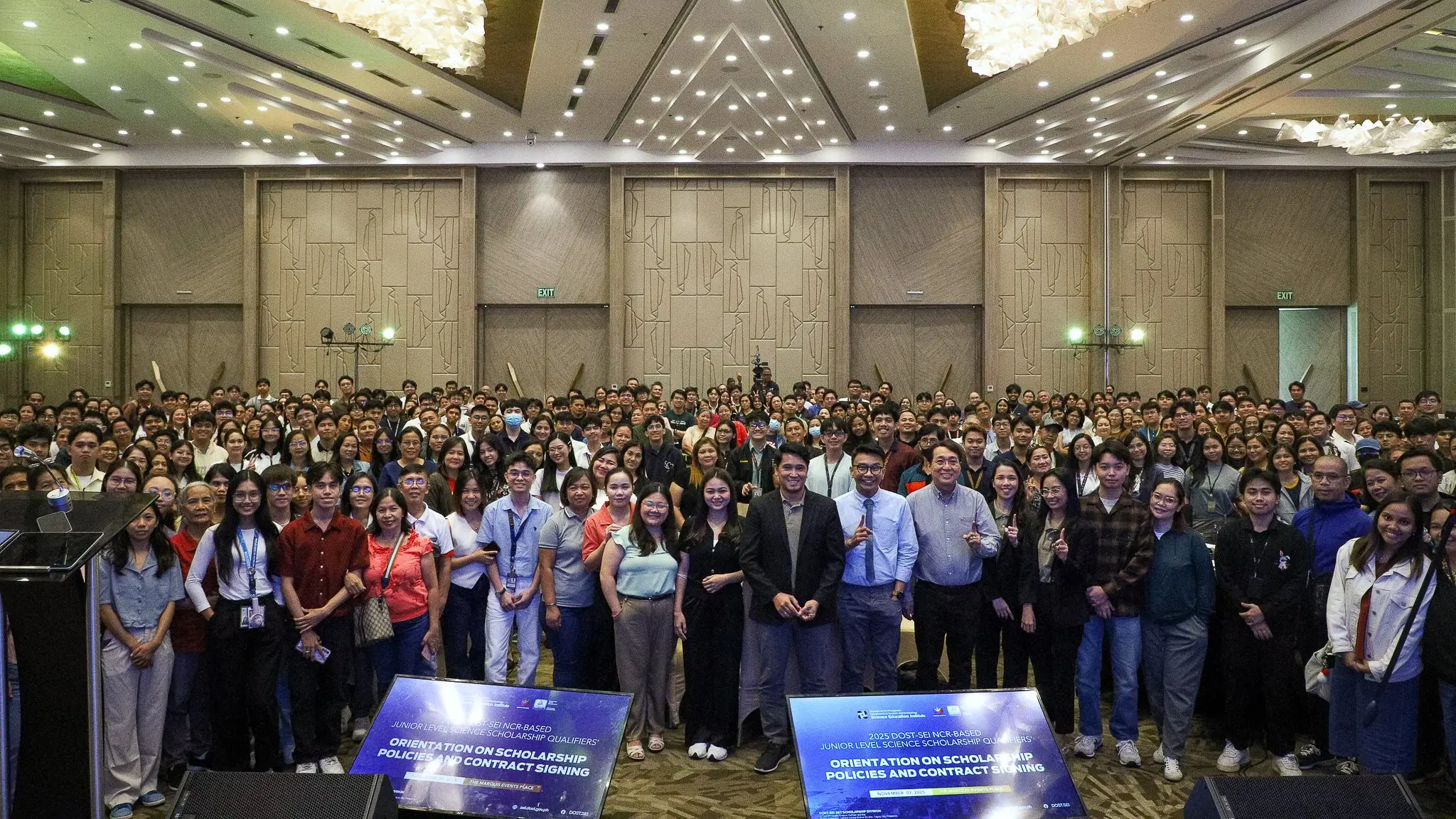
Why DOST scholarships matter to families
Unlike private grants, DOST scholarships are designed to reach students with academic potential who may not otherwise afford higher education—especially in science and technology courses that demand both time and resources.
For parents, this scholarship often means:
- Tuition assistance
- Monthly allowances
- Easily accessible books and tools
- A better standard of living after they graduate
While many see it as a financial relief, it’s often a beacon of hope. Many of those who wish to raise the standard of living know that they need to study. They often don’t, however, because they’re thinking about what they’ll feed their families the next day.
So when the news of the limited slots came out, it’s no surprise that the competition is going to be thicker and harder. According to a report by GMA News, budget constraints have capped the number of DOST scholars to around 8,500, raising concerns among families who rely on the program as their primary means to send children to college.
For households where every peso is accounted for, a scholarship slot can mean the difference between enrolling—or stopping altogether.
A Scholar’s Burden: Being The Family’s Hope
The DOST scholarship may look like a finishing line. But it’s not. In fact, for many, it’s often the starting line.
While being a scholar sounds cool, it actually hides a lot of stress and struggle that feels far worse than that of a regular student. Their lives are heavily centered on their academic requirements—one failing grade can cost them. So, they’re often doing the following:
- Maintain strict grade requirements
- Manage allowances responsibly—often supporting daily school needs
- Keep up with demanding coursework
- Meet deadlines for reports, grades, and clearances
- Balance academic life with family expectations
There’s little room for failure or mistakes. Failing subjects or missing requirements can mean losing the scholarship—and the safety net it provides. Many scholars describe living with constant awareness that one misstep could undo everything their parents worked for.

Allowance management: learning adulthood early
One of the least visible challenges of being a DOST scholar is financial discipline.
Allowances are meant to cover months of expenses. For students from low-income households, this often means budgeting not just for themselves, but sometimes helping at home in small ways.
Parents trust their children with money earlier than expected. Students learn, sometimes the hard way, how to stretch resources, prioritize needs, and say no to wants.
It’s financial literacy born out of necessity.
Scholarships Only Open Doors
DOST scholarships are powerful—but they are not guarantees.
Students still need to work hard. The academic stress is still there, and so are every financial or emotional issue the family faces. What they do, however, is open a door. When kids have dreams and education is the only way they can get it, the scholarship gives them that one shot.
But what happens after depends on how far they’re willing to go for it. That, along with the family’s continued support, patience, and belief.
For many parents, this scholarship is the only tangible key they can offer. A way of saying, “Ito ang kaya namin. Sana, sapat na.”
A Shot Is All They Need
Dreams cannot be realized unless one or two people believe in them. The same case applies to these scholars—their dreams don’t take off the ground unless someone sees they have potential. That’s their “shot.”
We’re no strangers to the romantic stories of resilience from valedictorians and the like. Their speeches may be filled with gratitude, but they only cover the surface of the stress they went through to stand at the top. They’ll have pride and regret. Not all of their academic choices were probably the right ones. Most of the time, they’re just the good ones to maintain their grades.
So, for the kids who have friends who grew up as DOST scholars, don’t ever tell them to slow down. All their life, they have known that doing so will cost them. Instead, tell them: “You’re making it. We’re here. Where to next?”
Because nothing says love and support more than trying to see the dream they have too.
Frequently Asked Questions
A DOST scholar is a student funded by the Philippines’ Department of Science and Technology (DOST). Coursework is usually all paid for, but with several exchanges depending on the agreement. Some need to complete the work in a certain amount of years. Others need to do stick to a certain track only.
According to the DOST, it’s the budget that limits the number of applicants. Not the stricter standards.
Currently, according to the DOST, there are 8,500 slots.
You can check the website at: https://science-scholarships.ph/.
Yes, they do have scholarships for post-graduate studies. But the schedules vary for the universities involved.
More about scholars and studying?
By Women, For Women: The Gallery of Giving Gives Opportunities Through Scholarships
How Emilio Baja Gives Chances For OFW Families To Have A Happier Narrative
The Child Who Refused to Disappear: A Graduation Story That Gives Us Hope