What Parents Need To Know About Singapore Math



Here’s what parents need to know and understand about Singapore Math
While Singapore Math has been around for some time, the constant curriculum changes to accommodate it have not been easy. As our kids start school with their new textbooks and run to us for help, we’re probably struggling with how to explain things to them. The new approach looks and sounds nothing like how we used to learn math back in the day! But here are some things parents need to know about Singapore Math:
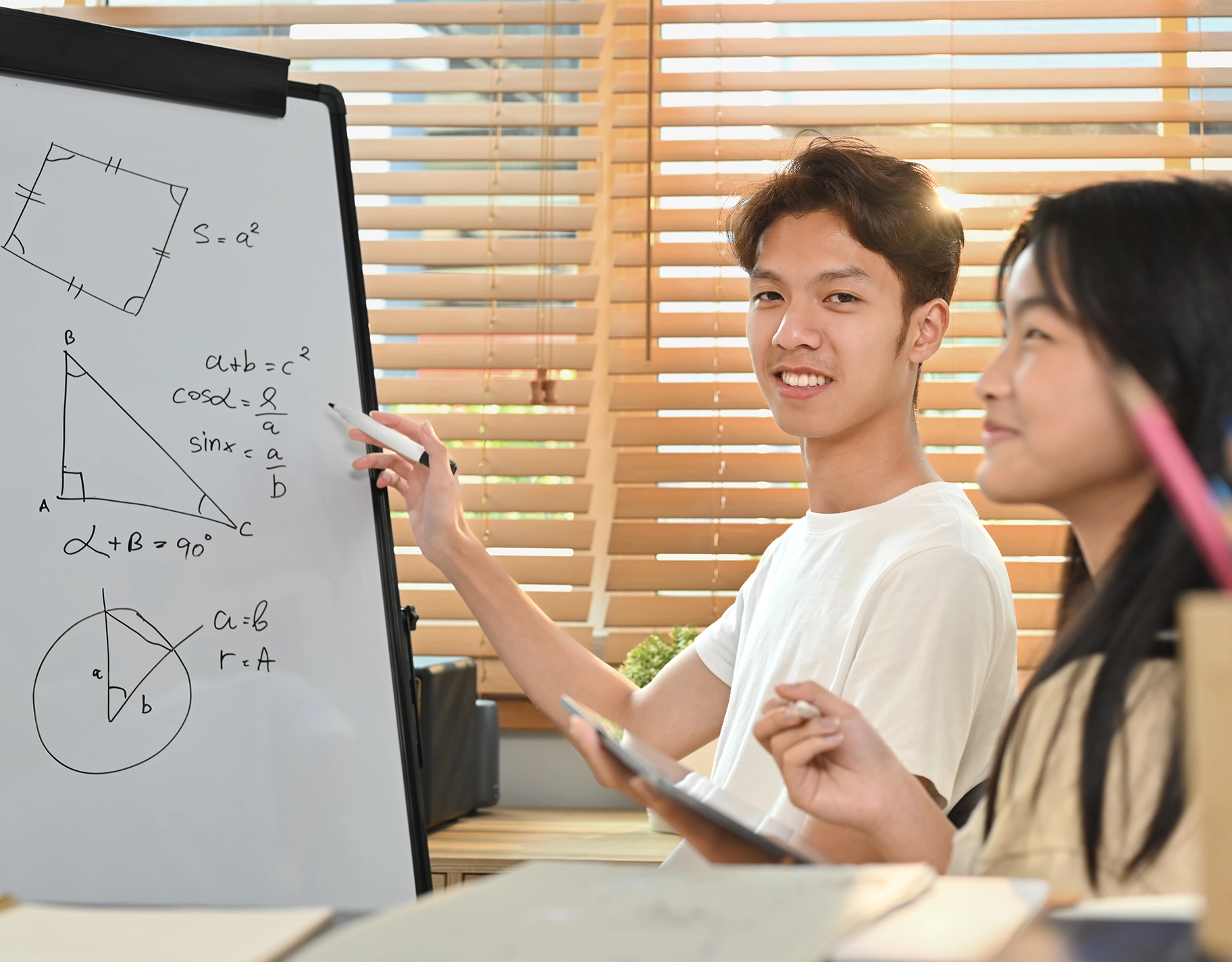
Singapore Math heavily focuses on comprehension
Growing up, a lot of us learned math through symbols and operations. We didn’t have many word problems to figure out until we were much older. However, Singapore Math brings that in as early as Grade 1 in some schools. Sentences like “___________ is 1 more than 9” or “________________ is 2 less than 7” is their way of building the kids’ foundations to solve word problems in the future easily.
Math terms are rarely used
Remember all those properties in math equations and what to call the numbers? It’s not a big focus in the book. Addends, minuends, subtrahends, and all those terms we grew up with don’t play too big a role in Singapore Math. In fact, the approach to Singapore Math lessons is more visual—they use bar graphs and an approach known as the Concrete-Pictorial-Abstract approach to build our kids’ perception of numbers. However, they still use words like “postulate” and “theorem” when teaching higher-level Geometry and others.
Singapore Math focuses on the why more than the “how”
Perhaps, as parents, that’s where most of our frustration in teaching our kids today’s math lies. We spent most of our years learning math as a “how” subject. Then, come Singapore Math, it emphasizes more on the “why”; we’re probably confused and scratching our heads on how to explain the process. In a way, Singapore Math goes against much of how the Philippines originally taught math, which is why both kids and parents are struggling.
Problem variation comes at an early stage
Some of us are probably bewildered by the kind of questions that pop up in our kids’ books because they look too advanced for their age! And when we listen to our kids comprehend the problem, we’re also overwhelmed by our knowledge of math. For example, a question like “5 less than 3 is__________” can easily turn into “5-3,” but it’s the reverse that becomes problematic for some kids.
When the question gets reversed to “___________ is 3 less than 5,” some kids interpret that as “3-5,” which is -2. And while we know that’s wrong in the context of the book, that’s not entirely wrong in math because negative and positive numbers exist across the range of numbers
What some tutors do is they drop hints that negative and positive numbers exist, but remind their kids that the question is just looking for positive numbers for now. While yes, the concept of “absolute values” exists, our kids don’t need those symbols yet!

Each lesson is a building block for another
Math in the Philippines has so many topics that Singapore Math, because of its fewer topics, may look shorter. But fewer doesn’t mean easier or lacking in this case; Singapore Math insists on mastery and will repeat a few lessons, as these serve as a building block for the next lesson. It’s probably why it can feel repetitive at first, but it’s as they say: practice makes perfect.
Singapore Math can feel too challenging for some
For many parents, Singapore Math can feel incredibly challenging simply because we’re not sure how to describe it. Back in the day, what mattered most was that we knew how to do it. Rote memorization and instinctive skills got us through most of our math-related classes. And if there were tests, it was more of test-taking skills and a lot of good “educated” guesses. Or, what some of us like to call the “Hail Marys.” But don’t worry; not understanding Singapore Math right away doesn’t mean we don’t know. We’re just seeing math presented differently.
And if we can’t teach the kids ourselves, then that’s okay! There are a lot of tutor houses and freelance tutors around on Facebook groups and some schools’ parent groups.
More school-related issues?
School Hacks: Back-to-School Budgeting For The SY 2025-2026
4 Tips to Encourage Kids Read Books
Revisiting the Classics: Why Nostalgic Stories Still Resonate