Why Teaching the Love for Learning Isn’t Easy for Filipino Parents Right Now



Love for learning dies in a broken system
Every Filipino parent prays for that same miracle: a child who’s curious, engaged, and eager to learn. Someone who asks questions not because they have to, but because they want to know more. Yet for many families today, nurturing that love for learning feels harder than it should—like swimming upstream while carrying a schoolbag full of expectations.
The thing is, we’re all trying to inspire that in today’s kids. But with an overloaded educational system and struggle against technological literacy, it’s no surprise that it doesn’t happen that way.

Learning Has Become About Survival, Not Curiosity
But how can parents teach their kids to learn? There’s no book about how to do it. No two methods are the same. And for many, the way some learned sounds more like a life-threatening risk by today’s standards.
With everything on the internet, “i-Google mo” has become the favorite expression of every exhausted Filipino parent who just doesn’t have the mental bandwidth to handle their kids’ barrage of questions. Although it’s good to encourage kids to find their own answers, there’s a bit of a problem there: 1) articles are written by adults for adults, and 2) kids won’t know what to search because they don’t have the word for it.
Let’s not forget also that because everyone’s on the internet, some treat people with the assumption that they should know what they know. The concept of what “common sense” is blurs. “Love for learning” no longer becomes a passion, but a life-skill—one that unfortunately doesn’t have a clear-cut way of mastering.
Grades are clearer than comprehension—and that’s a problem
For many years, grades were the metric for one’s learning.
Then, the pandemic changed all that. Teachers and parents, with empathy and patience stretched thin, helped in whatever way they could. “It’s the pandemic” became the rationale as to why kids couldn’t submit things on time or do things properly. Everything submitted at that time had been graded with that consideration.
Unfortunately, that’s where the problem began. Parents, knowing how stressful the pandemic is, sought to reduce as much stress as they could. To the point, kids would make other people do the work for them. All it took was a pair of teary puppy dog eyes, and someone was bound to cave. And if the person they needed to cave didn’t, escalate to mom or dad.
It also became difficult for teachers, who are overloaded with so many things to do, to truly verify if the kids did the work or not. Systems transitioned digitally. Many public schools closed down because they didn’t have the funding.
The slow erosion of reading and understanding
We can blame the pandemic all day, every day, for the loss of love for learning, but the truth still remains: until we break what we normalized in the pandemic, things will forever stay as they are.
While we’ll still keep the handwashing, facemasks, and alcohol, it’s the education that we need to realize has become obsolete. Not just in terms of content, but also in terms of the standards and criteria. Being able to read the words aloud is no sign of comprehension. What kids often do is memorize the sounds. The only way to truly check if they actually understand is when they come across a variant of the word with the same blended letters, but read it wrong.
What looks like laziness is actually them genuinely not knowing. Some more mild-mannered kids will just shut down and not try. Strong-willed kids will bite and fight out of frustration. And so, just to end our misery, we just do it for them. A part of us begs us to “get things done and over with” because the mental load is getting heavier every second the kids throw tantrumsTantrumsSudden outbursts of crying, screaming, or flailing, common in toddlers who cannot yet express big feelings. Staying calm, keeping the child safe, and talking afterward help, and clear routines and that make the possessed Emily Rose from The Exorcist look angelic.
Why Everyone’s Expected To Fill The Gaps
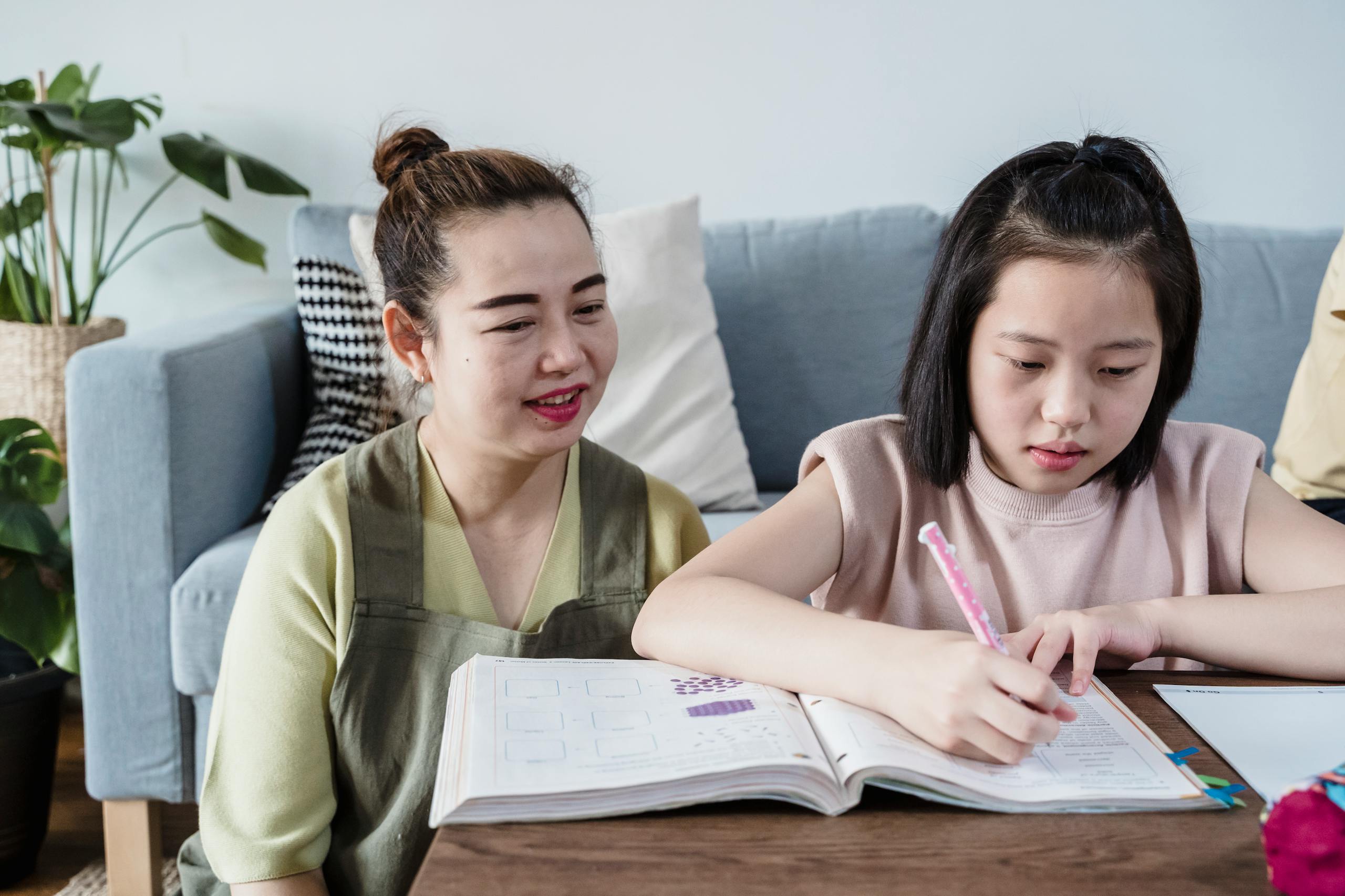
While society will say it’s the parents’ responsibility to fill the gaps, it’s actually a society-wide effort.
How can parents be deeply involved in their kids’ education when work has them stretched thin? The extra work they take is to put food on the table. Then, there’s also making sure the house doesn’t fall apart.
This doesn’t even include the other heavier factors, such as caring for multiple children, sickly family members, and elderly family members. While some can find comfort in saying, “Buti nalang mabait sila,” most tend to channel an erupting Mt. Pinatubo as their spiritual entity.
So, it’s a call to investigate cultures and streamlining processes. At workplaces, find technologies that can enhance quality and reduce time. Schools can maybe bring back classic books as book reports or restore some pre-pandemic activities. Just learn and find the tools to make it easier.
A Call To Restore Love for Learning
Despite everything, Filipino parents haven’t stopped caring about education. They still read with their kids, still celebrate small wins, still hope schools and systems improve. What they’re asking for isn’t less learning—but better learning. Clearer goals. Sensible standards. More accountability when kids fail or make a mistake.
Because love for learning doesn’t grow in fear or confusion. It grows when children feel safe to ask questions, allowed to slow down, and encouraged to make sense of the world—not just pass through it.
For parents, teaching that love starts with empathy—for their children, for themselves, and for the reality that this struggle isn’t a personal failure. It’s a shared one. And naming it is the first step toward fixing it.
Frequently Asked Questions
Kids are very good in memorization. They often parrot things more than they actually understand.
No. Public schools face resource and class-size challenges, while private schools often struggle with overload and performance pressure. The stress looks different, but the learning gaps can exist in both.
Unfortunately, it’s unavoidable. As parents, teaching is part of our responsibility. What we can do, however, is to give them the tools for learning. Ask them why. Don’t feel guilty for saying “I don’t know.” Follow up with the question they asked you to double-check.
Yes and no. Some kids, who feel unchallenged, will really act out. Kids nowadays think they know everything because of the internet.
However, it can also be that they’re suffering something else. Bad classmates and all.
So, yes, worry because they need to understand that school teaches them that there’s a structure that they need to adhere to. No, don’t worry, because a lot of times, the problem is a lot easier to fix than it looks.
Ask them for their course outlines. That usually gives an idea of what the kids will be learning for the year. From there, we can look for the root subject they can use to make learning those topics easier.
More about learning?
Janna Simpao: Keep Moving And Learning
Is My Kid Behind? Learning Gaps Can Be Managed
How the K-12 Curriculum Worked But Made Teachers and Families Struggle