
Paternity Leave Philippines: Possible Expansion of Leave From 7 Days to 105 Days



A new proposal seeks to drastically expand paternity leave in the Philippines from seven days to 105 days, giving fathers more time to support their partners and newborns during one of the most important stages of family life
A proposed measure by Akbayan Party-list Rep. Chel Diokno aims to increase paternity leave in the Philippines from the current seven days under the Paternity Leave Act of 1996 to as much as 105 days.
The proposal, also known as House Bill No. 9891 or PAPA Leave Act, comes as conversations around shared parenting, maternal health, and work-life balanceWork-Life BalanceDividing time and energy between a job and family life so neither suffers. Setting work boundaries, sharing household tasks, and protecting family time help parents avoid burnout and stay present continue to evolve. While existing law grants married fathers seven days of paid leave for the first four deliveries of their lawful spouse, supporters of the bill argue that modern families need more support during the postpartum period.
For many young couples starting a family, the first few months after childbirth can be physically, emotionally, and financially demanding. Advocates say longer paternity leave would allow fathers to play a more active role at home while helping mothers recover from childbirth.
What does the PAPA Leave Act hope to do?
The proposed Paternity and Parental Leave Act (PAPA Leave Act) seeks to modernize parental leave in the Philippines by expanding paternity leave from the current seven days to 105 days. It also aims to give fathers more time to support their partners during postpartum recovery, bond with their newborns, and take a more active role in caregiving.
Key points of the PAPA Leave Act:
- Increases paid paternity leave from the current seven days to 90 continuous days for live childbirth and 60 continuous days in cases of miscarriage or emergency termination of pregnancy.
- Additional 15 days of paid parental leave that may be availed of within one year from childbirth, either continuously or on separate occasions, bringing the total leave benefit to 105 days
- Broadens eligibility beyond married fathers, extending coverage to non-marital fathers and alternative caregivers who play a significant role in caring for newborns and young children.
The act recognizes the effect fathers have when they become more proactive. And especially for many young dads of today, this proposal will be definitely useful.
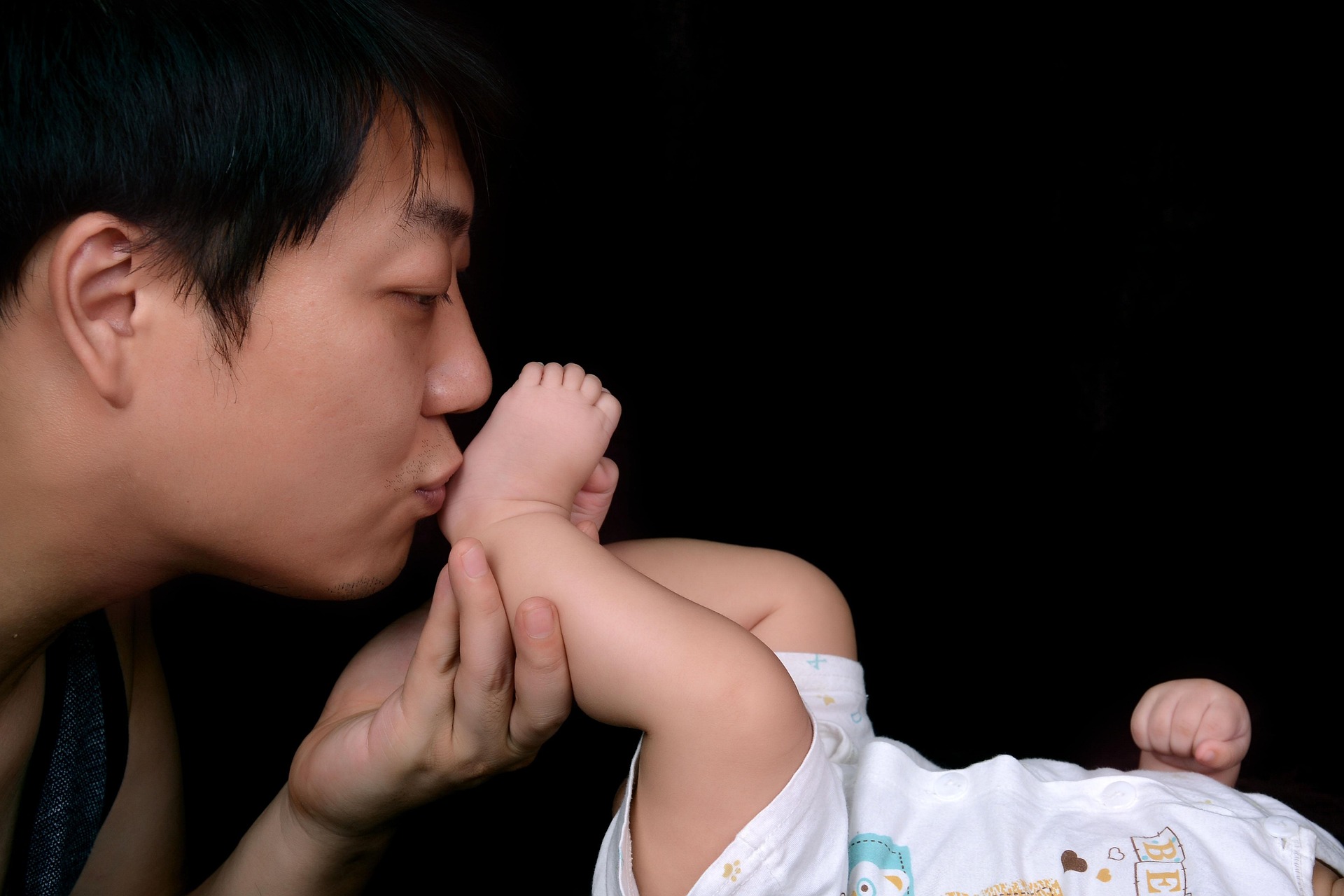
The Impact of Fathers on Postpartum Depression
Indirectly, the PAPA Leave Act also helps aid another issue: postpartum depressionPostpartum DepressionA serious mood condition that can affect mothers, and sometimes fathers, after childbirth, causing persistent sadness, anxiety, exhaustion, or loss of interest. It is treatable, and early support from doctors,.
Research consistently shows that support from partners can significantly affect a mother’s emotional well-being after giving birth. When dads are present and actively involved, moms often report lower stress levels, better recovery experiences, and improved mental healthMental HealthA person's emotional, psychological, and social well-being, which affects how children and parents think, feel, and cope. Open conversations, regular routines, and timely help from professionals make it easier for outcomes. (Barooj-Kiakalaee et. al, 2022; Martin, Maughan, Jaquiery, and Barker, 2022)
Beyond helping with newborn careNewborn CareThe daily care of a baby in the first month, including feeding, diapering, bathing, cord care, and sleep. New parents learn by doing, lean on family and health workers for, fathers can provide emotional support, share household responsibilities, and help reduce feelings of isolation that many new mothers experience. And for newborns, increased father involvement has also been linked to stronger parent-child bondingBondingThe emotional connection that forms between parent and child through touch, eye contact, voice, and responsive care. Skin-to-skin time, feeding, and simply talking to a baby all strengthen it, and and positive developmental outcomes.
While longer leave alone is not a complete solution to postpartum depressionPostpartum DepressionA serious mood condition that can affect mothers, and sometimes fathers, after childbirth, causing persistent sadness, anxiety, exhaustion, or loss of interest. It is treatable, and early support from doctors,, advocates believe it gives families something many desperately need in those early weeks: time.
More Than a Workplace Benefit
Fathers are no longer expected to be solely providers. Increasingly, they are caregivers, partners, and active participants in raising children from day one. And in a lot of cases, the more present fathers are—the more stable the marriage is. Moms are at their most vulnerable after childbirth and while the hormones eventually settle down, the feelings that came with it rarely do.
Whether the measure becomes law remains to be seen. But the conversation it has sparked highlights a growing recognition that supporting mothers and children often means supporting fathers, too.
Sometimes, one of the most valuable things a parent can give a newborn isn’t money or gifts—it’s presence.
References
Barooj-Kiakalaee, O., Hosseini, S. H., Mohammadpour-Tahmtan, R. A., Hosseini-Tabaghdehi, M., Jahanfar, S., Esmaeili-Douki, Z., & Shahhosseini, Z. (2022). Paternal postpartum depressionPostpartum DepressionA serious mood condition that can affect mothers, and sometimes fathers, after childbirth, causing persistent sadness, anxiety, exhaustion, or loss of interest. It is treatable, and early support from doctors,’s relationship to maternal pre and postpartum depressionPostpartum DepressionA serious mood condition that can affect mothers, and sometimes fathers, after childbirth, causing persistent sadness, anxiety, exhaustion, or loss of interest. It is treatable, and early support from doctors,, and father-mother dyads marital satisfaction: a structural equation model analysis of a longitudinal study. Journal of Affective Disorders, 297, 375-380.
Martin, A. F., Maughan, B., Jaquiery, M., & Barker, E. D. (2022). The protective role of father behaviour in the relationship between maternal postnatal depression and child mental healthMental HealthA person's emotional, psychological, and social well-being, which affects how children and parents think, feel, and cope. Open conversations, regular routines, and timely help from professionals make it easier for. JCPP advances, 2(2), e12075.
Frequently Asked Questions
Under the Paternity Leave Act of 1996, eligible married fathers are entitled to seven days of paid paternity leave for the first four deliveries of their lawful spouse. Although, some have made moves to increase it. House Bill 2366, introduced by Rep. Nelson S. Legacion, sought to increase from 7 to 14. Diokno, during the session, aims to increase it from 7 to 105 days.
The proposal seeks to increase paternity leave in the Philippines from seven days to 105 days to provide greater support for families after childbirth.
Longer paternity leave allows fathers to help care for newborns, support their partners’ recovery, and participate more actively in early parenting.
Partner support has been associated with improved maternal mental health, lower stress levels, and a better postpartum recovery experience.
New fathers, mothers recovering from childbirth, newborns, and families adjusting to life with a new baby could all benefit from extended leave policies.
More about dads?
Talking to Toddlers: How Parents Can “Rebrand” Tasks
How Paternity Leave Helps Dads Adapt to Fatherhood Better
Dads & Mental Health: They Need Help Too!