Bullying Prevention: Why This Local Comic Strip is a Game-Changer for Families



Researchers at Ateneo de Manila University paired up with local families to turn a simple medium into a powerful tool against school violence—proving that real prevention starts with open conversations at home
The Philippines is world-famous for its sun-kissed beaches and warm hospitality, but behind our welcoming reputation lies a pressing issue affecting our homes and classrooms: school bullying.
According to data from the Organization for Economic Co-operation and Development (OECD), the Philippines ranks among the highest globally for school bullyingBullyingRepeated, intentional harm toward another child through words, actions, exclusion, or online posts. Parents can help by listening without blame, documenting incidents, talking with the school, and reminding their child. The 2025 Programme for International Student Assessment (PISA), reported that 47.2% or nearly half of 15-year-old Filipino students reported experiencing “at least one form of bullyingBullyingRepeated, intentional harm toward another child through words, actions, exclusion, or online posts. Parents can help by listening without blame, documenting incidents, talking with the school, and reminding their child a few times per month or more.”
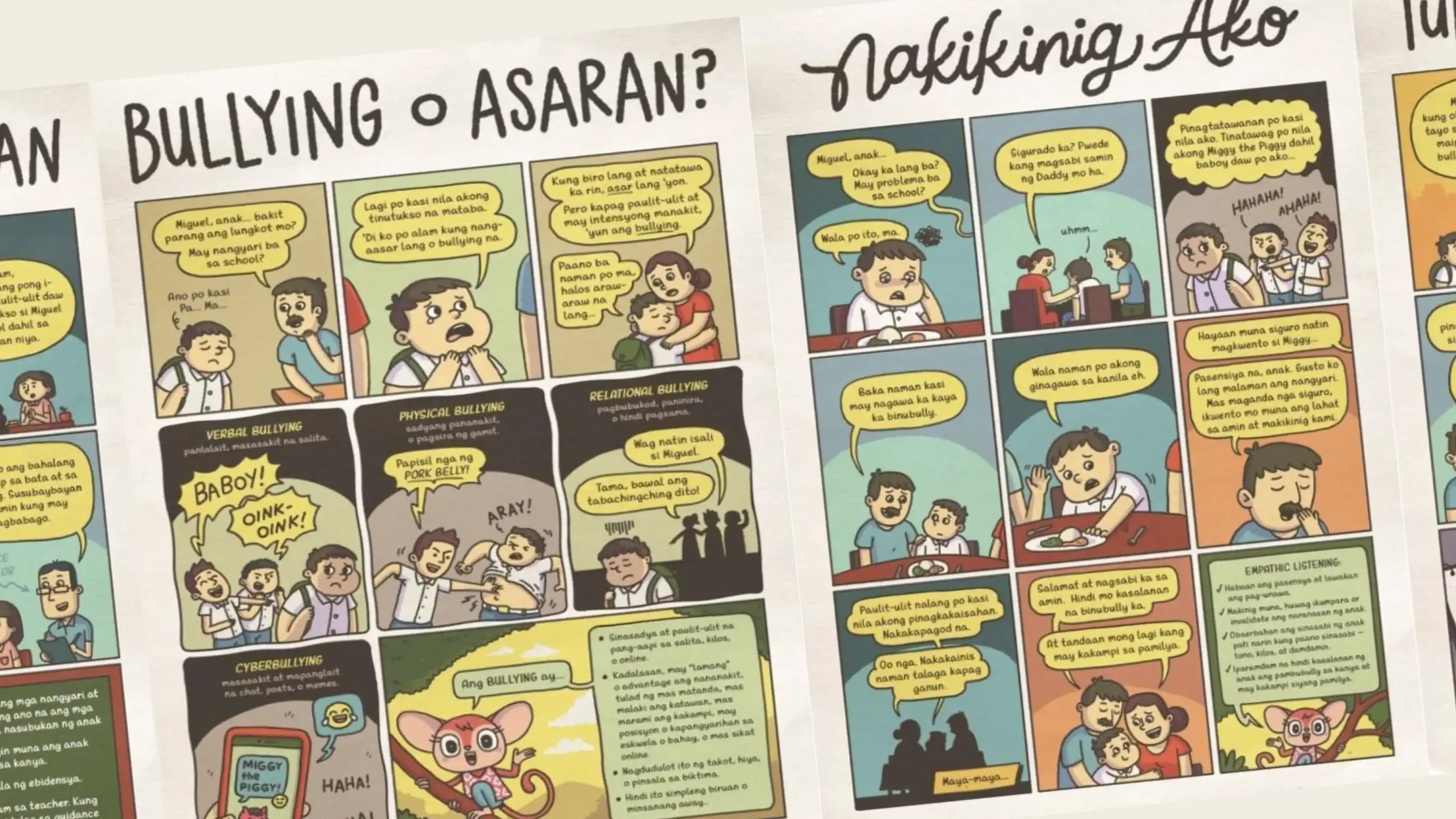
While schools and youth organizations continuously roll out awareness campaigns, researchers from Ateneo de Manila University’s Department of Psychology and Department of Information Systems and Computer Science took a different, grounded approach: they asked parents and kids directly what would actually work. The answer? A humble comic strip.
Why a Comic Strip?
The idea wasn’t cooked up in an academic vacuum—it came straight from local families. Dr. Regina Hechanova, one of the lead researchers behind the project, shared how the initiative took shape.
“We did a design thinking workshop with public school students and parents on bullyingBullyingRepeated, intentional harm toward another child through words, actions, exclusion, or online posts. Parents can help by listening without blame, documenting incidents, talking with the school, and reminding their child prevention, and the suggestion to use comics came directly from them,” Dr. Hechanova explained to Modern Parenting.
Their research revealed a sobering reality: bullyingBullyingRepeated, intentional harm toward another child through words, actions, exclusion, or online posts. Parents can help by listening without blame, documenting incidents, talking with the school, and reminding their child starts as early as kindergarten and reaches its peak between Grades 4 and 6. To tackle an issue hitting children so young, the medium needed to be visual, relatable, and approachable.
Rethinking Parenting Roles
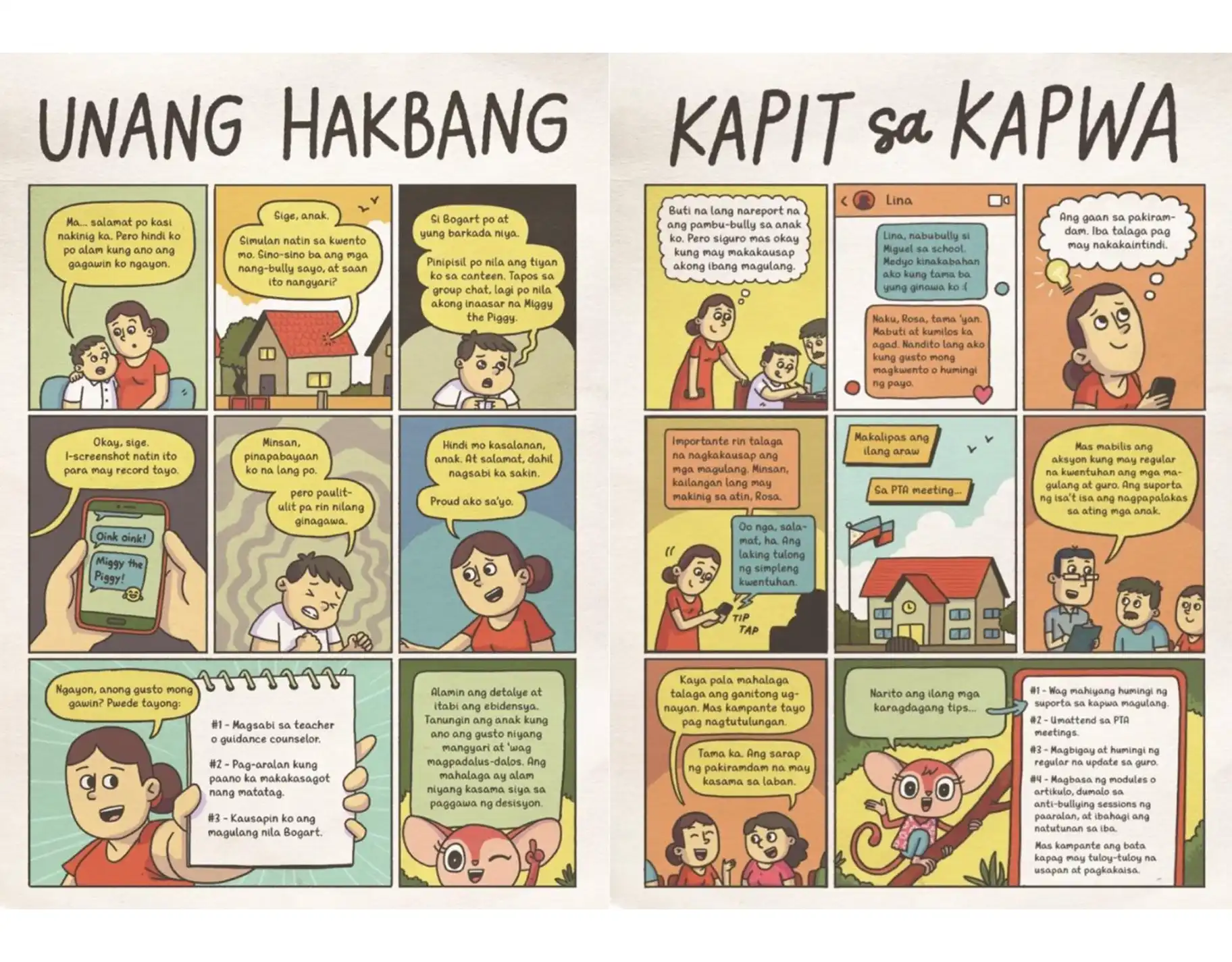
What makes these comic strips stand out isn’t just the format, but the story they tell about modern Filipino families. Instead of relying on tired tropes, the comics reflect active, shared parenting. One strip, for instance, highlights a father taking the lead in protecting his child and navigating the situation with the school.
Getting the content right required an iterative process with workshop participants. Through open feedback, the team refined the materials—ensuring clearer language, accessible visuals, and practical, realistic guidance on how families and schools can collaborate to resolve bullyingBullyingRepeated, intentional harm toward another child through words, actions, exclusion, or online posts. Parents can help by listening without blame, documenting incidents, talking with the school, and reminding their child incidents.
By grounding the stories in real, lived experiences, the team created a tool that feels authentic to the everyday Filipino family.
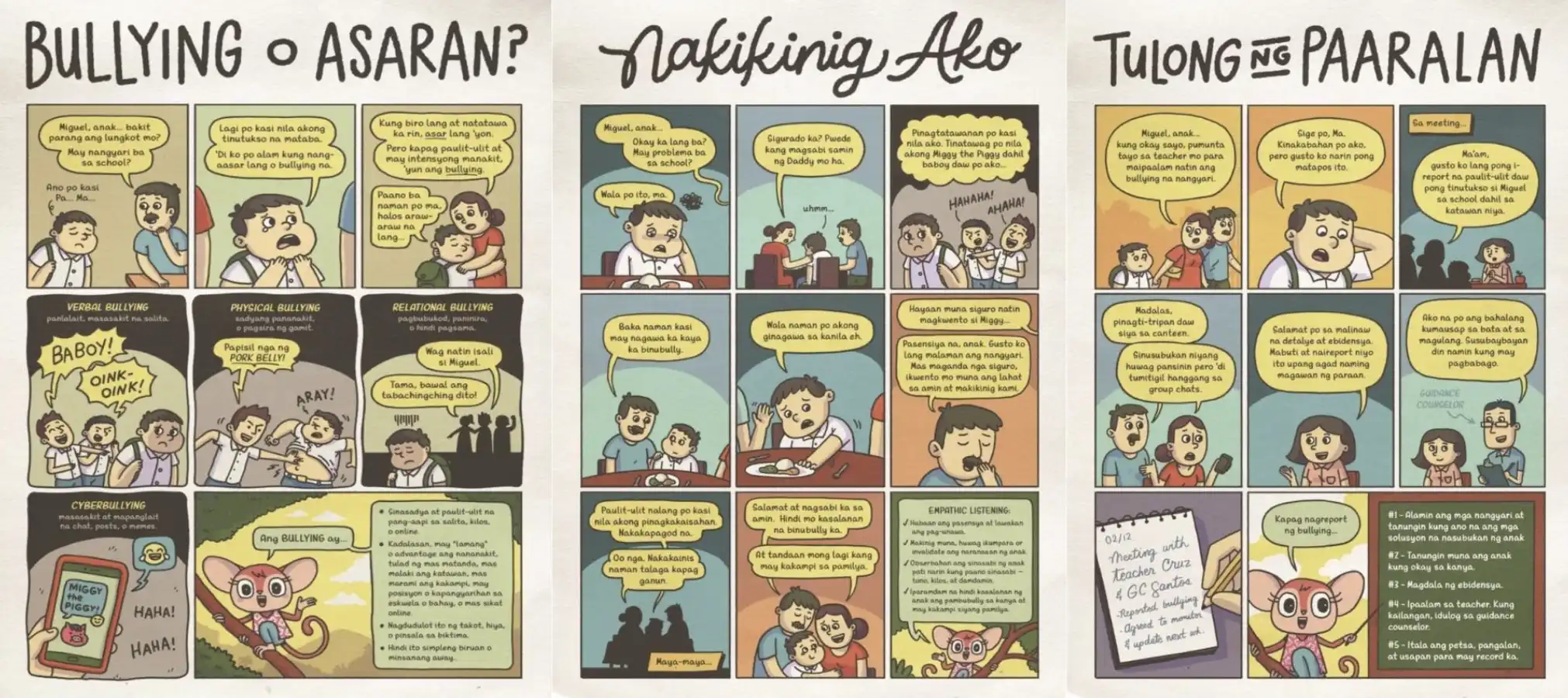
A Tool for Real Conversation and Action
The response from the community has been overwhelmingly positive so far.
“When we launched these during the DepEd Mental HealthMental HealthA person's emotional, psychological, and social well-being, which affects how children and parents think, feel, and cope. Open conversations, regular routines, and timely help from professionals make it easier for Caravan in Valenzuela, parents were eager to read the comics and requested that they be distributed regularly,” shared Dr. Hechanova.
For Dr. Hechanova, this comic strip is just the beginning of a broader movement to normalize open family discussions around school safety and mental healthMental HealthA person's emotional, psychological, and social well-being, which affects how children and parents think, feel, and cope. Open conversations, regular routines, and timely help from professionals make it easier for.
“We need to be more mindful about how we engage the issue of bullyingBullyingRepeated, intentional harm toward another child through words, actions, exclusion, or online posts. Parents can help by listening without blame, documenting incidents, talking with the school, and reminding their child by going directly to our stakeholders and empowering them to be part of the solution,” she emphasized. “It’s vital for our materials to be culturally nuanced so they are truly usable and effective.”
Ultimately, ending school bullyingBullyingRepeated, intentional harm toward another child through words, actions, exclusion, or online posts. Parents can help by listening without blame, documenting incidents, talking with the school, and reminding their child requires more than just policies—it requires active parental involvement. By using accessible mediums like comic strips, parents and kids gain both the awareness and the vocabulary they need to speak up, take action, and stand against bullyingBullyingRepeated, intentional harm toward another child through words, actions, exclusion, or online posts. Parents can help by listening without blame, documenting incidents, talking with the school, and reminding their child together.
For more information about the project, you can read the research called Da Mosang Tarsier Series: Developing Digital BullyingBullyingRepeated, intentional harm toward another child through words, actions, exclusion, or online posts. Parents can help by listening without blame, documenting incidents, talking with the school, and reminding their child Prevention Materials for Filipino Parents of Grade School Students through the website https://archium.ateneo.edu/children-and-families/1/
Frequently Asked Questions
Research from Ateneo de Manila University indicates that children experience bullying as early as kindergarten, with incidents peaking between Grades 4 and 6.
Comic strips offer accessible language, engaging visuals, and culturally relevant scenarios. They make tough conversations approachable for young children and give parents practical scripts on how to intervene.
Parents should document incidents, maintain open communication with their child, and approach school administrators collaboratively using clear, realistic steps rather than immediate confrontation.
More on the issue of bullying
Should Parents Be Held Accountable For Their Children’s Bullying?
Understanding Kids and Bullying: A Bias Gone Wrong
Why Bullying Celebrity Kids is Getting Out of Hand