How Parents Can Help Kids Process Their Grief



Grief isn’t easy to process but parents can help their kids through these ways.
GriefGriefThe deep sadness that follows the loss of a loved one, which children experience differently from adults. Parents can help by using honest, simple words, allowing tears and questions, keeping is an emotion a lot of us are terrified to deal with. We’re scared to get crippled by it. But imagine how our kids are trying to deal with it. Unlike us who have other things to run to, our kids may find themselves confused about the feelings. GriefGriefThe deep sadness that follows the loss of a loved one, which children experience differently from adults. Parents can help by using honest, simple words, allowing tears and questions, keeping is an emotion that deals with sadness, guilt, and many other emotions. So, for this, we’ll use Elisabeth Kübler-Ross’s Theory of GriefGriefThe deep sadness that follows the loss of a loved one, which children experience differently from adults. Parents can help by using honest, simple words, allowing tears and questions, keeping. It has five stages: denial, anger, bargaining, depression, and acceptance.

Stage 1: Denial
Denial means coming to terms with reality and sometimes, they’ll find it hard to do so. If it involves death, it’s trying to make sense that the presence that was once there is gone. Or if they lost, it’s the thought of wondering, “What happened? Where did I go wrong?” These usually show in the form of throwing tantrumsTantrumsSudden outbursts of crying, screaming, or flailing, common in toddlers who cannot yet express big feelings. Staying calm, keeping the child safe, and talking afterward help, and clear routines and when something that served as a big part of that event is touched—like a toy, a book, or a shirt. Or, it can even look like withdrawal.
Dealing with this takes a bit of space. Resist the urge to dive in and talk to them about it. Let them wrap their head around it first before talking to them. They’ll eventually come to you.
Stage 2: Anger
Anger shows differently when in griefGriefThe deep sadness that follows the loss of a loved one, which children experience differently from adults. Parents can help by using honest, simple words, allowing tears and questions, keeping. Kids serve an extra dish of savage and nasty in their sentences. Other times, they’re physically violent. Others are emotionally volatile. However, this doesn’t absolve them of their acts while enraged. We can start by saying, “I understand you’re mad and it hurts. But, it’s not nice to hurt others out of anger.”

It’ll take a few repetitions but eventually, it gets through. We suggest also reminding them (even if they don’t), “Don’t fight people on social media. It’s not worth it.” Have them deactivate if ever social media is the source of the toxicity.
Stage 3: Bargaining
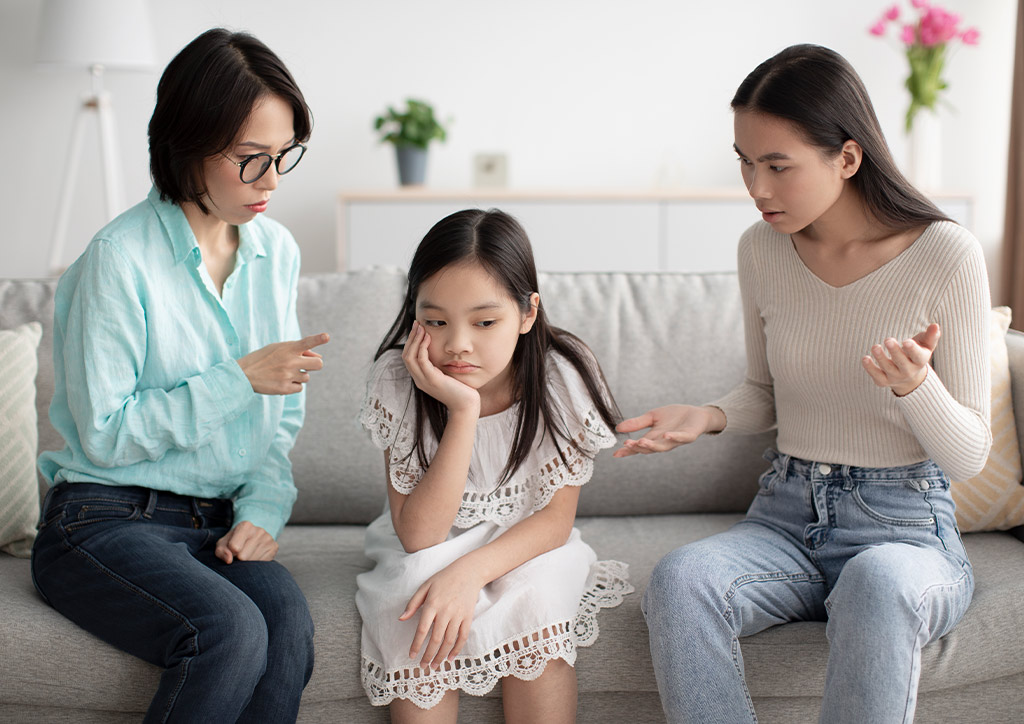
We may be used to our kids’ bargaining and negotiating for another scoop of ice cream. But bargaining in griefGriefThe deep sadness that follows the loss of a loved one, which children experience differently from adults. Parents can help by using honest, simple words, allowing tears and questions, keeping takes in the form of “What-ifs” in our kids. They start thinking about all the things they felt they could have done, wondering why they didn’t do it. Guilt hits them hard at this stage, making it swirl deeper into their feelings.
As they try to bargain, sometimes, the best way is to simulate the situation. Talk with them about it and ask what the original plan was. Or, if it’s death-related, ask them to write down things they wanted to ask that person.
Stage 4: Depression
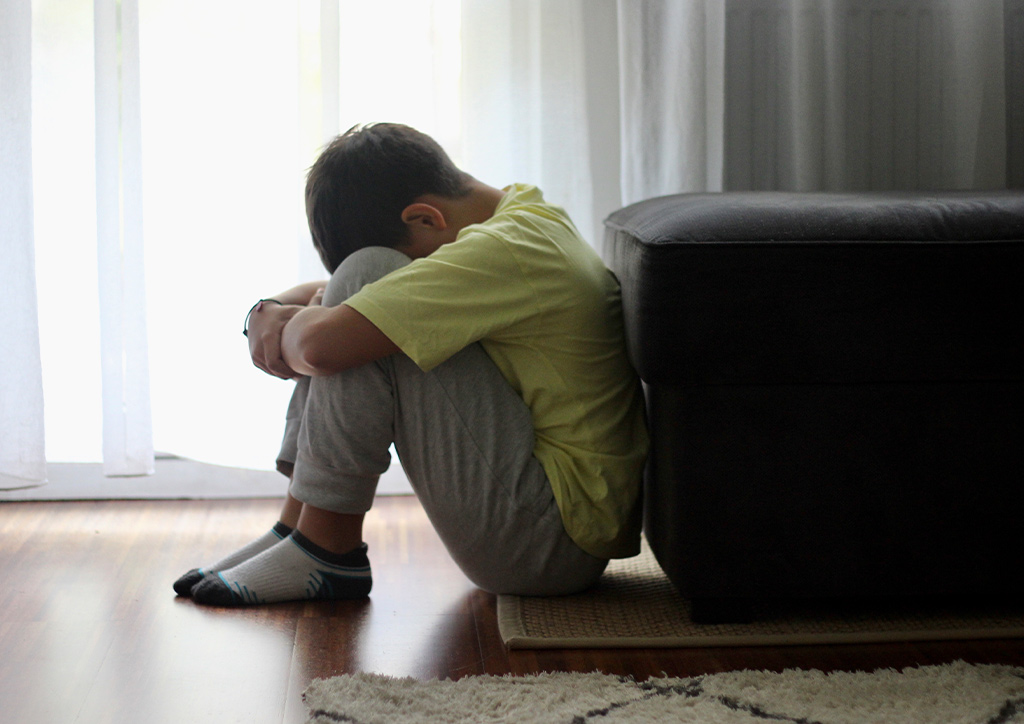
Guilt, deep sadness, volatility, and self-loathing are the common elements of depression. Kids usually show depression by waking up late, making off-hand comments on whether they lived or died, being easily enraged, not eating, and other things. They’ll sometimes be forgetful, too.
If they are forgetful of the little things, there’s no need to snap at them. Have it done but just let them know, “Don’t forget next time, okay?” Slowly breaking them into the routineRoutineA predictable daily rhythm for waking, meals, school, play, and sleep. Routines give children a sense of security, reduce power struggles, and make busy mornings smoother, while some flexibility keeps again also helps them deal with the loss of structure.

Stage 5: Acceptance
Usually, this is the stage of griefGriefThe deep sadness that follows the loss of a loved one, which children experience differently from adults. Parents can help by using honest, simple words, allowing tears and questions, keeping where there’s a lot of crying. Gradually, when our kids come to terms with it, there will be a desire for a cathartic release. These can take in the forms of crying it out, screaming, rolling in the bed, or binge-eating. It takes a while but helping them process it means allowing them to do so without hurting themselves or anyone.
Kids process grief in their own way
Unlike us who occasionally prefer some booze and bubbly or coffee, kids have their own way of processing griefGriefThe deep sadness that follows the loss of a loved one, which children experience differently from adults. Parents can help by using honest, simple words, allowing tears and questions, keeping. Sometimes, it may not be the best way but it’s the only way their minds can figure out how. But the one thing to remember is that coping with griefGriefThe deep sadness that follows the loss of a loved one, which children experience differently from adults. Parents can help by using honest, simple words, allowing tears and questions, keeping doesn’t happen in one direction. We tend to jump through the stages and may fall back into one of the older ones. But that’s okay, because processing griefGriefThe deep sadness that follows the loss of a loved one, which children experience differently from adults. Parents can help by using honest, simple words, allowing tears and questions, keeping takes time. There’s no rushing it.
Talking about heavy topics? Here are more stories:
Mental Health and Filipino Families: We Need To Talk
Postpartum Depression: Understanding the Unseen in This
Autism: In The Eyes of A Child And Now, An Adult